Manila Channel Dive Site
Puerto Galera (Mindoro), Philippines · Near Puerto Galera
Overview
Manila Channel sits between the Sabang area and the deeper waters off Puerto Galera's northern coast, a gentle sloping reef that drops into a sandy channel at around 18 to 23 metres. It is one of Puerto Galera's more versatile dive sites, accessible enough for newly certified divers on calm days yet interesting enough to hold the attention of experienced photographers who know what to look for on sand and rubble.
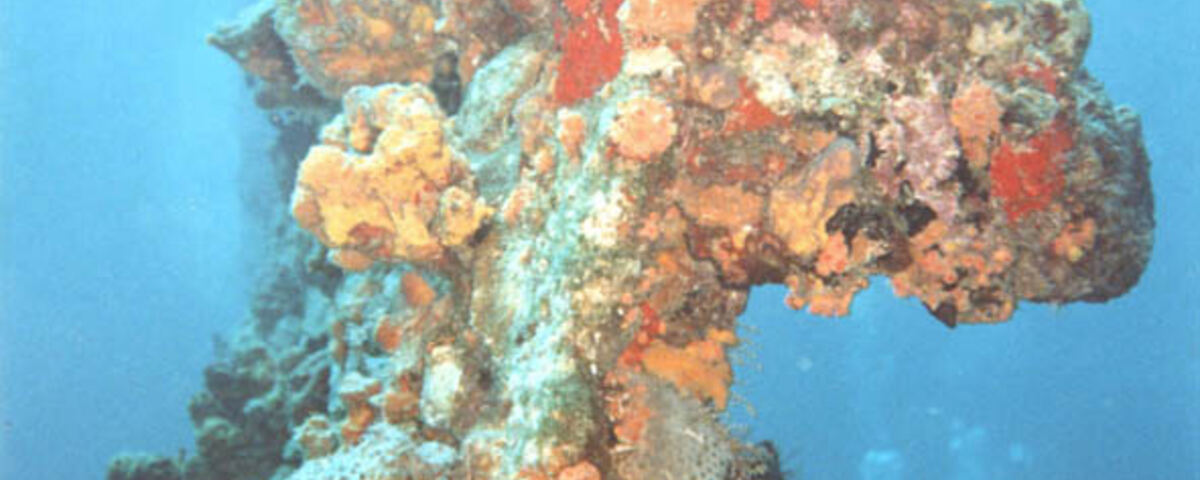
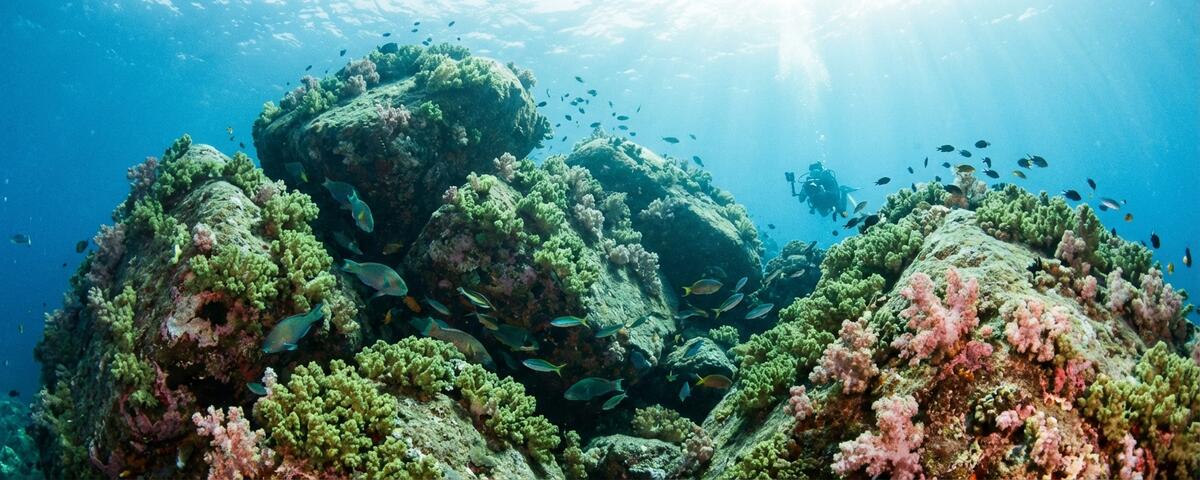
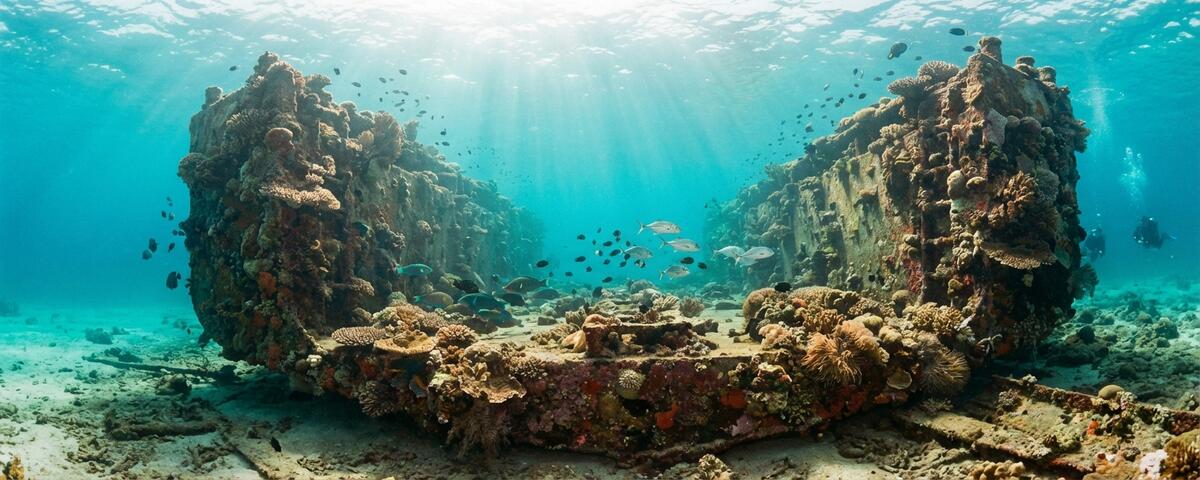
The site starts shallow, around 5 metres, on a reef crest thick with hard corals. Stony corals dominate the upper sections: massive Porites heads, branching Acropora tables, and the bulky rounded formations that locals call potato coral. From this reef edge the bottom slopes gradually into the channel proper, where sand and scattered coral rubble create a different environment entirely. That transition zone, from reef to sand, is where Manila Channel gets interesting.
Most of Puerto Galera's famous sites trade on current and drama. The Canyons will pin you against a wall on a strong ebb. Hole in the Wall channels divers through rock tunnels with surge. Manila Channel does something different. It lets you slow down. The current here, when it runs at all, carries divers gently along the contour of the reef at a pace that barely requires finning. Your air lasts longer, your breathing settles, and you start noticing things you would miss entirely on a faster dive.
The channel sits within the Verde Island Passage, that strip of water between Mindoro and Batangas that marine biologists have identified as the centre of the centre of marine biodiversity. That sounds like marketing copy, but the science backs it up. A 2006 survey by the California Academy of Sciences recorded more species of fish and invertebrates per unit area here than anywhere else on the planet. Manila Channel benefits from this location without requiring the advanced skills that the Passage's stronger current sites demand.
Dive operators use Manila Channel as a first or second dive on morning and afternoon schedules. The 10-minute boat ride from the Sabang or Big La Laguna piers makes it one of the closest offshore sites. Many shops pair it with a shallower site like Giant Clam or Coral Garden, giving divers a two-dive set that covers both reef and channel environments without pushing depth or current limits.
The site works year-round, though conditions peak during the dry season from November to May when visibility improves and surface conditions calm. During the southwest monsoon from June to October, the northern coast of Mindoro gets some chop, but Manila Channel's relatively sheltered position means it rarely gets cancelled entirely. Water temperature stays tropical, 25 to 30 degrees depending on the season, with occasional thermoclines during the cooler months that drop things a few degrees at depth.
Marine Life at Manila Channel
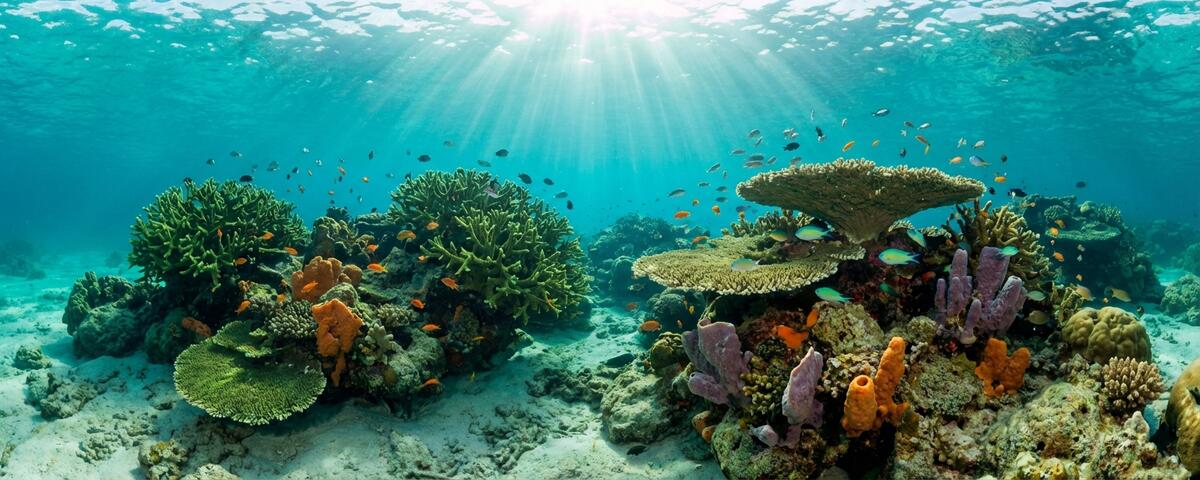
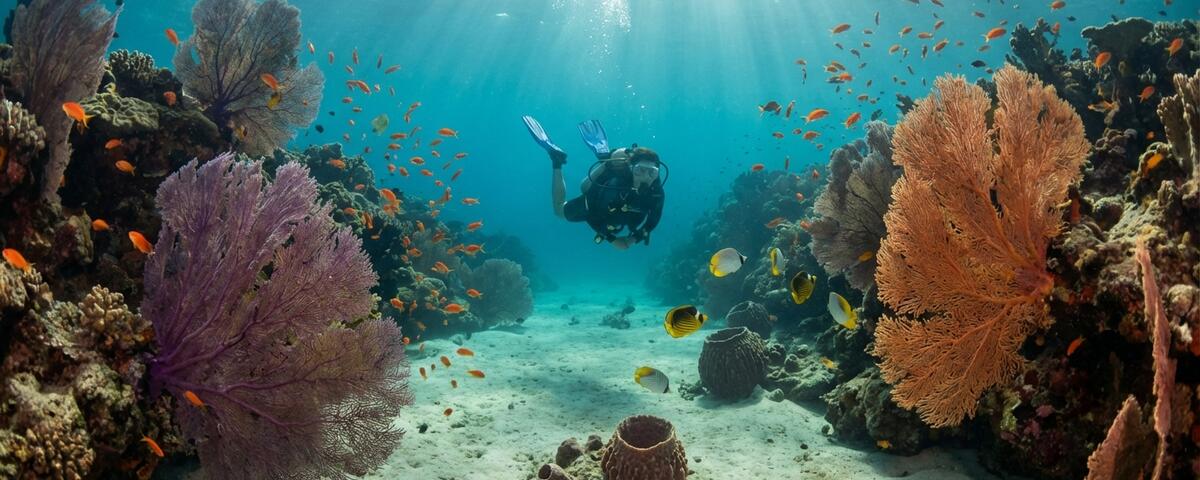
The shallow reef crest is a wall of colour and movement. Anthias swarm over the coral heads in clouds of pink and orange, so dense in places that they obscure the reef behind them. Sergeant majors hang in loose formations, their vertical black bars catching the light as they turn. Butterflyfish work the reef in pairs, methodical, focused, picking at coral polyps with the precision of surgeons. Look closely at the larger coral heads and you will find Christmas tree worms spiralling from the surface, their delicate fans snapping shut when your shadow passes over them.
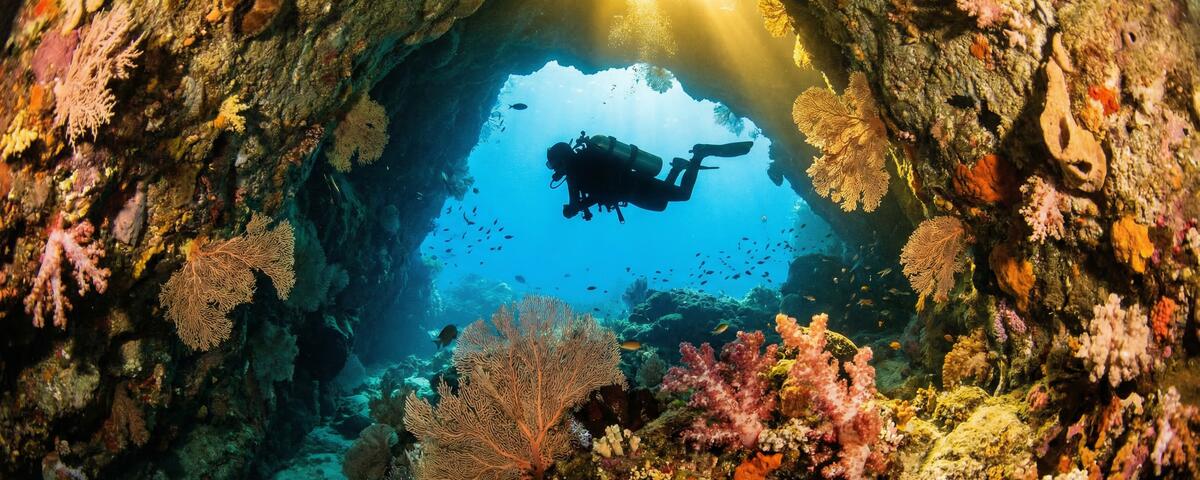
The gorgonian sea fans along the channel walls are the most photogenic feature. Purple, orange, and deep red fans spread from the rock faces at 12 to 18 metres, some of them a metre across, their lattice structures filtering plankton from the passing current. Check the branches carefully. Pygmy seahorses live on gorgonians throughout the Verde Island Passage, and while they are fiendishly difficult to spot without a guide's help (they are smaller than your thumbnail and perfectly colour-matched to their host), Manila Channel has produced sightings for patient searchers.
Groupers patrol the walls and overhangs. Several resident individuals occupy specific territories along the channel, and experienced local guides know exactly where to find them. They are well camouflaged against the coral and rock, mottled brown and green, and often the first sign of one is realising that the rock you were looking at has eyes. Mantis shrimp occupy burrows in the sand and rubble near the base of the walls. They are most visible early in the morning when they sit at their burrow entrances, and their compound eyes, swivelling independently on stalks, are unmistakable once you know what you are looking for.
The sandy bottom of the channel rewards muck diving instincts. Barrel sponges grow from the sand in clusters, some of them large enough to sit inside (though you should not). Whip corals extend vertically from the substrate, and commensal shrimp live on these in symbiotic pairs. Finding them requires patience and good eyesight, or a guide with a pointer stick and the willingness to wait while you fumble with your macro lens.
Flamboyant cuttlefish are the site's star critter. They walk across the sand on modified arms, displaying pulsing patterns of purple, yellow, and brown that shift faster than you can follow. They are small (perhaps 8 centimetres fully grown), toxic, and completely unbothered by divers. Not every dive produces a sighting, but Manila Channel is one of Puerto Galera's more reliable spots for them, particularly on the sandy sections between 15 and 20 metres.
Giant frogfish sit motionless on sponges along the overhangs. They come in various colours, from solid black to mottled yellow and orange, and their camouflage is so effective that guides will sometimes place a pointer within centimetres of one before you can see it. Nudibranchs populate the rock faces in variety that would take a dedicated reference book to catalogue. Chromodoris species are the most visible, their purple, blue, and orange mantles bright against the substrate, but the smaller species require a macro lens and a slow pace to appreciate.
Schooling fish use the channel as a highway. Fusiliers stream past in the mid-water. Jacks cruise through in small hunting groups. Occasionally a large barracuda holds station in the blue, watching the reef traffic with the flat disinterest that barracuda do so well. Blue-spotted stingrays rest on the sandy patches, and a careful approach can get you close enough for a portrait shot before they ripple away.
Dive Conditions
Current at Manila Channel is the main variable, and it is generally kind. On an ebbing tide the channel runs a gentle drift from east to west, carrying divers along the reef contour at a pace that requires minimal effort. This is the ideal condition: you drop in, descend to the reef, and let the water do the work while you scan the walls and sand for critters. On a flooding tide the drift reverses, and operators adjust their drop-in point accordingly. Slack water produces no drift at all, which suits macro photographers who want to park themselves in front of a nudibranch without fighting the current.
Strong current days are rare here compared to sites like the Canyons or Sinandigan Wall. When it does pick up, the effect is moderate rather than overwhelming. An intermediate diver comfortable with basic drift technique will manage fine. The channel's sloping profile means you can always move shallower to reduce current exposure if conditions surprise you mid-dive.
Visibility ranges from 8 metres on murky days to 20 metres or better when conditions align. The best visibility coincides with the northeast monsoon season from November to May, when the prevailing wind pushes cleaner water onto Puerto Galera's northern coast. Plankton blooms can reduce visibility temporarily, particularly during tidal transitions, but these same blooms bring the filter feeders (whale sharks have been spotted in the Verde Island Passage during heavy plankton events, though this is not a whale shark site by any stretch).
Water temperature holds between 25 and 30 degrees Celsius year-round. The cooler end of that range hits during the northeast monsoon, roughly December to February, when thermoclines can drop temperatures at depth by 2 to 3 degrees compared to the surface. A 3mm full wetsuit handles the full temperature range. Some divers go thinner during the warmer months, but the full suit provides better protection against jellyfish stings and coral scrapes, both of which are more likely here than hypothermia.
Depth management is straightforward. The reef starts at 5 metres and the channel floor sits at 18 to 23 metres. There are no sudden drop-offs or complex multi-level profiles to navigate. The gentle slope means depth changes are gradual and predictable, which is partly why the site works so well for less experienced divers. Safety stops happen on the reef crest at 5 metres, surrounded by the anthias clouds and hard coral gardens that make the shallow section a highlight in its own right.
Entry is by giant stride from a bangka (outrigger boat). The boats anchor or drift above the site, and descent is a free drop to the reef. Surface conditions are usually calm, with the headland providing shelter from open-ocean swells. Even during monsoon season, the boat ride from Sabang is short enough that discomfort is minimal.
⚓ Divemaster Notes
Manila Channel is a site I use for everything from first fun dives after certification to dedicated macro photography sessions. The versatility is the point. On a calm day with a gentle drift, I can take a group of newly certified divers down the reef slope, let the current carry them through the channel, and deliver 50 minutes of easy, confidence-building diving. On the same day, I can bring a photographer to the same site and spend an hour on a 10-metre section of sand flat, finding critters.
The key to guiding this site well is reading the tide table. The drift runs predictably with the tide, and the best dives happen when you drop in at the start of an ebb and ride it through the channel. I check the tide chart the night before and plan the schedule around it. Getting this wrong means swimming into current on a site that is supposed to be effortless, which ruins the experience.
I start most dives on the shallow reef at 5 to 8 metres, letting the group settle and get their buoyancy sorted before heading deeper. The hard coral section is interesting enough to hold attention while I assess the group's comfort level. If everyone looks solid, I drop to the channel floor at 18 to 20 metres and work the sand flats for critters. If the group is less confident, I keep them at 12 to 15 metres along the walls where the gorgonians and overhangs provide the visual interest without the depth.
Frogfish locations change seasonally but I maintain a mental map of current sightings. The overhangs at 14 to 16 metres on the western wall are the most reliable spots. I check them on every dive and update my colleagues on what is there. When I find one, I approach slowly from below and position the group at arm's length. Most guests cannot see it until I place my pointer right next to it, even when they are staring directly at it.
Flamboyant cuttlefish hunting requires patience and a good eye. They favour the open sand between 15 and 20 metres, often near fire urchins and mushroom corals. I scan for their distinctive walking gait across the bottom. Once spotted, they generally tolerate a close approach. I brief photographers beforehand: slow movements, no strobe aimed directly at their eyes, and position yourself below them to get the sand background rather than shooting down from above.
Air consumption at this site is generous compared to Puerto Galera's current-heavy sites. The gentle profile and easy drift mean most divers come back with 80 to 100 bar after 50 to 55 minutes. I use this to my advantage by planning longer dives than I would at the Canyons or Sinandigan, which lets the group see more and gives me time to hunt for the site's more elusive residents.
The safety stop at 5 metres on the reef crest is a highlight, not a formality. Anthias, damsels, and butterflyfish in dense numbers, with the hard coral providing colour and texture. I have seen guests burn through their safety stop photography budget here, shooting more frames in three minutes of decompression obligation than during the entire deeper section of the dive.
How to Get to Manila Channel
Puerto Galera sits on the northern tip of Mindoro Island, separated from Luzon by the Verde Island Passage. The standard route from Manila takes roughly 3 to 4 hours door to door.
From Manila, take a bus or private van to Batangas Pier (approximately 2 hours from the capital, depending on traffic). Si-Kat and Jam Liner run regular services from Manila's bus terminals to Batangas. From Batangas Pier, passenger ferries cross to Puerto Galera in 45 minutes to 1 hour. Montenegro Lines and Starlite Ferries operate the route, with departures throughout the day. Ferry tickets cost around 250 to 350 PHP per person.
If you are coming from elsewhere in the Philippines, the Batangas ferry is still your entry point. From Cebu or other Visayan islands, fly to Manila's NAIA terminal and connect by road to Batangas. There is no direct ferry from the Visayas to Puerto Galera.
Once in Puerto Galera, the dive sites cluster around the Sabang and Big La Laguna Beach areas on the north coast. If your accommodation is on White Beach (the main tourist strip), a tricycle ride to the Sabang dive shops takes 15 to 20 minutes along a winding coastal road. Most dive operators provide pick-up from any Puerto Galera accommodation as part of their dive packages.
Manila Channel is approximately 10 minutes by bangka from the Sabang or Big La Laguna piers. It is one of the closer offshore sites, making it a convenient first dive of the day or a second dive after a deeper morning site.
Accommodation in the Sabang and Big La Laguna area ranges from budget guesthouses at 800 to 1,500 PHP per night to mid-range resorts at 3,000 to 6,000 PHP. The area is compact and walkable, with restaurants, dive shops, and basic amenities all within a few minutes on foot.
Gear Recommendations
A 3mm full wetsuit covers the entire temperature range at Manila Channel. The full suit matters more for jellyfish protection than warmth, particularly during the warmer months when small box jellyfish occasionally drift through the channel. Dive computer is recommended for all experience levels; the gentle slope makes depth management straightforward, but a computer removes the need to think about no-decompression limits entirely.
For photography, this is a macro site first and wide-angle second. A 60mm or 100mm macro lens captures the nudibranchs, frogfish, and flamboyant cuttlefish that make the site special. Compact cameras with macro mode and a close-up diopter lens produce excellent results here because the subjects are small, stationary, and tolerant of close approach. A video light or torch is useful for illuminating overhangs and bringing out the true colours of gorgonians and nudibranchs at depth, where ambient light shifts everything towards blue-green.
Wide-angle has its moments, particularly on the reef crest where the hard coral formations and anthias schools fill the frame nicely. If you can only bring one setup, go macro. The wide-angle shots at Manila Channel are pleasant but not distinctive; the macro opportunities are genuinely excellent.
SMB (surface marker buoy) is good practice for the drift section, though the current is gentle enough that separation from the boat is unlikely. Reef hook is not needed and not particularly useful here. The sandy bottom and gentle current make it unnecessary, and there is nothing appropriate to hook onto without damaging the reef.
Reef-safe sunscreen applied before the dive reduces the amount of chemical run-off entering the water at the shallow reef crest. The hard corals here are healthy and worth protecting.
Recommended Dive Operators
BADLADZ Scuba Diving on Big La Laguna Beach runs well-organised trips with experienced Filipino and international guides who know the critter spots at Manila Channel inside out. Their two-dive morning and afternoon schedules make it easy to pair this site with a complementary reef or wreck dive. Scandi Divers, also on Big La Laguna, has been operating since the 1990s and their guide team includes several long-term residents who can find flamboyant cuttlefish when nobody else can. They maintain a solid rental fleet and their boats are comfortable for the short crossing. Asia Divers operates from Sabang Beach with a professional setup that handles everything from Open Water courses to advanced fun diving. Their familiarity with local current patterns means they time Manila Channel dives to catch the optimal drift conditions. Frontier Scuba on Small La Laguna combines personalised guiding with a strong conservation focus, and their guides are particularly good with macro photography coaching at muck-style sites like Manila Channel. Tech divers and those wanting extended bottom time should check with Action Divers in Sabang, who offer nitrox fills and more flexible dive planning for experienced divers who want to maximise their time on the sand flats.
Liveaboard Options
Puerto Galera is a shore-based dive destination. No liveaboards operate routes that include Manila Channel specifically. However, several Philippine liveaboard itineraries pass through the Verde Island Passage on routes between Batangas and the Visayas. Expedition Fleet and Philippine Siren run seasonal routes that include Verde Island and occasionally Puerto Galera sites as weather stops or bonus dives. These are premium operations running week-long itineraries, and a Manila Channel dive would be incidental rather than a destination feature. For dedicated diving at this site, a shore-based stay at one of the Sabang or La Laguna operators is the practical and cost-effective approach.