Green Rock Dive Site
Koh Tao (Gulf of Thailand), Thailand · Near Koh Tao
Overview
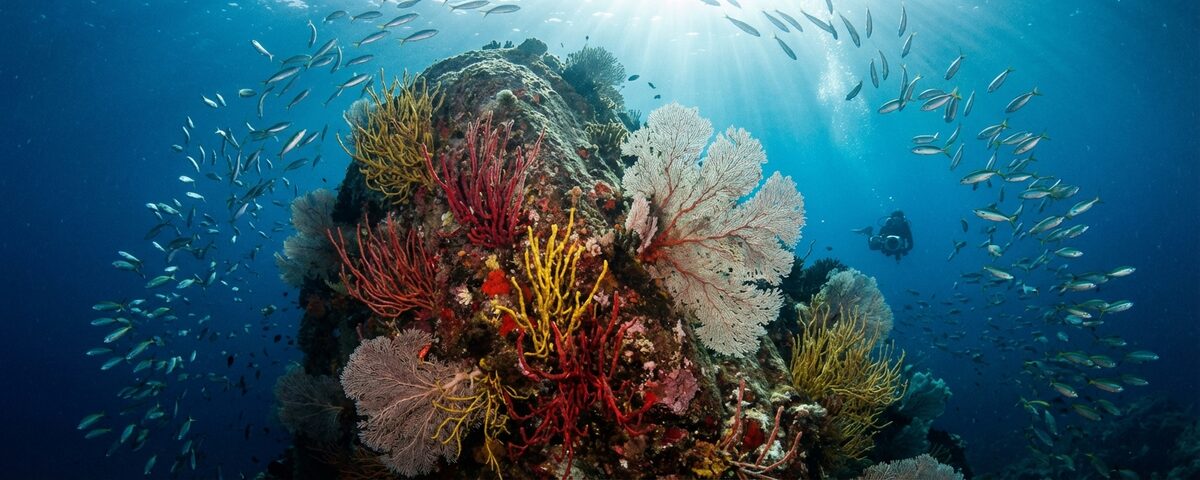
Green Rock sits off the northwest tip of Koh Nang Yuan, the three-island formation connected by sandbars that most visitors know from Instagram rather than from actually swimming there. The name comes from the algae and vegetation clinging to the rocks above the waterline, giving them a mossy green tint that is visible from the boat. Below the surface, though, green is about the last colour you would use to describe it. The site is a jumbled collection of massive granite boulders stacked on top of each other like some geological accident, riddled with swimthroughs, caverns, and overhangs that make it one of the most three-dimensional dive sites on Koh Tao.
What separates Green Rock from the other named rocks around the island (White Rock, Shark Island, the Twins) is complexity. This is not a site you can map in your head after one dive. The boulder formations create a vertical labyrinth from 2 metres right down to 28 metres on the sand, with passages threading between rocks at every depth. Turn left through a swimthrough at 14 metres and you pop out on a different face of the reef. Drop through a chimney between two boulders and you land on a coral-covered ledge you did not know existed. Divers who have logged fifty dives here still find new routes.
The flip side of this complexity is exposure. Green Rock faces the open ocean on the north side of Koh Nang Yuan, which means it catches current that the sheltered sites on Koh Tao's west coast never see. On calm days, the current is manageable and the site feels almost relaxed. On strong current days, it demands proper technique: finning into flow, using the boulders as shelter, reading the water before committing to a swimthrough. This is why most operators grade Green Rock as an advanced site and why the dive schools running Open Water courses stick to White Rock and Japanese Gardens instead.
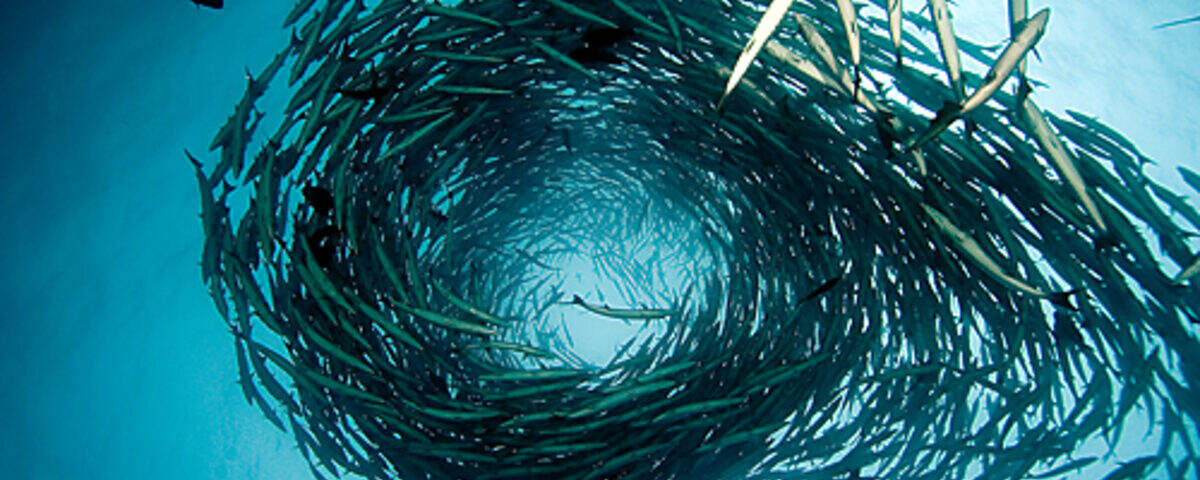
The payoff for that added difficulty is marine life density that rivals anything in the Gulf of Thailand. The currents that make Green Rock challenging are the same currents that bring nutrients, plankton, and the predators that follow both. Barracuda schools circle the top of the pinnacle in numbers that would be headline material at less frequented sites. Groupers the size of suitcases lurk in cavern entrances. Triggerfish patrol their nests with the territorial aggression that anyone who has been bitten by one remembers vividly.
Green Rock is the site that separates Koh Tao divers who have moved beyond the training grounds from those still working through their logbooks. It rewards experience, good buoyancy, and a willingness to explore. It punishes poor air consumption, bad trim, and the assumption that every Koh Tao dive site is gentle enough to sleepwalk through.
Marine Life at Green Rock
The barracuda are the first thing most divers notice, because they are difficult to miss. Schools of yellowtail barracuda form rotating columns above the pinnacle, sometimes stacking three or four metres high, turning in slow spirals that catch the light as hundreds of silvery bodies shift direction simultaneously. They are present on most dives, though the school size fluctuates. On a good day you are looking at several hundred fish. On a quiet day, a few dozen.
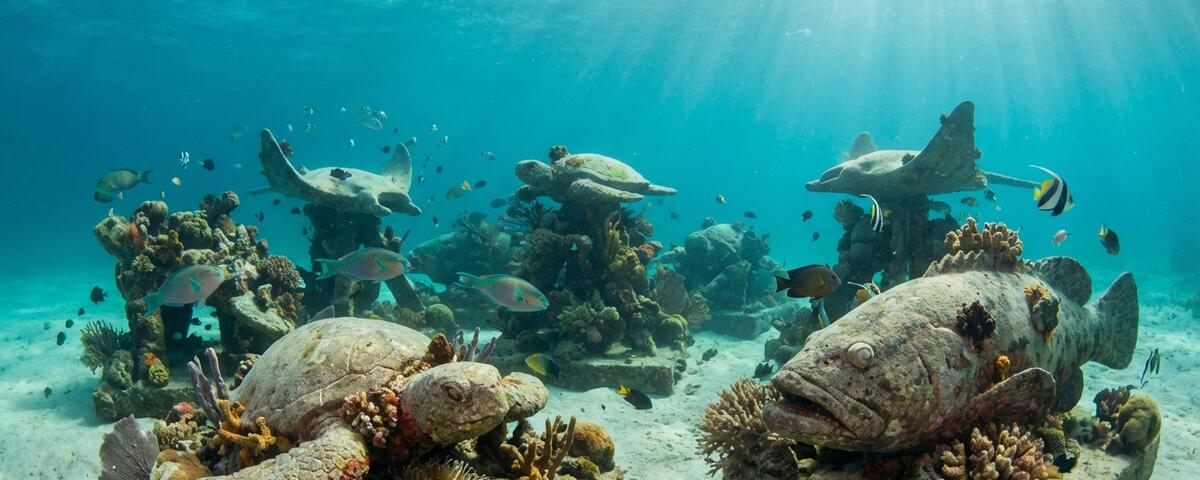
Giant groupers occupy the caverns and overhangs throughout the boulder field. Some of these fish are genuinely large, well over a metre, and they have become habituated enough to divers that they hold position rather than retreating when you approach. You will often find them sitting at cavern entrances like bouncers, watching the traffic pass. Brown-marbled groupers and coral groupers are common in the mid-depth range.
Triggerfish are abundant and territorial, particularly titan triggerfish during nesting season (roughly September through November, though it varies). These fish defend cone-shaped territories above their nests and will charge divers who swim through their airspace. The bites are not dangerous but they hurt, and the real risk is a panicked ascent in response. Swim horizontally away from a charging titan, not upward. Experienced Koh Tao divemasters will point out active nests before the dive.
Turtles frequent Green Rock regularly. Hawksbill turtles feed on the sponges growing across the boulder surfaces, and green turtles rest in the sandy patches between formations. Neither species is guaranteed but both are common enough that a dive without a turtle sighting feels unusual.
The smaller marine life rewards patience and a torch. Moray eels, both giant morays and white-eyed morays, coil in crevices throughout the boulders. Banded sea kraits hunt through the reef, their black-and-white striped bodies threading into gaps too narrow for most fish to follow. Blue-spotted stingrays lie on sandy patches at the base of boulders, often half-buried. Nudibranchs are scattered across the coral-encrusted surfaces, with a dozen species turning up on a careful dive.
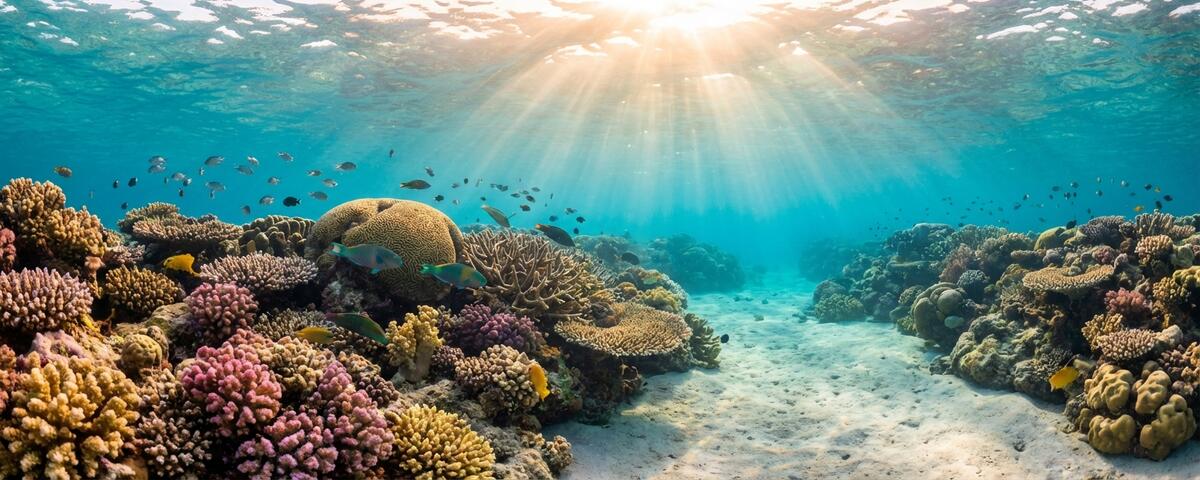
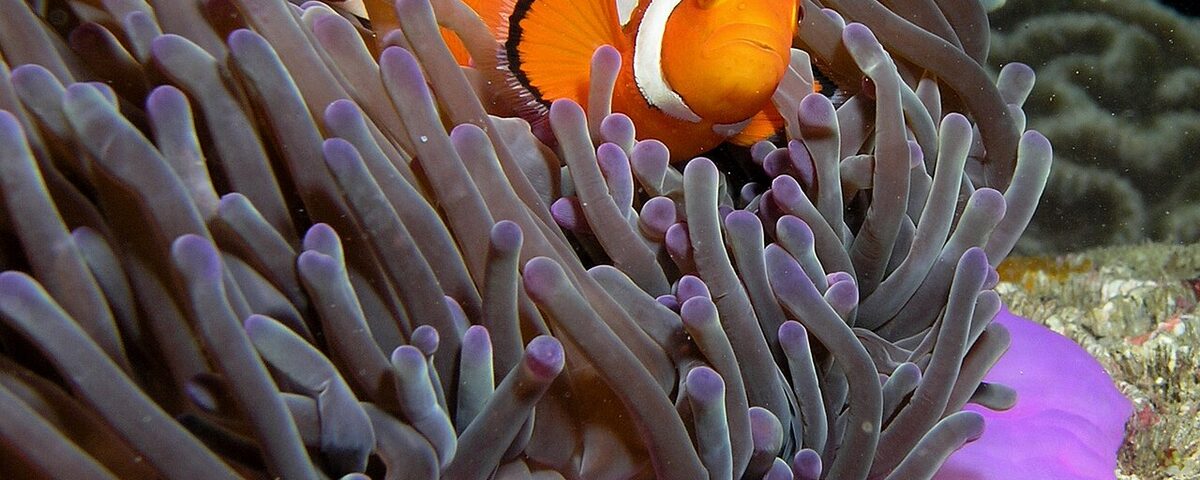
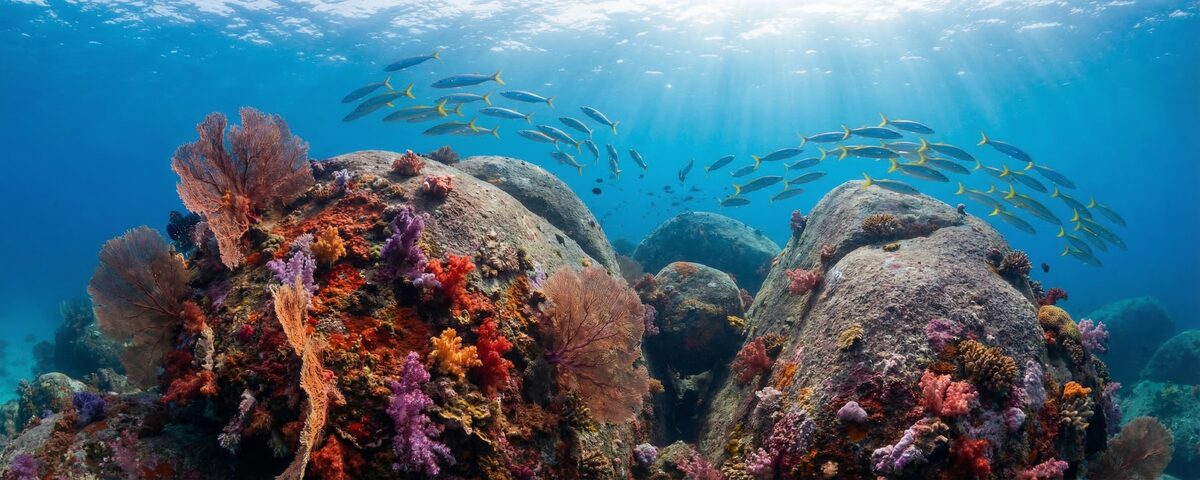
The coral coverage is genuine and varied. Hard corals dominate the shallower sections, with staghorn, brain, and plate corals competing for light. Deeper down, soft corals and sea fans take over, particularly in the current-swept channels between boulders where nutrient-rich water flows. Barrel sponges grow in the overhangs, some large enough to sit inside (though obviously you should not). Anemone colonies with their resident clownfish appear throughout the mid-depth range.
Schooling fish beyond the barracuda include fusiliers, trevally, and occasional batfish. Reef fish density is high across all depths: butterflyfish, angelfish, parrotfish, wrasse, and damselfish in the standard tropical mix, plus less common sightings of pipefish and juvenile sweetlips hiding in coral crevices.
Whale sharks pass through the area during plankton-heavy months, typically March to May and September to November. Green Rock is not the most likely site for an encounter (Chumphon Pinnacles and Southwest Pinnacles see more), but the combination of current and depth means they do appear here. When they do, the dive becomes the one people talk about for years.
Dive Conditions
Green Rock's position on the exposed ocean side of Koh Nang Yuan means conditions here are less predictable than at Koh Tao's sheltered west coast sites. This is part of what makes it interesting and part of what makes it unsuitable for inexperienced divers.
Currents range from absent to strong, and the shift can happen mid-dive. On neap tides and calm days, the site feels almost gentle. You can pick your route through the swimthroughs without worrying about being pushed off course. On spring tides or during monsoon transition periods, current can build to a point where swimming against it becomes impractical and the correct approach is to work with it, using the boulders as shelter and timing your crossings between formations.
The boulder topography actually helps with current management. Unlike an open pinnacle where there is nowhere to hide, Green Rock's caverns and overhangs create dead spots where the flow drops to nothing. Experienced divers use these calm pockets to rest, regroup, and plan the next segment. The swimthroughs act as funnels, though: enter one facing into the current and you have an easy exit, enter one running with the current and you may shoot out the other side faster than expected.
Visibility fluctuates more than at most Koh Tao sites. On clear days, particularly during the dry season from March through September, visibility can reach 20 to 25 metres and the boulder landscape looks spectacular from a distance. During plankton blooms or after rough weather, it can drop to 5 metres. Reduced visibility at Green Rock is more problematic than at simpler sites because navigation through the swimthroughs requires spatial awareness that gets harder when you cannot see far ahead.
The depth profile runs from 2 metres at the top of the pinnacle, where the rocks break the surface at low tide, down to 28 metres on the sand at the deepest point. Most of the interesting topography sits between 5 and 20 metres, which is where the swimthroughs and cavern systems are concentrated. The deeper sand at 25 to 28 metres has its own attractions (stingrays, larger groupers, occasional reef sharks) but drains air and no-decompression time quickly.
Water temperature holds between 27 and 30 degrees through most of the year. The Gulf of Thailand does not produce the dramatic thermoclines that Andaman Sea sites experience, so temperature at depth is usually within a degree or two of the surface. A 3mm shorty works for most divers. Those who feel the cold or plan longer dives will prefer a full 3mm suit.
Entry is from a dive boat moored at the site, typically a Thai longtail or a larger purpose-built dive boat depending on the operator. There is no shore entry option. The mooring lines are fixed to the pinnacle top, and descents go directly down the line to the reef. On current days, holding the mooring line during descent is standard practice rather than optional.
⚓ Divemaster Notes
Green Rock is the site I use to gauge whether a diver is ready for the more demanding sites around Koh Tao. If someone handles Green Rock well, they can handle Chumphon Pinnacles or Southwest Pinnacles without me worrying. If they struggle here, I know to stick to the west coast sites for the rest of their trip.
The pre-dive briefing matters more at Green Rock than at almost any other Koh Tao site. I draw a rough map of the boulder layout and mark the three main swimthroughs that we will use. The central chimney drops vertically from about 8 metres to 14 metres between two massive boulders. It is wide enough for one diver at a time in full kit. The eastern swimthrough runs horizontally at around 12 metres and exits onto the open face of the reef. The western passage is the tightest, roughly shoulder-width at the narrowest point, and I only take divers through it who I have already watched demonstrate clean trim and spatial awareness.
Air management is the limiting factor for most divers here. The combination of current, depth variation, and the natural excitement of swimming through caverns burns air faster than people expect. I tell everyone to plan for a 40-minute dive and be pleasantly surprised if they get 50. Anyone dropping below 100 bar before the 30-minute mark gets moved to the shallows for the remainder.
The titan triggerfish nesting season catches people off guard every year. I check for active nests on the first descent and route the dive around them. A titan defending its nest will ignore dive guides it sees daily but charge straight at an unfamiliar diver who drifts overhead. The nest is usually visible as a cleared patch of sand or rubble on a flat surface, often near the top of a boulder around 5 to 8 metres depth.
One thing I wish more divers understood about Green Rock: the site is better on the second dive than the first. The first visit, everyone is processing the layout, trying to remember where they are, dealing with the current. On the second dive, the mental map clicks into place and you start noticing the details. The moray hiding in the crevice at 16 metres. The cleaning station where wrasse pick parasites off groupers. The anemone colony tucked into an overhang on the south side. I always recommend doing Green Rock twice if the schedule allows it.
How to Get to Green Rock
Koh Tao is a small island in the western Gulf of Thailand, roughly 70 kilometres off the coast of Surat Thani province. Getting there involves a ferry from the mainland or from one of the neighbouring islands.
From Bangkok, the fastest route is a flight to Koh Samui (1 hour, Bangkok Airways monopoly so not cheap) followed by a ferry from Samui to Koh Tao (roughly 1.5 to 2 hours on the Lomprayah catamaran or Seatran Discovery). The budget route is an overnight train or bus to Chumphon, then a morning catamaran direct to Koh Tao (1.5 hours from Chumphon pier). The combined bus-and-boat ticket from Bangkok runs around 800 to 1,200 THB and takes 10 to 12 hours total, but it is popular with divers on training-course budgets.
From Koh Tao, Green Rock is a 15 to 20 minute boat ride from Mae Haad pier, the island's main port on the west coast. The site sits just off the northwest tip of Koh Nang Yuan, visible from boats heading north out of Mae Haad harbour. Every dive operator on Koh Tao includes Green Rock in their regular site rotation, though it is typically scheduled on days when conditions on the north side look favourable.
Koh Nang Yuan itself charges an entrance fee for snorkellers and day visitors (currently 100 THB) but this does not apply to divers on boats that moor at Green Rock without landing on the island.
The site is accessible year-round, but the calmest conditions for diving Green Rock typically fall between March and September. October through December can bring rougher seas on the north side of Koh Nang Yuan as the northeast monsoon builds. January and February are variable. Operators will swap Green Rock for a more sheltered site if conditions look unsafe on a given morning.
Gear Recommendations
Full 3mm wetsuit preferred over a shorty due to potential scrapes from tight swimthroughs and coral abrasion near boulder surfaces. Torch strongly recommended for illuminating caverns and overhangs where groupers and morays hide, and for revealing true colours of soft corals in shaded areas. Reef hook not needed (unlike current-swept pinnacles, the boulders provide natural shelter). Wide-angle lens setup ideal for photography given the scale of the boulder formations and schooling barracuda. Nitrox beneficial for extending no-decompression time, particularly if diving the deeper sections beyond 20 metres. SMB mandatory for safety signalling, as currents can push divers away from the mooring point on ascent. Compact dive computer with clear display helpful for monitoring depth changes in the variable topography.
Recommended Dive Operators
Crystal Dive operates the largest dive centre on Koh Tao with multiple boats running daily. They include Green Rock on their advanced fun-dive schedule and their Advanced Open Water course regularly uses the site for deep and navigation training dives. Ban's Diving Resort is one of the longest-running operations on the island (since 1999) with experienced guides who know every swimthrough route at Green Rock. Their boat fleet is well-maintained and they run smaller groups on advanced sites. Big Blue Diving offers Green Rock on their fun-dive programme with an emphasis on marine conservation briefings. They are a good option for divers who want more context about what they are seeing. Roctopus Dive is a smaller, PADI 5-star operation that takes a maximum of four divers per guide at Green Rock, which makes a genuine difference at a site where navigation through tight swimthroughs is the main event. For budget-conscious divers, Davy Jones Locker runs solid fun-dive programmes and prices their Green Rock trips competitively.
Liveaboard Options
Koh Tao does not have a meaningful liveaboard scene in the way that Similan Islands or Komodo does. Nearly all diving here operates from day boats based on the island. A handful of Gulf of Thailand liveaboard routes include Koh Tao as a stop on itineraries that also cover Sail Rock, Chumphon Pinnacles, and Ang Thong Marine Park, but these are relatively uncommon. The standard approach is to base yourself on Koh Tao for 3 to 7 days, book a series of fun dives with a local operator, and request Green Rock specifically on days when conditions on the north side look good. Accommodation on Koh Tao ranges from 300 THB dorm beds to 5,000 THB boutique bungalows. Most dive centres offer package deals combining accommodation with dive courses or fun-dive bundles at discounted rates.