Hin Wong Pinnacle Dive Site
Koh Tao (Gulf of Thailand), Thailand · Near Koh Tao
Overview
Hin Wong Pinnacle sits off Koh Tao's eastern shore, and it is a different animal entirely from the gentle west coast sites that most visitors see first. This submerged granite seamount rises from a sandy seabed beyond 30 metres, topping out around 10 to 12 metres below the surface. No mooring buoy marks the summit on many days. You drop in on a GPS coordinate, descend into blue water, and the pinnacle materialises beneath you like something from a nature documentary. That first glimpse of the rock emerging from the deep is one of those moments that sticks with you.
The site rewards divers who have moved past their Open Water qualification and want something with more teeth. Currents here range from negligible to properly challenging depending on tidal patterns and season, and the depth profile means your no-decompression limits are a genuine consideration rather than a theoretical one. This is not a site where you can switch off and drift along a wall. You need decent buoyancy control, good air management, and the kind of spatial awareness that comes from having a few dozen dives behind you.
What makes the effort worthwhile is the marine life. The combination of depth, current exposure, and offshore position draws species that rarely appear at shallower, more sheltered sites around the island. Pelagic visitors, unusual reef species, and the occasional genuine surprise from the blue make Hin Wong Pinnacle the site that experienced Koh Tao divers talk about over beers. It is not the island's most famous dive, but ask any divemaster which site they would choose if they could only dive one, and this name comes up far more often than the tourist favourites.
The east coast location also means seasonal access. Unlike White Rock or Japanese Gardens on the sheltered west side, Hin Wong Pinnacle is best dived during the southwest monsoon months when the island itself blocks the prevailing weather and the east coast sits in calm, clear water. During the northeast monsoon, the site takes the full force of incoming swells and most operators avoid it. This seasonality is part of the appeal. You cannot dive it every day, so when conditions align, it feels like an event.
Marine Life at Hin Wong Pinnacle
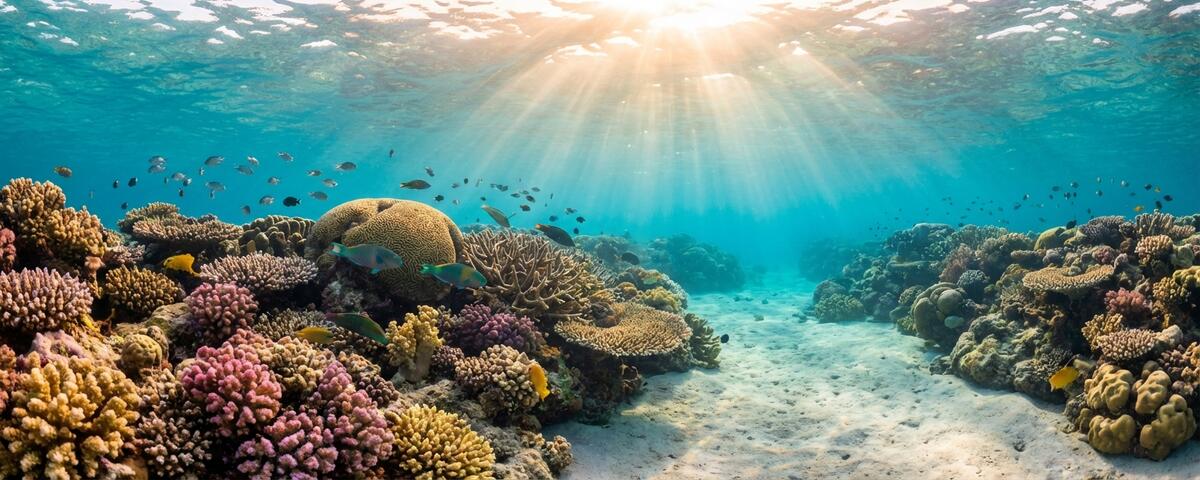
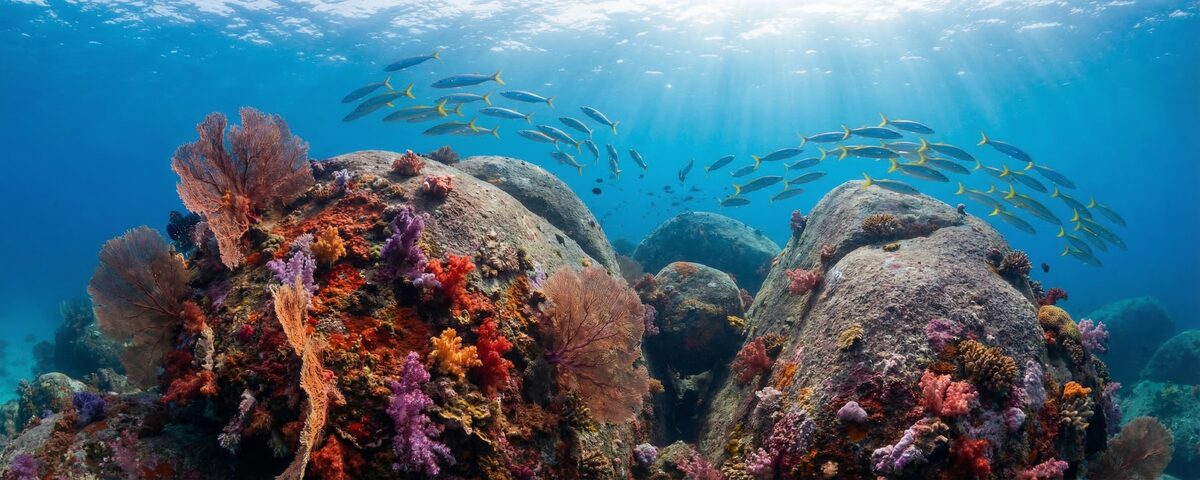
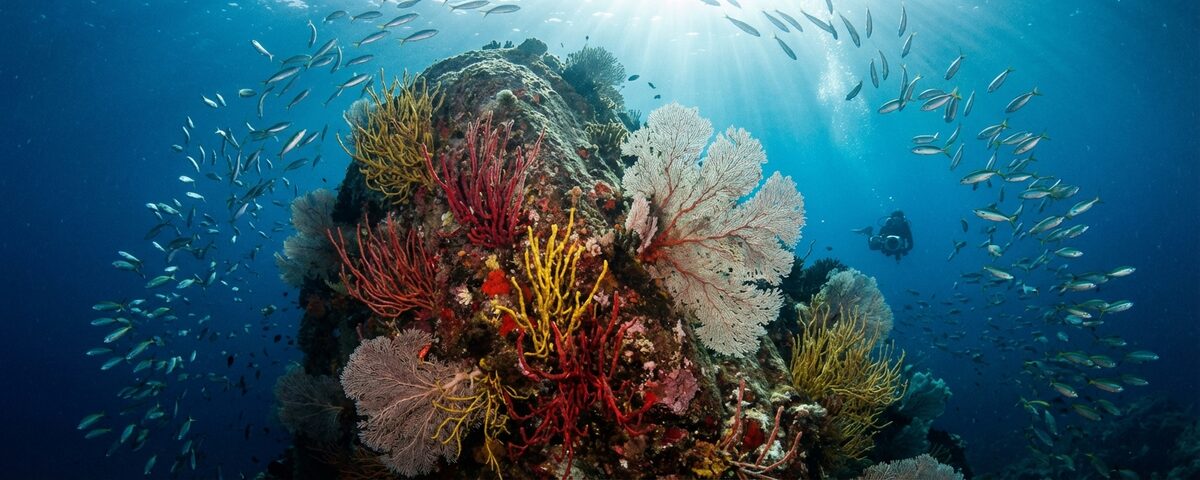
The pinnacle structure itself sets the tone for what lives here. Granite boulders stacked and weathered into ledges, overhangs, and a distinctive trench that cuts through the formation wide enough for a diver to swim through single file. Every surface is colonised. White gorgonian sea fans spread across the current-facing slopes, their delicate lattice structures filtering plankton from the flow. Sea whips grow in dense clusters on the deeper sections below 20 metres, bending with the current like underwater grass in a breeze. Hard coral coverage is patchy compared to the west coast sites, but what grows here is robust, adapted to the stronger water movement.
The fish life splits into two categories at Hin Wong Pinnacle, and both are worth the dive on their own. Close to the reef, the residents are a mix of the familiar and the unexpected. Clown triggerfish, with their psychedelic patterning, patrol territories on the rocky shelves. These are uncommon at other Koh Tao sites and their presence here reflects the deeper, more current-swept environment they prefer. Razorfish hang vertically in small schools near sandy patches between boulders, their bodies oriented head-down in that peculiar way that makes them look like they are standing on their noses. Scorpionfish sit motionless on ledges, perfectly camouflaged until you are close enough to see their eyes tracking you. Giant moray eels occupy crevices throughout the formation, some large enough that their heads alone are the size of a football.
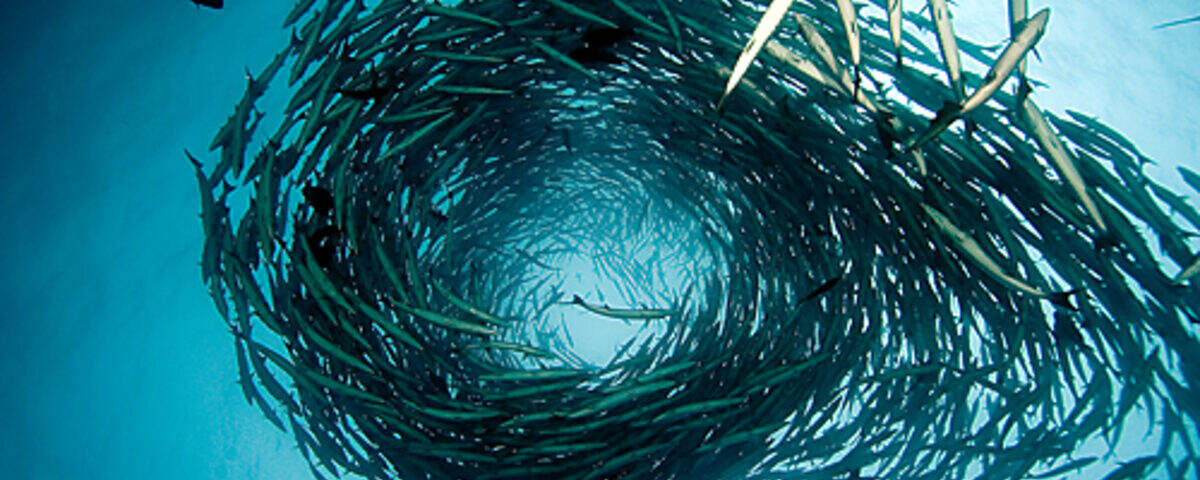
Out in the blue, the pelagic traffic is where Hin Wong Pinnacle separates itself from the pack. Schools of fusiliers form shimmering curtains above the pinnacle summit, shifting direction in unison when trevally cut through on hunting passes. Giant trevally are regulars here, proper big specimens that cruise the drop-offs with the unhurried confidence of apex predators. Yellowtail barracuda school in loose formations, sometimes condensing into tight spirals when they sense a threat. Queenfish and rainbow runners pass through periodically, and on days when the current is running and the visibility cooperates, you can sit at 18 metres watching the parade without swimming a stroke.
Banded sea kraits appear here more frequently than anywhere else around Koh Tao. They are venomous but completely docile towards divers, and watching one weave between coral heads hunting for small fish is mesmerising. Green turtles visit, though less reliably than at shallower west coast sites. The deeper water and stronger currents mean turtle sightings are a bonus rather than a guarantee.
On exceptional days, the site produces genuine surprises. Cobia cruise past in small groups. Whale sharks have been spotted here during plankton-rich periods, though calling them anything other than rare would be misleading. What you can count on is a dive that feels wilder and more unpredictable than the standard Koh Tao experience. The current brings nutrients, the nutrients bring baitfish, and the baitfish bring everything else.
Dive Conditions
Hin Wong Pinnacle is more exposed than any of the popular west coast sites, and the conditions reflect that. Current is the defining variable here. On calm days, you descend directly onto the pinnacle and explore at leisure, circling the formation and ducking through the trench with no resistance. On days when the current is running, the dive becomes a different proposition entirely. Moderate flow pushes you along the reef, which is manageable and even enjoyable, turning the dive into a natural drift where the pinnacle slides past and fish life concentrates in the eddies. Strong current requires you to tuck behind the pinnacle, use the rock as shelter, and time your movements between exposed sections carefully. Divemasters who know the site will read the current before descent and plan routes accordingly.
Visibility ranges from 5 to 20 metres, with the best clarity typically during the southwest monsoon season from June to September. Incoming currents from the open Gulf push cleaner water onto the east coast during these months, and visibility averaging 12 to 15 metres is common. When conditions are optimal, you get 20-metre visibility that lets you see the entire pinnacle structure from a distance during descent, which is a spectacular sight. On poor days, green particulate reduces visibility to 5 to 8 metres, and the dive shifts from panoramic to intimate, focusing on the reef details and macro life close to the rock.
Water temperature holds steady between 27 and 30 degrees Celsius through the year. Thermoclines are more common here than at shallower sites because of the depth. Dropping below 22 metres, you occasionally hit a cooler layer that can be 2 to 3 degrees below the surface temperature. It is not dramatic, but it catches people off guard when they have been comfortable in warm water for the first half of the dive.
The best window for diving Hin Wong Pinnacle runs June to September. The island blocks the southwest monsoon winds, leaving the east coast calm while the west side takes the weather. This is the opposite of the pattern at sites like White Rock, which are at their best from March to May when the east coast is more exposed. October through February brings the northeast monsoon, which hits the east coast directly. Waves, swell, and reduced visibility make the site inaccessible on many days during this period.
Depth is the other consideration. The interesting sections start at 12 metres and extend beyond 30. Most recreational dive profiles work the 14 to 24-metre range, which gives 30 to 40 minutes of bottom time on a standard aluminium tank. Divers on Nitrox 32 gain meaningful extra time here, and the site is one of the best arguments for getting your Enriched Air certification before visiting Koh Tao. Deep diver certification is useful for exploring the lower flanks beyond 24 metres, where the larger gorgonians and sea whip gardens grow densest.
⚓ Divemaster Notes
The single biggest factor in whether Hin Wong Pinnacle delivers a great dive or a mediocre one is the current call. I check conditions at the surface before committing to the descent, and if the flow is ripping, I adjust the plan on the spot rather than sending divers into a fight they will lose.
On calm days, I run a full circumnavigation starting on the deeper south side at 22 to 24 metres. The largest gorgonian fans grow here, oriented perpendicular to the prevailing current, and the light at depth gives them an almost ghostly quality against the blue background. Working north and up, the trench at about 18 metres is the site's signature feature. It is wide enough for single file, maybe 8 metres long, and exits onto the pinnacle's most densely colonised face. I slow groups down through here because people rush through swimthroughs when they should be looking at the walls.
When current is moderate, I use the pinnacle as a shield. Drop on the upcurrent side, descend behind the rock, work the sheltered face, then let the current carry the group around the exposed side where fish life concentrates in the flow. The eddies on the downcurrent face always hold fish. Trevally and barracuda stack up here because baitfish get trapped in the turbulence, and watching the predation from a comfortable hover behind a boulder is the best show the site offers.
Strong current days, I keep groups tight and high. We stay between 12 and 18 metres, use the pinnacle top as shelter, and focus on the reef life rather than attempting the deeper circuit. Even experienced divers burn through air fast when fighting current at 24 metres, and cutting a dive short at this site means a safety stop in open water with nothing to hold onto. Not ideal.
One thing I always mention: deploy your SMB before ascending. There is no permanent mooring buoy at this site on many days, and the boat needs to see you coming up. The surface can have boat traffic from longtails and fishing vessels, and the east coast does not have the same diver awareness that west coast boat operators have developed through years of heavy traffic.
For divers on Nitrox, this site is where enriched air earns its certification fee. The difference between 25 minutes of bottom time on air and 35 minutes on Nitrox 32 at 22 metres is the difference between a quick loop and a proper exploration. I always recommend it here.
How to Get to Hin Wong Pinnacle
Getting to Koh Tao follows the same route regardless of which dive site you are targeting. From Bangkok, take a night train or VIP bus to Chumphon (8 to 10 hours), then a Lomprayah or Songserm high-speed catamaran to Koh Tao (1.5 to 2 hours). Combined tickets run 1,000 to 1,500 THB from Khao San Road agencies or online booking platforms. Flights from Bangkok to Chumphon or Surat Thani airports cut the mainland travel to an hour, though you still need the ferry connection. From Koh Samui, the catamaran crossing takes about 2 hours. From Koh Phangan, roughly 1 hour.
Once on Koh Tao, Hin Wong Pinnacle is accessed from Hin Wong Bay on the island's east coast. This is a key difference from west coast sites where you simply board a boat at Mae Haad or Sairee. Most operators arrange a short taxi or pickup truck ride across the island to Hin Wong Bay pier, then a shuttle boat out to the dive boat moored offshore. The total travel from your accommodation to the water takes 30 to 45 minutes depending on where you are staying. Some divers choose to stay in or near Hin Wong Bay to cut the commute, though accommodation options there are limited compared to Sairee or Mae Haad.
The boat ride from Hin Wong Bay to the pinnacle site takes around 15 to 20 minutes. Because the east coast is less sheltered, the boat ride itself can be bouncy in anything other than calm conditions, which is part of why operators only run the trip when conditions are suitable.
Accommodation on Koh Tao centres on three areas. Sairee Beach has the most options, from 300 THB dorm beds to 3,000 THB air-conditioned bungalows. Mae Haad near the ferry pier is practical. Chalok Bay on the south coast is quieter. For dedicated east coast diving, Hin Wong Bay has a handful of budget to mid-range guesthouses that put you within walking distance of the pier. The island has ATMs, pharmacies, small clinics, and a recompression chamber operated by the SSS Network.
Gear Recommendations
A 3mm full wetsuit is standard for Hin Wong Pinnacle. The deeper profile means you spend more time below 15 metres than at shallower sites, and the occasional thermocline at depth makes a full suit more practical than a shorty. Some divers comfortable in cooler water get by with a rashguard in the warmest months, but the potential for a 2 to 3 degree temperature drop below 22 metres catches people out.
Dive computer is not optional here. The multi-level profile between 12 and 28 metres requires real-time no-decompression tracking that dive tables handle poorly. The depth and the tendency for divers to lose track of time watching pelagics in the blue make a computer essential rather than merely recommended. Rental computers are available from all operators on the island.
Surface marker buoy is mandatory at this site. There is no permanent mooring structure on many days, boats relocate based on current and conditions, and surfacing without a visible marker in an area with fishing boat traffic is genuinely risky. Carry your own SMB and know how to deploy it. If you do not own one, every dive shop on Koh Tao rents them cheaply.
Nitrox certification and a tank of EANx 32 are strongly recommended. At the working depths of this site, enriched air provides 10 to 15 minutes of additional no-decompression time, which makes the difference between a rushed visit and a dive that lets you properly explore the formation. Most operators on the island fill Nitrox.
Torch adds value even on daytime dives. The overhangs and crevices where moray eels, scorpionfish, and crustaceans shelter are dim at 20-plus metres, and the trench swimthrough is dark enough that a focused beam reveals detail you would otherwise miss. For photographers, a wide-angle setup is the right call. The pinnacle structure, schooling fish, and gorgonian fans are the hero compositions. Macro opportunities exist in the crevices, but the site's character is big and dramatic rather than small and intricate.
Recommended Dive Operators
Big Blue Diving runs regular east coast trips from their Sairee base and their divemasters know the pinnacle's seasonal patterns inside out. They adjust routes based on current direction and typically pair Hin Wong Pinnacle with a second east coast site for a full morning of diving. Their briefings cover current management in useful detail rather than the generic overview you get from less experienced operations. Crystal Dive schedules east coast trips during the southwest monsoon window and sends experienced guides who can read the conditions quickly on descent. Their group sizes are managed well, which matters at a site where current can separate divers who are not paying attention. New Heaven Dive School brings their conservation focus to every site, including Hin Wong Pinnacle. Their guides identify species and coral types that other operations swim past without comment, and the post-dive briefings are genuinely educational rather than perfunctory. They run smaller groups by default, which suits this site's demands. Roctopus Dive has a technical diving pedigree that shows at deeper sites. Their divemasters spend more time on the lower flanks where the gorgonians and sea whip gardens are densest, and they carry species identification slates. If you want the macro and reef ecology perspective rather than just the big fish show, Roctopus delivers. Ban's Diving Resort includes east coast trips in their weekly rotation and their package deals combining accommodation with diving represent good value for week-long stays focused on the advanced sites.
Liveaboard Options
No liveaboard operations use Hin Wong Pinnacle as a feature site. The Gulf of Thailand liveaboard market is small compared to the Andaman Sea, and the few vessels that run Gulf itineraries focus on Sail Rock and Chumphon Pinnacles as headline destinations, with Koh Tao sites appearing as secondary stops.
MV Nautica and similar operators occasionally include east coast Koh Tao sites on 3 to 4-night Gulf routes running between March and October, though scheduling is weather-dependent and these trips are not as regular as Similan Islands or Komodo liveaboard departures.
The practical approach for diving Hin Wong Pinnacle is shore-based on Koh Tao. Stay on the island, book east coast day trips during the June to September window, and combine Hin Wong Pinnacle with other advanced sites like Green Rock and Tanote Bay. A week on the island costs less than a single liveaboard night and gives you the flexibility to wait for ideal conditions before committing to the east coast crossing.