Shark Island Dive Site
Koh Tao (Gulf of Thailand), Thailand · Near Koh Tao
Overview
Shark Island sits roughly 800 metres off the southeastern tip of Koh Tao, a granite islet that breaks the surface in a formation locals say resembles a shark's dorsal fin. The Thai name, Gong Sai Deang, translates to something far less dramatic, but the English name stuck and it draws divers who expect sharks. They sometimes get them. More reliably, they get one of Koh Tao's most rewarding reef dives, a site where current brings colour and life in quantities that the island's calmer, more sheltered bays simply cannot match.
The underwater topography is all granite. Massive boulders tumble from the island's base down to a sandy bottom at 20 to 28 metres, creating a labyrinth of swimthroughs, overhangs, and crevices that change character completely depending on which side of the island you dive. The northern face is more sheltered, with gentler slopes and shallower profiles suited to less experienced divers on calm days. The southern and eastern exposures catch the full force of the Gulf of Thailand's currents, and this is where the site shows its real personality.
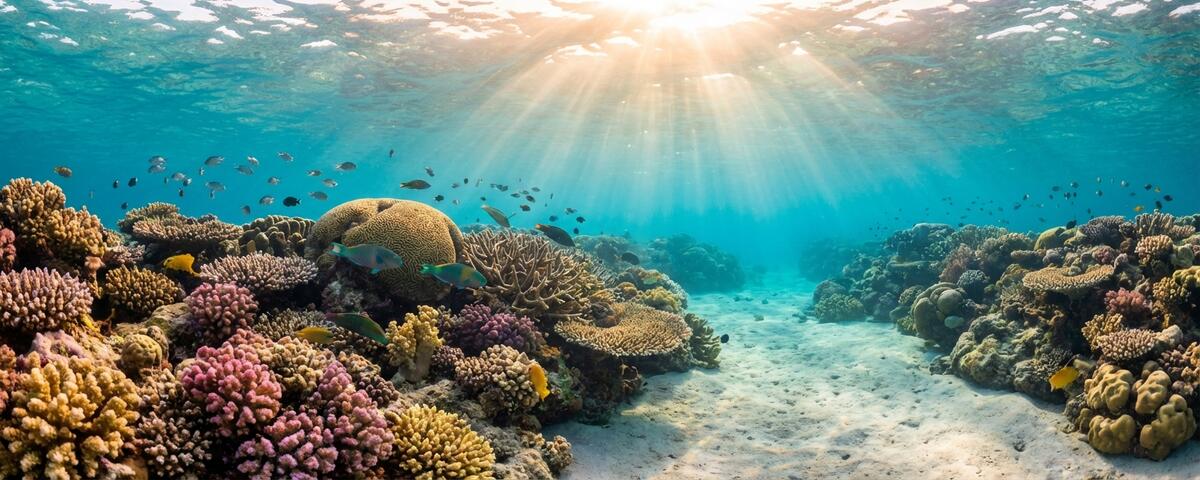
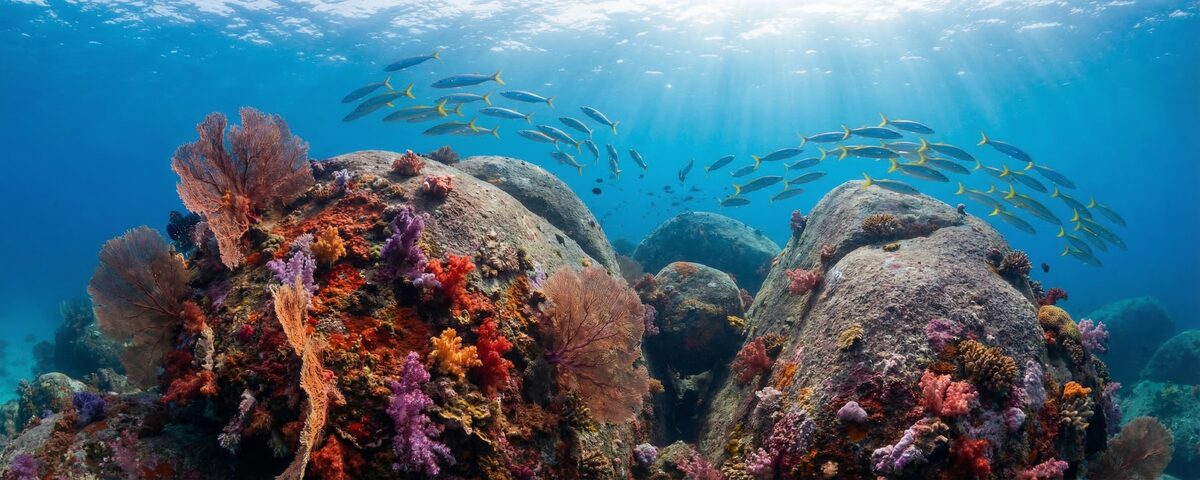
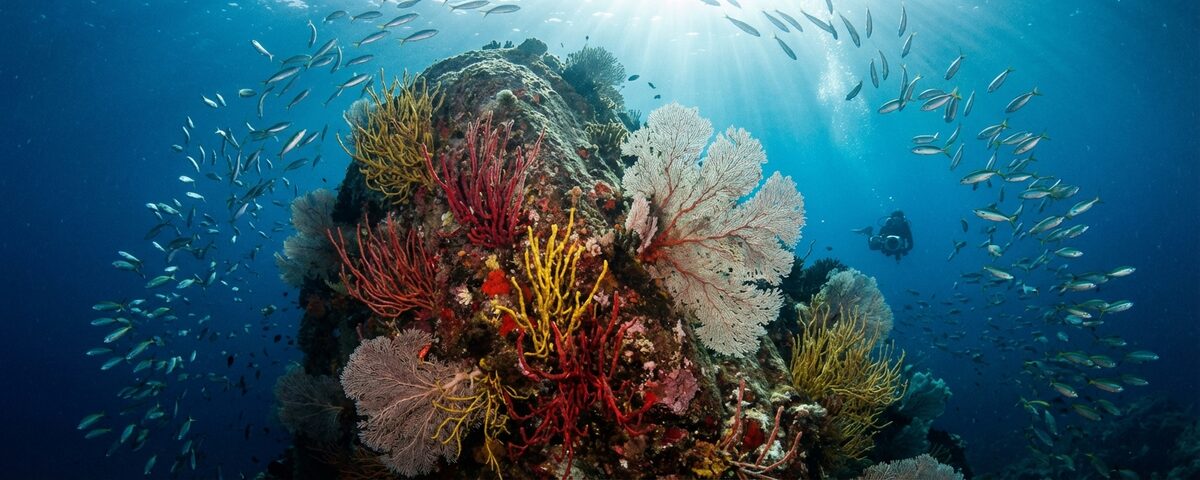
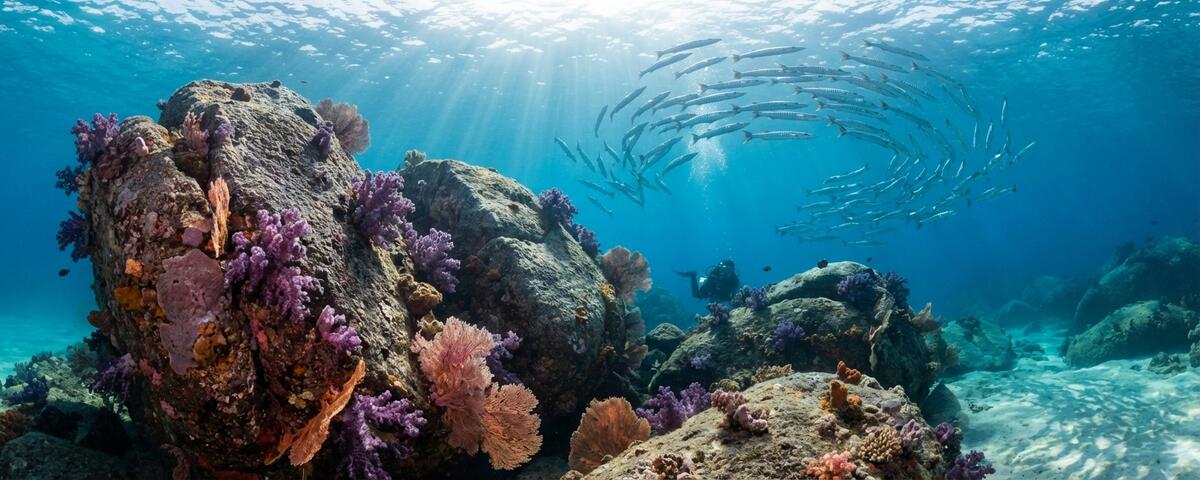
What separates Shark Island from Koh Tao's more popular training sites is the coral coverage. The current that makes this spot tricky for beginners also delivers nutrients that feed an unusually dense soft coral community. Purple soft tree corals drape the granite surfaces in patches so vivid they look artificial. Gorgonian sea fans extend from the rock faces at depth, their lattice structures oriented perpendicular to the prevailing flow. Barrel sponges, brain corals, whip corals, and hard coral formations fill the gaps between them. The overall effect is a reef that feels more like the Andaman Sea than the Gulf of Thailand, which is precisely why experienced Koh Tao guides rate it among the island's top three sites.
The island itself is uninhabited. No beaches to speak of, just bare granite above the waterline and a few scraggly bushes clinging to the rock. Below the surface is where the interest lies, and it starts immediately. You can be in 3 metres of water surrounded by reef fish within seconds of dropping off the boat. The profile then deepens as you work around the island's perimeter, and most divers spend their bottom time between 10 and 20 metres where the coral density peaks and the fish aggregations are thickest.
For divers based on Koh Tao's southern coast, particularly around Chalok Bay, Shark Island is the local site. The boat ride takes 10 to 15 minutes. From Sairee Beach or Mae Haad on the western side, it is closer to 20 minutes. Either way, it is a short commute to a site that consistently outperforms expectations.
Marine Life at Shark Island
The soft coral is the first thing that registers. Purple tree corals (Dendronephthya species) grow across the granite boulders in clusters that catch the current and sway with it, their branches thick enough to create a purple haze across entire sections of reef. They are most concentrated on the current-exposed southern face between 8 and 18 metres, and on a good visibility day the colour contrast against the grey granite and blue water is genuinely striking. These are not the bleached, struggling corals you find at heavily dived training sites. The current feeds them, and it shows.
Gorgonian fans grow at the deeper limits of the boulder field, 15 to 25 metres, where they catch plankton from the passing water column. Some specimens reach over a metre across. Whip corals extend from overhangs and crevice edges. Between the soft corals, hard coral species fill in: branching Acropora, massive Porites, brain corals, and encrusting species that coat every surface the soft corals have not already claimed.
Schooling fish are a constant presence. Great barracuda patrol the edges of the reef, solitary or in small groups, their silver bodies catching light as they turn. Schools of fusiliers stream past in shifting formations, sometimes numbering in the hundreds. Yellowtail barracuda form tighter groups that circle specific boulder formations in a holding pattern. Batfish drift in mid-water, often approaching divers with that peculiar batfish curiosity that makes them seem almost tame.
Blacktip reef sharks occasionally cruise the deeper sections, typically along the sandy bottom at 20 to 25 metres. Sightings are not guaranteed on every dive, but they happen with enough regularity that guides mention them during briefings as a genuine possibility rather than wishful thinking. The sharks here are not large. Juveniles and sub-adults make up most encounters, and they tend to keep their distance.
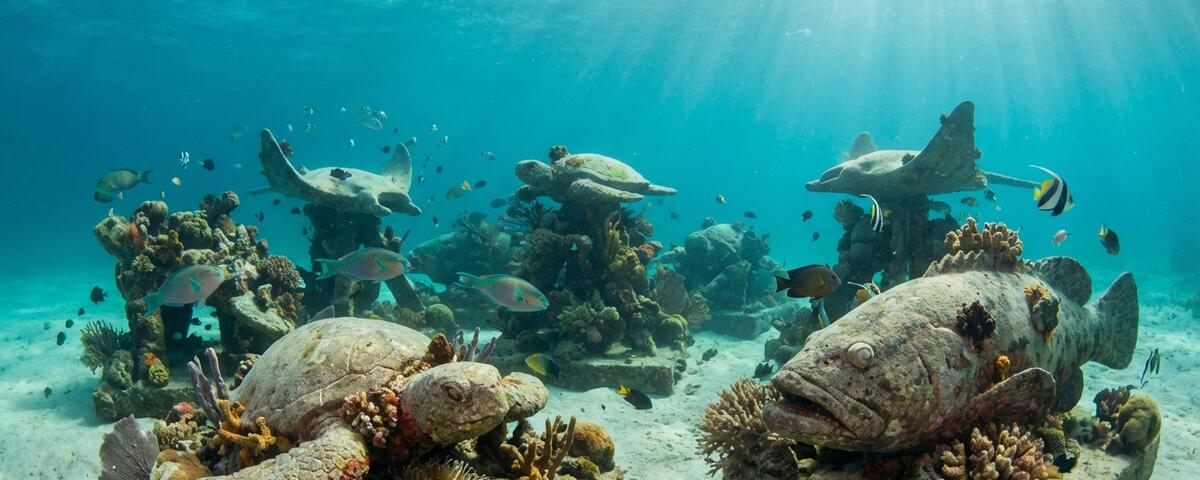
Sea turtles are reliable residents. Hawksbill turtles feed on sponges across the boulder field, and green turtles rest in the sandy channels between rocks. On a typical dive you might see one or two, sometimes more. They are habituated to divers and rarely bolt unless approached too closely.
The macro life deserves more attention than most divers give it. Nudibranchs in several Chromodoris species populate the rock surfaces, their bright colours making them easier to spot than at many sites. Banded boxer shrimp occupy crevices in the granite, visible with a torch. Moray eels, both giant and yellow-margin species, rest in holes with just their heads protruding. Blue-spotted stingrays sit on sandy patches between boulders, often half-buried and easy to miss until they move.
Banded sea kraits (sea snakes) are a regular sighting. They are venomous but completely non-aggressive toward divers, and watching one hunt through the reef crevices is one of those experiences that stays with you. They surface to breathe periodically, creating a looping dive pattern as they work the reef.
Whale sharks pass through during plankton season, roughly March to September. The probability on any single dive is low, but the site's current-exposed position makes it one of Koh Tao's better locations for unexpected encounters with the big filter feeders.
Dive Conditions
Current defines the diving experience at Shark Island more than at any other site around Koh Tao. The islet sits in open water where Gulf of Thailand tidal movements hit it without the buffering effect that the main island provides to sites like Japanese Gardens or Tanote Bay. On a calm day, the current is mild and the site is accessible to confident Open Water divers. On a strong current day, this becomes an advanced dive where maintaining position against the flow requires fitness, good buoyancy control, and the willingness to work for your air.
The current is also what makes the site worth diving. Strong flow brings cleaner water, and the best visibility at Shark Island correlates directly with current strength. On good days, visibility stretches to 25 or even 30 metres, which is exceptional for the Gulf of Thailand. When the current drops, visibility tends to fall with it, sometimes to 5 or 10 metres with suspended green particulate that reduces the experience considerably. Guides who know the site well can often read the conditions from the surface before committing to the dive.
Water temperature holds between 27 and 30 degrees Celsius year-round. The Gulf does not produce the sharp thermoclines that surprise divers on Thailand's Andaman coast, so you will not hit a cold layer at depth. A 3mm wetsuit or shorty is sufficient for all conditions. Some divers in the warmer months (April to June) dive in just a rashguard, though neoprene provides useful protection against the granite surfaces.
The best diving window runs March to September, when the Gulf's eastern coast is sheltered from the northeast monsoon. Sea conditions on the surface are calmer, visibility averages higher, and whale shark activity peaks. October to December brings the northeast monsoon, which can produce rough surface conditions and reduced visibility. Operators sometimes skip Shark Island during the roughest monsoon weeks, redirecting to more sheltered western-coast sites. January and February are transitional months with improving conditions.
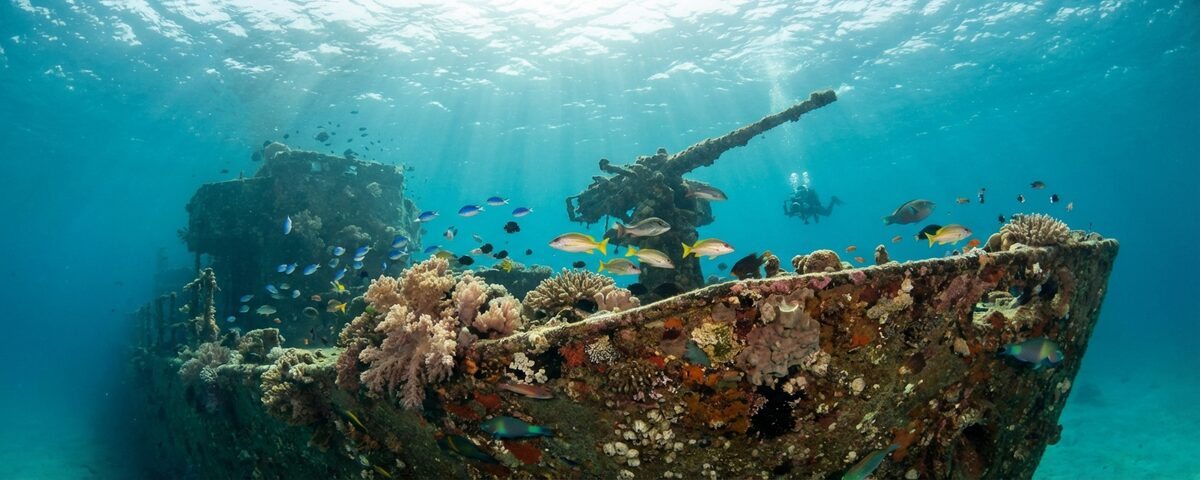
Depth management requires attention. The boulders create an uneven profile where you can drop from 10 metres to 22 metres by swimming through a single gap between rocks. The sandy bottom on the deeper side reaches 25 to 28 metres, and there is a sunken vessel (the MV Trident) sitting at around 30 to 35 metres off the southern face, which draws deep-certified divers but is beyond recreational limits for standard Open Water certification.
Entry is by giant stride from the dive boat. Boats typically moor on the sheltered northern side or drift above the site, depending on current conditions. On current days, expect a drift dive where the boat picks you up downcurrent after your safety stop.
⚓ Divemaster Notes
Route selection at Shark Island depends entirely on what the current is doing, and I make that call within the first minute of the dive. If current is running south to north (the most common pattern), I drop the group on the southern tip at around 18 to 20 metres and let the drift carry us along the eastern or western face, working upward as we go. The soft coral coverage on the southern exposure in current is the best show on Koh Tao, and drift conditions mean the group covers more ground with less effort.
When current is light or absent, I run a circumnavigation starting on the northern sheltered side, working clockwise around the island. This lets us hit the deeper sections on the exposed faces while we have the air, then finish on the shallower northern slope where the coral gardens and turtle resting spots make a pleasant end to the dive. Full circumnavigation takes around 45 minutes at a comfortable pace.
I brief every group about the titan triggerfish. They nest on the sandy patches between boulders at 12 to 20 metres, and during nesting season (roughly May to August) they are genuinely aggressive. The territory is cone-shaped, expanding upward from the nest. If someone gets charged, the move is lateral, not vertical. Swim sideways out of the territory. Going up only takes you deeper into the cone.
For the deeper sections and the MV Trident wreck at 30 to 35 metres on the southern side, I only take divers with Deep Diver certification or equivalent experience. The wreck is an interesting bonus for those qualified, but it is not the main attraction and I do not let it become a distraction from the excellent reef diving above it.
Air consumption runs higher here than at sheltered Koh Tao sites. The current, the depth, and the general excitement all contribute. I brief groups to expect 35 to 50 minute dives depending on depth profile and conditions. Starting with 200 bar and signalling at 70 to 80 bar keeps everything manageable. I always carry a surface marker buoy and require all divers to carry their own. In current, separation from the boat during ascent is a real possibility, not a theoretical one.
The safety stop is best done on the northern shallows at 5 metres, where the granite slopes gently and there is enough reef life to keep everyone occupied. Turtles frequently rest in this area, which makes the mandatory three minutes pass quickly.
How to Get to Shark Island
Koh Tao sits in the Gulf of Thailand, part of Surat Thani province. Reaching the island means getting to the Thai mainland first, then catching a ferry.
From Bangkok, the most practical route is a night train or bus to Chumphon (8 to 10 hours), then a Lomprayah or Songserm high-speed catamaran to Koh Tao (roughly 1.5 to 2 hours). Combined tickets cost around 1,000 to 1,500 THB. Flying from Bangkok to Chumphon or Surat Thani airports cuts the journey significantly, though you still need the ferry leg from the mainland.
From Koh Samui, the catamaran takes about 2 hours and costs 600 to 800 THB. From Koh Phangan, it is roughly 1 hour. Inter-island ferries run multiple times daily during high season, with reduced frequency during the monsoon.
Once on Koh Tao, Shark Island is accessed by dive boat. From Chalok Bay on the south coast (the closest departure point), the ride takes just 10 to 15 minutes. From Mae Haad pier or Sairee Beach on the western coast, expect 15 to 20 minutes. Most dive operators include Shark Island in their regular site rotation, typically as part of a two-dive morning trip.
Accommodation clusters around three main areas: Sairee Beach (largest selection, most operators), Mae Haad (ferry pier, practical), and Chalok Bay (quieter, closest to Shark Island). Budget rooms start at 300 to 500 THB per night, mid-range bungalows run 1,000 to 3,000 THB. The island has basic amenities including ATMs, pharmacies, small clinics, and a recompression chamber operated by the SSS Network.
Gear Recommendations
A 3mm full wetsuit handles the water temperature and provides useful protection against granite contact. The boulder surfaces are rough and it is easy to brush against rock in the swimthroughs and tight gaps between formations. Dive computer is not optional at this site given the variable depth profile; you can transition from 8 to 22 metres through a single boulder gap, and the multi-level nature of the dive means no-decompression limits change constantly.
Surface marker buoy is essential. Shark Island sits in open water with current, and drifting away from the boat during ascent is a realistic scenario, not an edge case. Boats need to spot you on the surface, and an SMB deployed at 5 metres during the safety stop gives the captain time to position.
For photography, wide-angle is the primary choice here. The soft coral gardens, the boulder formations, and the schooling fish all favour a wide field of view. A fisheye or rectilinear wide-angle with a dome port captures the scale of the purple coral coverage against the granite landscape. Bring a torch or video light for the overhangs and crevices, where moray eels, shrimp, and nudibranchs benefit from artificial illumination. Macro shooters will find subjects, particularly nudibranchs and crustaceans in the crevices, but this is primarily a wide-angle site.
Reef hooks are not used at Koh Tao dive sites and are not appropriate here. Gloves are prohibited at most Thai dive sites to discourage coral handling. Current management relies on good finning technique and using the boulders as natural shelter.
Recommended Dive Operators
New Heaven Dive School operates from Chalok Bay, making Shark Island their home reef. The 10-minute boat ride means they know this site better than most, and their conservation focus (they run a marine conservation programme and reef monitoring) translates into guides who understand the ecology of what you are looking at. They limit group sizes and run a relaxed two-dive-per-day schedule that avoids the early morning rush. Crystal Dive is one of Koh Tao's largest operations with professional PADI instruction and regular fun dive trips to Shark Island. Their guide team handles mixed-ability groups well, routing less experienced divers to the sheltered northern face while advanced groups tackle the current-exposed southern side. Big Blue Diving has the boat fleet and experience to run consistent Shark Island trips, and their guides are strong on current management, which matters at this site. Scuba Shack runs small-group trips from Sairee Beach with personalised guiding that pays off at a site where route selection determines the quality of the dive. Eco Koh Tao combines diving with marine conservation work and runs regular monitoring dives at Shark Island, offering a different perspective on the reef for divers interested in the science behind the scenery.
Liveaboard Options
Koh Tao is a shore-based dive destination, and no liveaboards operate exclusively around the island. A handful of Gulf of Thailand liveaboard itineraries pass through the area on routes between Chumphon and the Ang Thong Marine Park, occasionally including Shark Island and the other Koh Tao offshore sites in 3 to 4-night trips. MV Nautica and similar vessels run these routes seasonally, combining Shark Island with Chumphon Pinnacles, Sail Rock, and Southwest Pinnacles in a single itinerary. These trips are far less common than Andaman Sea liveaboard operations. For most divers, staying on Koh Tao and diving Shark Island from day boats is the standard approach, and the short boat ride (10 to 20 minutes depending on departure point) makes liveaboard access unnecessary for this particular site.