Southwest Pinnacles Dive Site
Koh Tao (Gulf of Thailand), Thailand · Near Koh Tao
Overview
Southwest Pinnacles sits roughly 7 kilometres off the southwestern coast of Koh Tao, a cluster of granite peaks rising from a sandy seabed at 30 metres to within 5 metres of the surface. The site is one of Koh Tao's premier offshore dives, and for good reason. Where Chumphon Pinnacles draws the deep diving crowd and Sail Rock pulls divers between islands, Southwest Pinnacles occupies a middle ground that rewards both wide-angle spectacle and careful reef exploration in a single dive.
The formation consists of roughly seven separate pinnacles arranged in a loose chain. The main pinnacle is the largest, topping out at around 5 metres, and the surrounding peaks drop to various depths between 8 and 25 metres. Between them, sandy channels and rocky ridges create a maze-like underwater landscape that changes character depending on where you are in the formation and what the current is doing.
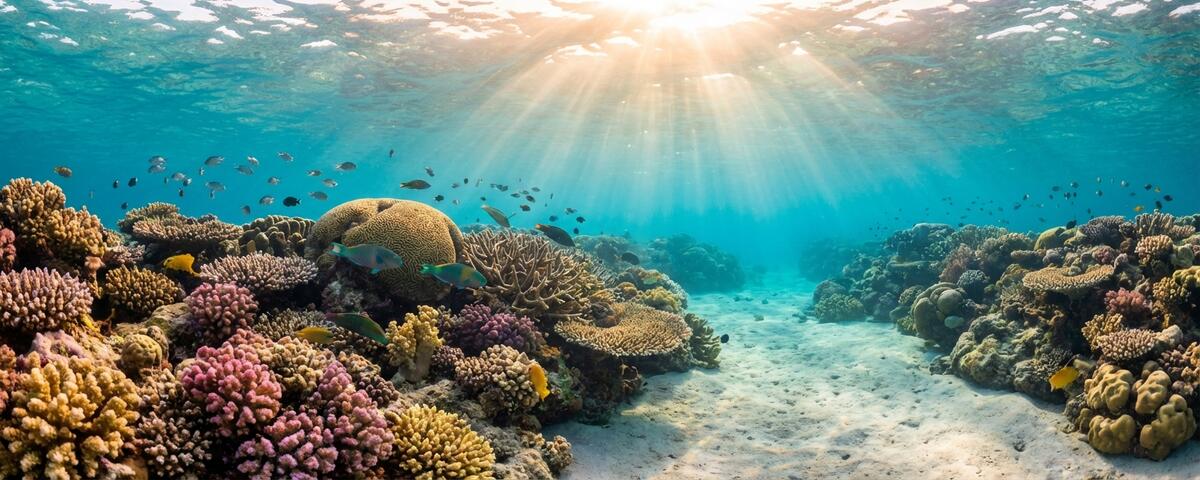
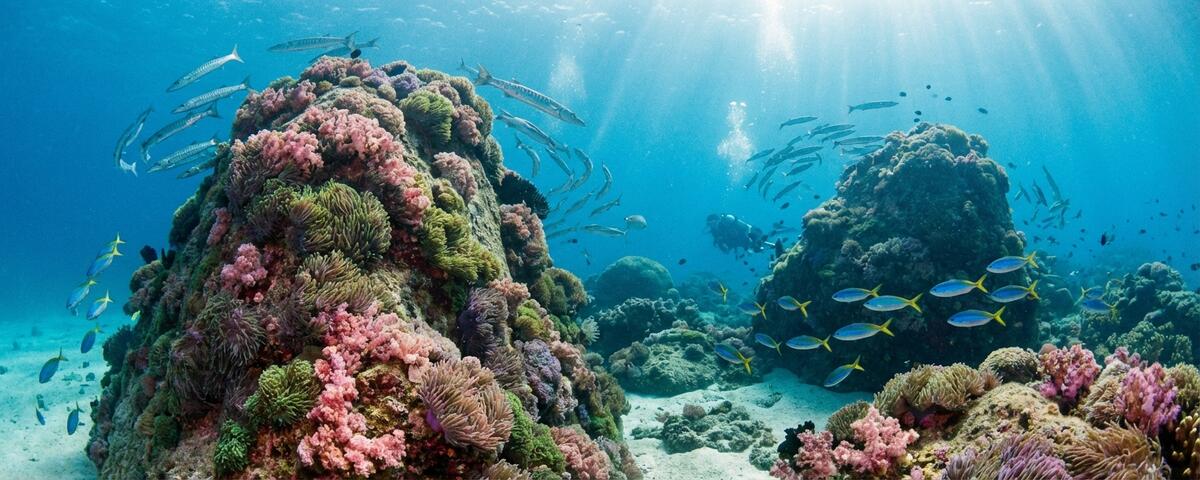
What makes this site immediately distinctive is the anemone coverage. The upper sections of every pinnacle are carpeted in sea anemones, dense fields of them in greens, pinks, blues, and purples. Resident anemonefish dart between their hosts by the hundred. On a clear day with good light, the colour saturation on the shallow tops of these pinnacles is genuinely startling. It looks overdone, like someone cranked the contrast in a photo editor. But that is just what the reef looks like.
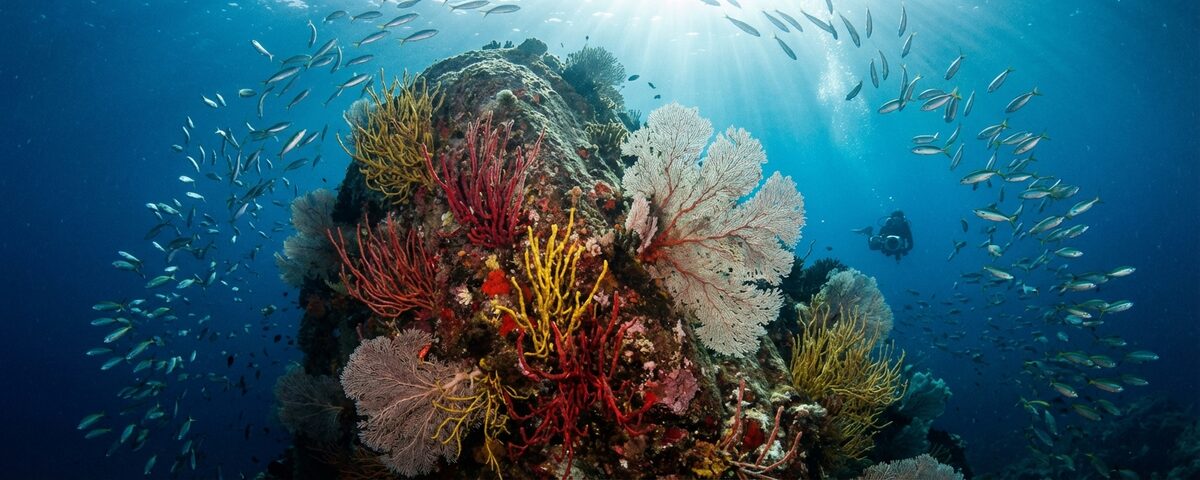
The deeper sections tell a different story. Gorgonian fans and whip corals extend from the rock faces at 15 to 25 metres, and the crevices between boulders shelter a different community entirely. The transition from the anemone gardens above to the gorgonian territory below happens over just a few metres of depth change, giving the site a vertical diversity that many Gulf of Thailand locations lack.
Southwest Pinnacles is also one of Koh Tao's better whale shark sites. Sightings cluster between March and September when plankton-rich water moves through the Gulf, and while Chumphon Pinnacles gets more whale shark publicity, Southwest delivers encounters with enough frequency that experienced local guides consider it a genuine contender. The difference is that Southwest's shallower profile means whale shark passes here happen in better light, which matters more than most divers realise until they are trying to photograph a 6-metre fish in murky deep water.
The boat ride from Koh Tao takes 30 to 45 minutes depending on the vessel and sea state. Most operators run morning trips, departing around 7:00 to 7:30 and returning by midday. The site pairs well with a second dive at a shallower nearby location, giving groups a two-dive morning that covers both offshore pinnacle and coastal reef diving.
Marine Life at Southwest Pinnacles
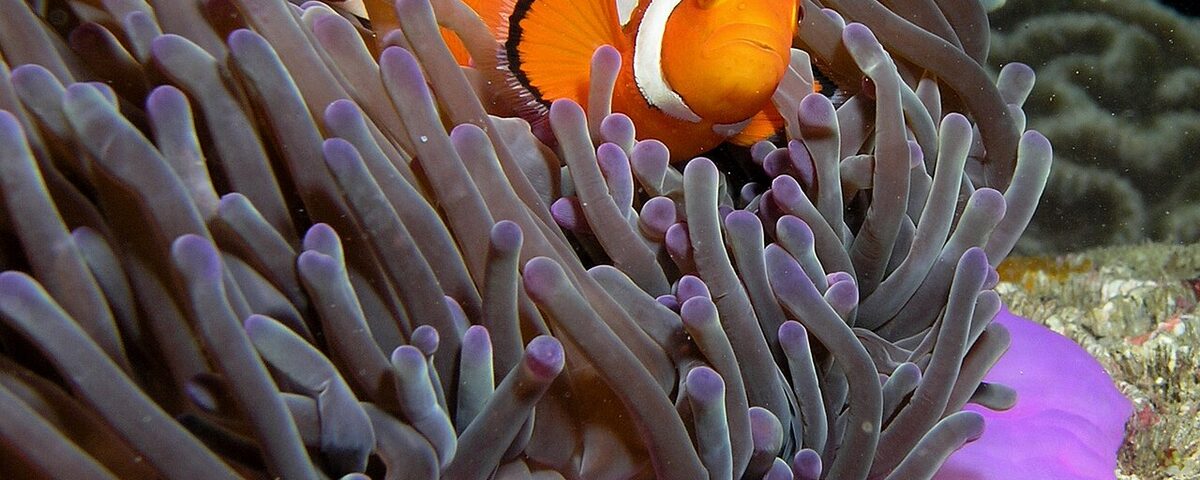
The anemone gardens on the pinnacle tops are the visual centrepiece and the first thing most divers notice. Bubble-tip anemones, magnificent anemones, and Haddon's carpet anemones create a living mosaic across the granite surfaces, each one hosting its resident clownfish. Pink anemonefish are the most common species here, and they are not subtle about defending their territory. Get close with a camera and they will come straight at you, which incidentally makes for excellent macro photography because they practically pose themselves.
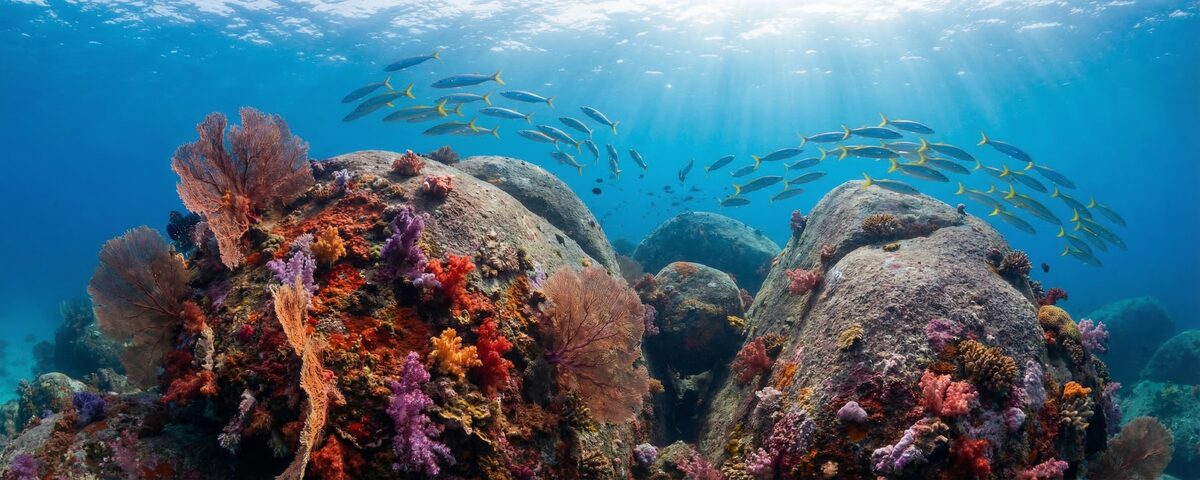
Schooling fish define the mid-water experience at Southwest Pinnacles. Fusiliers are the constant, streaming past the pinnacles in shifting blue and silver formations that can number in the thousands. Chevron barracuda gather in tight schools between the peaks, holding position in the current with that unsettling stillness they do so well. Giant trevally cruise through the schools like wolves through a flock, their hunting runs sudden and explosive against the slower movement around them. Yellowtail barracuda show up in smaller groups, often circling a single pinnacle in a holding pattern.
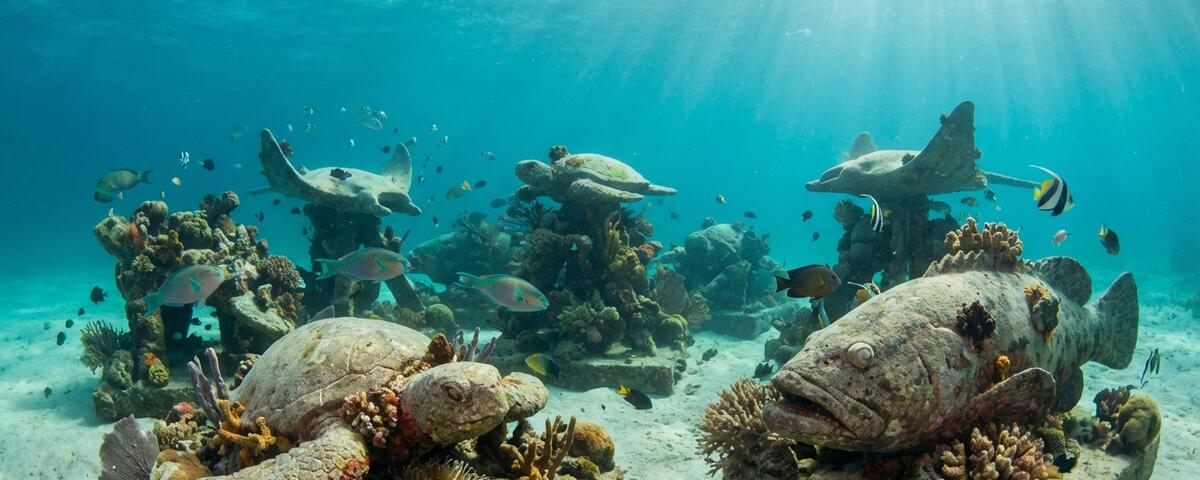
Giant groupers are a reliable highlight. Several resident individuals patrol the deeper sections of the main pinnacle, and they are big. A metre or more in length, slow-moving, apparently unbothered by divers. They sit in overhangs and under ledges with the gravity of furniture, and they have been at this site long enough that regular guides know individual animals by sight.
Batfish are perhaps the most companionable residents. They frequently approach dive groups and maintain station at arm's length, drifting alongside divers for entire sections of the dive. Longfin batfish are the most common species here, their dark vertical bands and rounded profile making them easy to identify.
The deeper gullies between pinnacles shelter a macro community that often gets overlooked in favour of the pelagic show above. Banded boxing shrimp occupy crevices, their red and white striped bodies and oversized claws visible with a torch. Pipefish cling to gorgonian branches. Nudibranchs in various Chromodoris species populate the rock faces, though this is not primarily a macro site and the diversity does not match Koh Tao's shallower bays for small critter hunting.
Triggerfish territory is a defining feature. Titan triggerfish nest on the sandy patches between pinnacles, and during nesting season (roughly May to August) they become genuinely aggressive. A titan triggerfish defending its nest will charge divers who enter its cone-shaped territory, which extends upward from the nest. The solution is lateral movement, not ascent. Swim sideways out of the territory rather than up into it. Good guides brief this before every dive during the season, and a few fin marks from a trigger are considered a rite of passage at this site.
Whale sharks pass through during the plankton-heavy months, typically March to September. Sightings are not daily events, but they happen often enough that the possibility adds a genuine frisson to every dive during the season. When a whale shark appears at Southwest Pinnacles, it tends to cruise the deeper edges of the formation, filtering plankton in the current. The encounters are usually brief (2 to 5 minutes) but profoundly memorable.
Dive Conditions
Current is the variable that shapes every dive at Southwest Pinnacles. The site sits in open water exposed to Gulf of Thailand tidal movements, and conditions can range from dead calm to genuinely challenging within the same week. Moderate current is the most common state, strong enough to bring nutrients and fish activity but manageable for competent divers with reasonable fitness. When the current builds beyond moderate, the site becomes an advanced dive where holding position requires effort and air consumption increases noticeably.
The upside of current is visibility. The clearest conditions at Southwest Pinnacles correlate with stronger water movement, and on good current days visibility can reach 25 to 30 metres. That is exceptional for the Gulf of Thailand, which averages lower visibility than the Andaman Sea coast. Slack water tends to bring reduced clarity, sometimes dropping to 10 metres or below, with suspended particles giving the water a greenish cast.
Water temperature stays warm year-round, ranging from 27 to 30 degrees Celsius. The Gulf of Thailand does not experience the thermoclines that catch Andaman Sea divers off guard, so temperature is consistent from surface to depth. A 3mm shorty or full wetsuit handles all conditions. Some divers go with just a rashguard during the warmer months (April to June), though a wetsuit provides useful exposure protection on the granite surfaces.
The best season for diving Southwest Pinnacles runs from March to September, when the Gulf's eastern coast is sheltered from the northeast monsoon. Visibility peaks during this window, whale shark activity concentrates here, and sea conditions on the surface are generally calmer. The northeast monsoon from October to December brings rougher seas, and operators occasionally cancel Southwest Pinnacles trips when conditions are too rough for the 45-minute crossing. January and February are transitional, with conditions improving as the monsoon fades.
Depth management matters here. The main pinnacle tops out at 5 metres, which is excellent for safety stops, but the channels between pinnacles drop to 25 to 30 metres quickly. It is easy to lose depth awareness while following a fish or exploring a gully. Divers without computers (surprisingly common among the training crowd on Koh Tao) should be particularly careful about depth creep.
Entry is by giant stride from the dive boat. There is no mooring at the site; boats drift or hold station above the pinnacles, and divers descend on a free descent to the formation below. On current days, the boat captain positions the entry point upcurrent of the pinnacles so divers drift onto the site during descent.
⚓ Divemaster Notes
Southwest Pinnacles rewards careful route planning more than most Koh Tao sites. The temptation is to head straight for the main pinnacle and circle it, but the best dives here work the gaps between multiple peaks where the current concentrates fish activity. I start most groups on the upcurrent side of the main pinnacle, drop to 20 to 22 metres to check the gullies for groupers and gorgonians, then work upward and across to the secondary pinnacles as the dive progresses and air allows.
Current assessment before the dive is not negotiable. I check conditions on descent and make a decision within the first 30 seconds about whether to keep the group on the sheltered side of the formation or commit to an exposed traverse. If current is running hard, I keep less experienced divers on the lee side of the main pinnacle where the anemone gardens provide excellent diving without the current management challenge. Advanced groups get taken around the full circuit.
The anemone gardens on top are where I send groups for their safety stop, and it is the best safety stop on Koh Tao. Five metres of depth, surrounded by colour, with anemonefish buzzing around your mask. Nobody gets bored, nobody ascends early, and the photos are better than most people's main dive footage.
Trigger season briefings are serious. I have seen divers take hits from titan triggerfish that drew blood through wetsuits. The nesting patches are on the sandy areas between pinnacles at 15 to 20 metres. I point them out during the briefing, mark the general areas on a slate, and keep the group above or well to the side of active nests. If someone gets targeted, the instruction is clear: swim horizontally away from the nest, do not ascend (the territory is cone-shaped and widens upward).
For whale shark encounters, my protocol is simple. If one appears, I signal the group to hold position, maintain depth, and let the shark come to them. Nobody chases. Nobody descends below the shark. Nobody touches. The encounters that result from calm, stationary divers are invariably longer and closer than those where the group scatters in pursuit.
Air consumption at this site runs higher than at Koh Tao's sheltered bays. The depth, the current, and the excitement all contribute. I brief groups to expect 40 to 50 minute dives rather than the 60 minutes they might be used to at White Rock or Japanese Gardens. Starting with 200 bar and signalling at 80 bar keeps things manageable. I carry a spare second stage and keep it accessible, because the combination of depth, current, and relatively inexperienced divers (Koh Tao trains a lot of newly certified divers) creates a profile where out-of-air situations are more plausible than at shallower sites.
How to Get to Southwest Pinnacles
Koh Tao is a small island in the Gulf of Thailand, part of Surat Thani province. Getting there involves reaching the mainland and then taking a ferry.
From Bangkok, the most common route is a night train or bus to Chumphon (8 to 10 hours), followed by a Lomprayah or Songserm catamaran to Koh Tao (roughly 1.5 to 2 hours). The combined ticket (train or bus plus ferry) runs around 1,000 to 1,500 THB. Flights from Bangkok to Chumphon or Surat Thani cut the journey to a few hours, though you still need the ferry connection from the mainland.
From Koh Samui, the ferry takes about 2 hours and costs 600 to 800 THB. From Koh Phangan, it is roughly 1 hour by catamaran. These inter-island connections run multiple times daily during the high season, with reduced schedules during the monsoon months.
Once on Koh Tao, Southwest Pinnacles is accessed by dive boat from the island's main piers at Mae Haad or Sairee Beach. The boat ride takes 30 to 45 minutes heading southwest. All established dive operators on the island offer trips to this site as part of their regular rotation, typically as a morning two-dive trip departing around 7:00.
Koh Tao itself is compact enough that most dive shops are walking distance from accommodation. Sairee Beach on the west coast has the highest concentration of operators and is the most convenient base for diving the offshore pinnacle sites. Mae Haad (the ferry pier town) is equally functional.
Accommodation on Koh Tao ranges from budget hostels at 300 to 500 THB per night to mid-range bungalows and small hotels at 1,000 to 3,000 THB. The island has basic but functional amenities: ATMs, small clinics, pharmacies, and a recompression chamber (SSS Network) for diving emergencies.
Gear Recommendations
A 3mm wetsuit or shorty handles the water temperature at Southwest Pinnacles year-round. Full 3mm is better than a shorty for the granite surfaces; brushing against rock at depth is more comfortable with neoprene coverage on your arms. Dive computer is strongly recommended given the multi-level profile and the easy depth transitions between pinnacle tops and channels. Surface marker buoy (SMB) is essential at this site; current can carry you away from the boat during ascent, and boats need to spot you on the surface in open water.
For photography, wide-angle is the primary choice. The anemone gardens, the schooling fish, and the pinnacle topography all favour wide lenses. A fisheye with dome port gives the classic pinnacle shot: anemone foreground, blue water background, school of barracuda in the mid-distance. Compact cameras with wide adapters work well for the anemone macro-wide shots on top. Bring a torch for the deeper gullies where gorgonians and crevice-dwelling critters benefit from artificial light.
Reef hook is not commonly used at Koh Tao sites, and the granite surfaces at Southwest Pinnacles are not ideal anchor points. Better to work on positioning and use the pinnacles as natural current breaks. Gloves are not permitted at most Thai dive sites to discourage coral touching.
Recommended Dive Operators
Big Blue Diving is one of Koh Tao's largest and longest-running operations, with experienced guides who know Southwest Pinnacles intimately. They run scheduled trips to the site several times per week and their boat fleet handles the open water crossing comfortably. Crystal Dive offers professional PADI courses and fun diving with regular Southwest Pinnacles trips, and their guides are good at managing mixed-ability groups between the shallow anemone gardens and deeper gully sections. Ban's Diving Resort has the infrastructure and guide team to run reliable offshore trips, with a large enough operation to maintain consistent schedules even during quieter periods. Scuba Shack on the north end of Sairee Beach has built a strong reputation for small-group diving and personalised guide service, which pays dividends at a site like Southwest Pinnacles where current management and route selection matter. Roctopus Dive runs well-organised trips with a focus on experienced divers and technical training, making them a good fit for the deeper sections of the pinnacle formation.
Liveaboard Options
Koh Tao is primarily a shore-based dive destination. No liveaboards operate exclusively around the island. However, several Gulf of Thailand liveaboard itineraries include Koh Tao as a stop on routes between Chumphon and the Ang Thong Marine Park. MV Nautica and similar vessels occasionally run 3 to 4-night trips that cover Southwest Pinnacles, Chumphon Pinnacles, Sail Rock, and Ang Thong sites in a single itinerary. These trips are seasonal and less common than the Andaman Sea liveaboard market. For most divers, staying on Koh Tao and diving from day boats is the standard and most practical approach to Southwest Pinnacles.