White Rock Dive Site
Koh Tao (Gulf of Thailand), Thailand · Near Koh Tao
Overview
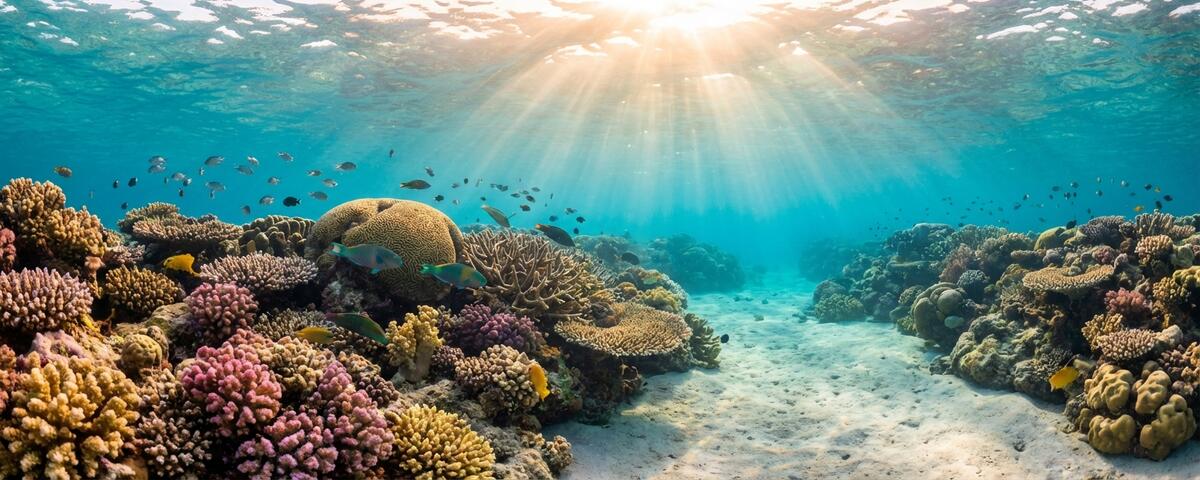
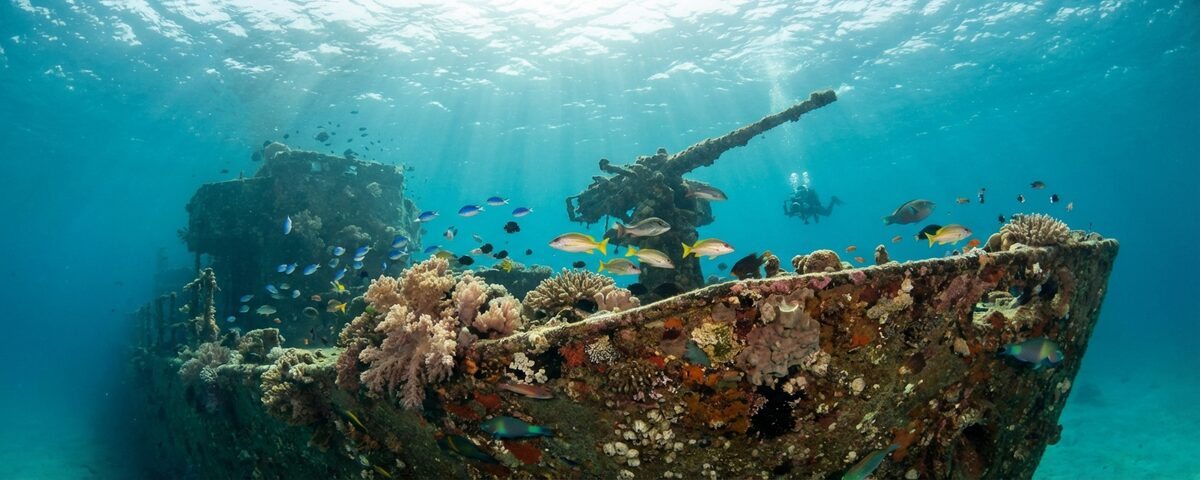
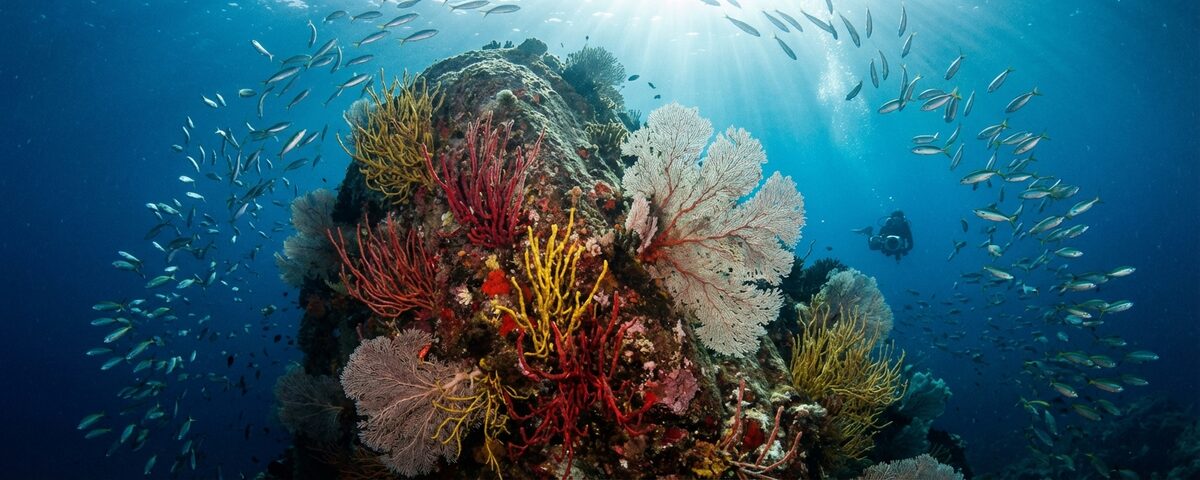
White Rock is Koh Tao's most dived site, and for good reason. Sitting between the island's west coast and Koh Nang Yuan, this collection of submerged granite pinnacles draws everything from first-time Open Water students on their qualifying dives to experienced photographers hunting nudibranchs in the crevices. The Thai name, Hin Khao, refers to the pale colour of the rocks when viewed from the surface, though underwater the granite is anything but white. Decades of coral growth have turned every surface into a patchwork of hard corals, soft corals, barrel sponges, and anemone colonies that look more like an overgrown garden than bare rock.
The site consists of two main pinnacle groups connected by a saddle of coral reef at around 12 metres. The northern pinnacle breaks the surface, marked by a mooring buoy that dive boats queue up at during morning rush hour. The southern group stays submerged, topping out at roughly 5 metres and dropping to sand at 18 to 22 metres on the deeper flanks. Between and around these formations, smaller boulders and coral outcrops create a maze of swimthroughs, overhangs, and sandy channels that you could dive a dozen times without repeating the same route.
What makes White Rock work as a site for all levels is its protected position. The main island and Koh Nang Yuan shelter it from the worst of the Gulf's weather. Currents here rarely exceed a gentle drift, and when they do pick up, they tend to push divers along the reef rather than away from it. This predictability is why every dive school on Koh Tao uses White Rock in their rotation. It is also why the reef, despite absorbing thousands of diver visits per month, remains in surprisingly decent health. The coral diversity is genuine, the fish life is consistent, and the site delivers reliably even when conditions elsewhere around the island shut down.
The shallow sections between 2 and 8 metres are where most training dives happen. Sandy patches between coral heads give instructors space to run skills, and the surrounding reef provides enough visual interest that students get a taste of real diving between exercises. But calling White Rock a training site sells it short. The deeper flanks, the swimthroughs on the southern pinnacle group, and the night dive version of this site are all genuinely interesting dives that hold up against far more remote and expensive destinations.
Marine Life at White Rock
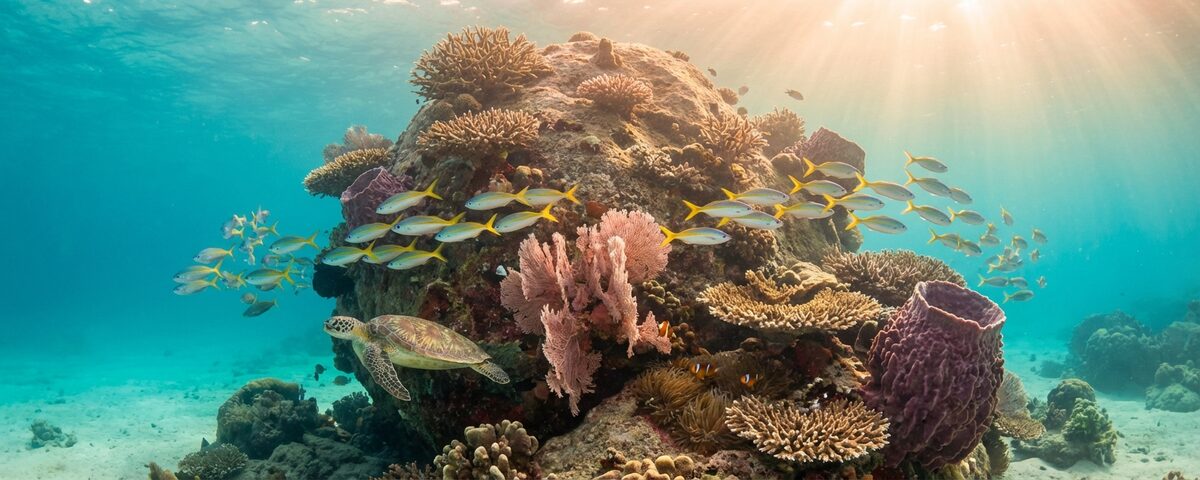
The coral coverage at White Rock is the first thing that catches your eye, and it is more varied than most first-time visitors expect from the Gulf of Thailand. Staghorn coral colonies (Acropora species) form dense thickets on the upper slopes of both pinnacle groups, their branches creating shelter for damselfish that hover above in territorial clouds. Massive brain corals, some over a metre across, anchor the reef framework on the mid-depth sections. Porites boulders the size of small cars sit on the deeper margins, their surfaces pocked with Christmas tree worms that retract in a flash when you wave a hand past them.
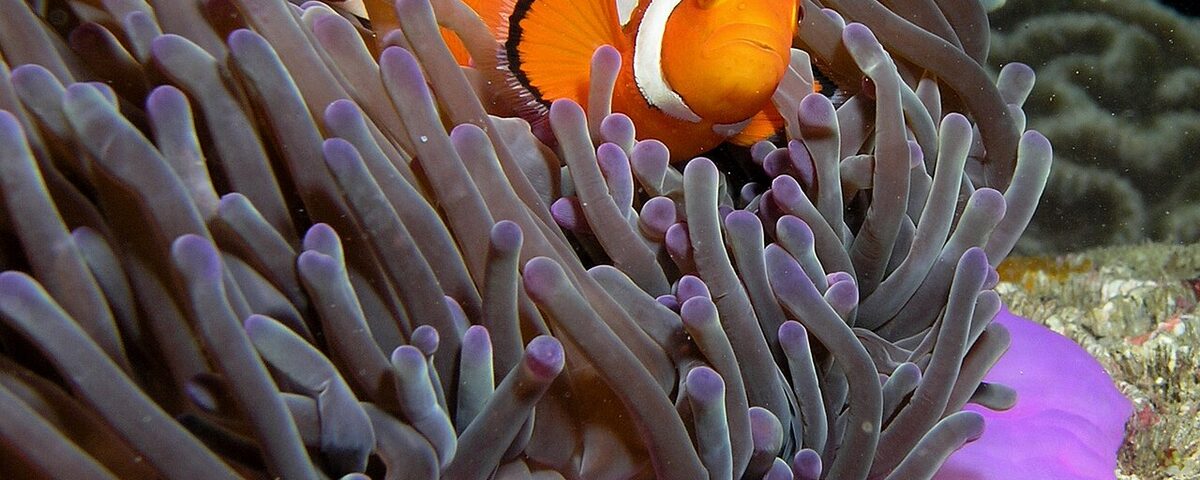
Barrel sponges grow on the deeper flanks, particularly on the southern pinnacle group between 14 and 20 metres. They are not as enormous as you would find in Raja Ampat or Wakatobi, but several specimens are large enough to photograph a diver peering into them. Soft corals appear in patches, mostly along current-exposed edges where nutrient flow supports them. Anemone colonies host resident clownfish on several sections of the reef, and the anemones themselves range from the common bubble-tip to the larger carpet varieties.
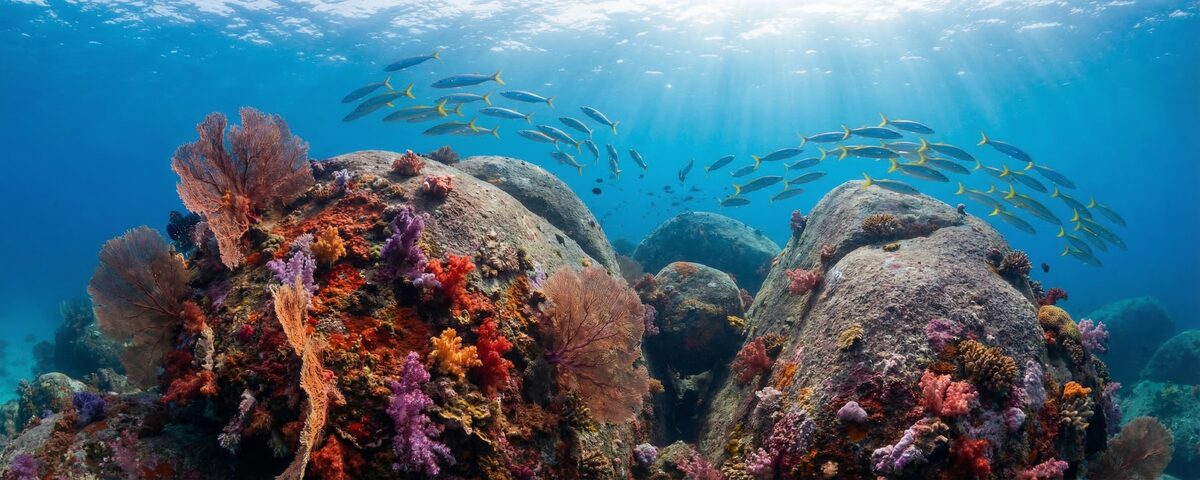
For fish life, White Rock benefits from its position as a waypoint between open water and the island's coast. Yellowtail barracuda school in loose formations above the pinnacles, sometimes tightening into a vortex when a predator passes through. Giant trevally cruise the deeper edges, particularly in the early morning before dive boats arrive in numbers. Schools of fusiliers, snappers, and bannerfish provide the constant backdrop motion that makes reef diving feel alive. Angelfish and butterflyfish work the coral surfaces in pairs.
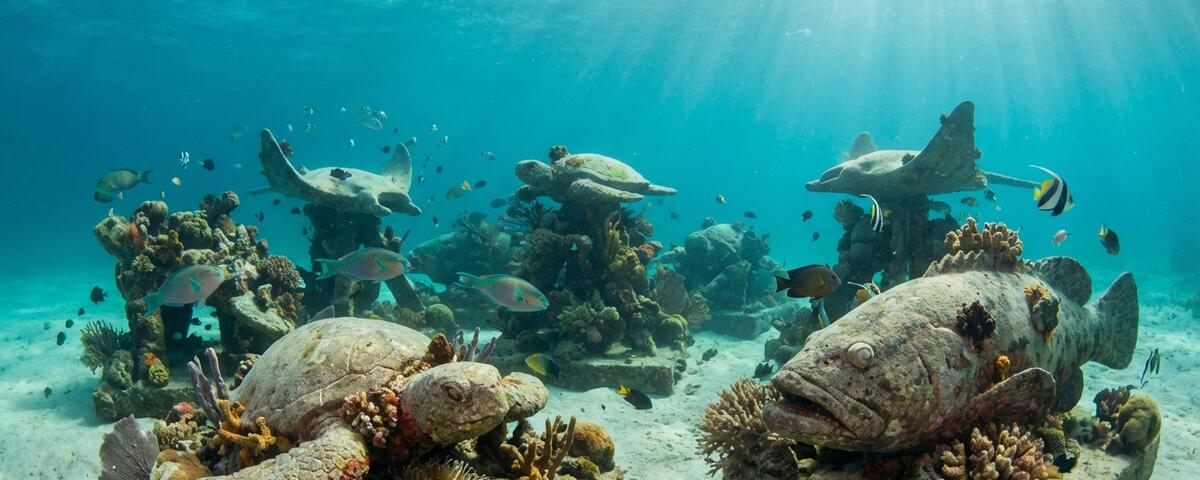
Green turtles are reliable residents. They feed on the algae that grows on rocks and rest in sandy depressions between coral heads. Most dives produce at least one sighting, sometimes three or four. They are habituated to divers and tend to continue feeding even when a group of eight people hovers overhead taking photos.
The macro life at White Rock is genuinely good and often overlooked by divers distracted by the turtles and barracuda. Nudibranchs populate the rocky surfaces in respectable variety. Chromodoris species are the easiest to spot, their bright colours standing out against the grey granite in crevices. Banded boxer shrimp occupy holes throughout the reef. Moray eels, including giant morays and white-eyed morays, rest in crevices with heads protruding. Blue-spotted stingrays sit on sandy patches, occasionally flushing out from under ledges when a diver passes too close.
Night diving at White Rock transforms the site entirely. Basket stars unfurl from their daytime hiding spots and extend feeding arms into the current. Crabs emerge from every crevice. Sleeping parrotfish wedge themselves into coral heads, wrapped in their mucus cocoons. Octopuses hunt across the reef, their colour changes visible in torch beams. The resident turtle population seems to increase at night, or perhaps they are just easier to find when they are sleeping in their usual spots.
Dive Conditions
White Rock is about as forgiving as Gulf of Thailand diving gets, which is precisely why it handles the volume of divers it does. The site sits in the lee of both Koh Tao and Koh Nang Yuan, creating a natural shelter from the prevailing winds for much of the year. On a typical day, the surface is calm enough for comfortable giant stride entries and the current underwater is either absent or a mild drift that requires no effort to manage.
Visibility is the variable that matters most here. On a good day, you get 15 to 25 metres of clear blue-green water with enough light penetration to make the coral colours pop. These days tend to coincide with incoming current that pushes cleaner offshore water over the site. On a poor day, visibility drops to 5 to 8 metres with green particulate suspended in the water column. The site is still diveable in low visibility, but the experience changes from a wide-angle reef dive to something more intimate, where you are working the crevices and close-up reef life rather than taking in the panorama.
Water temperature is stable year-round, sitting between 27 and 30 degrees Celsius. There are no significant thermoclines at this site. A 3mm wetsuit is standard, and plenty of divers in the warmer months get by in a shorty or rashguard. The deeper flanks around 20 metres occasionally feel a degree or two cooler, but not enough to matter.
The best conditions run March to September, when the Gulf's eastern seaboard catches the tail end of the dry season and early southwest monsoon. Seas are calm, visibility averages higher, and the water is at its warmest. October through December brings the northeast monsoon, which stirs up the Gulf and reduces visibility. Dive operations rarely close White Rock even in monsoon season (it is too sheltered for that), but the experience is noticeably better during the calm months.
Depth ranges from the surface to about 22 metres on the deepest sandy patches. Most of the interesting reef life concentrates between 5 and 16 metres, so air consumption is rarely an issue. Dives typically run 45 to 60 minutes, and even divers with above-average air consumption rarely cut a dive short here. The multi-level profile practically manages itself: start deep, work up, finish on the shallow pinnacle tops for safety stop.
⚓ Divemaster Notes
White Rock looks simple on the surface. Two pinnacle groups, mooring buoy on the north, sandy bottom at 18 to 22 metres. But the site rewards route planning more than most people realise, and the difference between a mediocre White Rock dive and a great one comes down to timing and navigation.
I start morning dives early, before the armada of training boats arrives at 09:00. Dropping at 07:30 gives you the reef with almost no other divers on it, which matters at a site this popular. The fish behaviour changes noticeably without a crowd. Giant trevally patrol closer to the reef, barracuda schools are tighter and lower, and the turtles are actively feeding rather than circling warily above the coral.
For experienced groups, I run the southern pinnacle circuit. Drop to 18 metres on the south side, work the deeper boulders where the barrel sponges and larger gorgonians grow, then weave through the swimthroughs between the pinnacles. There is a particular gap at about 14 metres on the southeast corner where two boulders lean together creating a short tunnel. It is wide enough for single-file divers and exits onto a shelf absolutely packed with anemones and their resident clownfish. Most groups swimming past on the outside never see it.
The saddle between the two pinnacle groups at 10 to 12 metres is the site's natural crossroads. Current, when it exists, funnels through here, and the fish life concentrates in the flow. Spending five minutes hovering in the saddle watching traffic pass through is more productive than swimming the entire perimeter at speed.
For training dives, the sandy areas on the northwest side between 5 and 8 metres are the standard skills station. But I move skills practice to the northeast flats when other school groups are already occupying the northwest. Same depth, same sand, less crowding. After skills, a short swim south puts students on actual reef, which keeps motivation up after the tedious parts of training.
Night dives here are the hidden highlight of Koh Tao diving. The site is protected enough that conditions rarely prevent a night trip, and the transformation is dramatic. I brief groups to bring backup torches and move slowly. The basket stars alone are worth the dive, but the octopus hunting behaviour and the sleeping parrotfish in their mucus cocoons give even experienced night divers something to talk about at dinner.
One thing I always mention in briefings: this site gets heavy boat traffic. Keep your ascent close to the mooring line or deploy your SMB. Surfacing away from the buoy line in the channel between Koh Tao and Nang Yuan puts you in the path of longtail boats and speedboats that are not watching for divers.
How to Get to White Rock
Koh Tao sits in the Gulf of Thailand, part of Surat Thani province. Getting there means reaching the Thai mainland first, then taking a ferry across.
From Bangkok, the most common route is a night train or VIP bus to Chumphon (8 to 10 hours), followed by a Lomprayah or Songserm high-speed catamaran to Koh Tao (1.5 to 2 hours). Combined bus-and-ferry tickets run around 1,000 to 1,500 THB and are sold at Khao San Road agencies and online. Flying from Bangkok to Chumphon Airport or Surat Thani Airport cuts the mainland travel to 1 hour, though you still need the ferry connection from either town.
From Koh Samui, the catamaran takes about 2 hours and costs 600 to 800 THB. From Koh Phangan, the crossing is roughly 1 hour. Multiple ferry services operate daily during high season, with fewer departures in monsoon months.
Once on Koh Tao, White Rock is a short boat ride from any part of the island. From Mae Haad pier (where ferries arrive) or Sairee Beach, the trip takes 10 to 15 minutes. Dive boats moor on designated buoys at the site. Every dive operator on the island includes White Rock in their regular schedule, and most visit it at least three or four times per week.
Accommodation options spread across three main areas. Sairee Beach on the west coast has the biggest selection of dive shops, restaurants, and nightlife. Mae Haad around the ferry pier is practical and walkable. Chalok Bay on the south coast is quieter and closer to sites like Shark Island. Budget rooms start at 300 to 500 THB per night. Mid-range bungalows with air conditioning run 1,000 to 3,000 THB. The island has ATMs, pharmacies, small medical clinics, and a recompression chamber operated by the SSS Network.
Gear Recommendations
A 3mm wetsuit is the standard kit for White Rock. Water temperature sits between 27 and 30 degrees year-round, and the shallow profile means you spend most of the dive above 15 metres where it is warmest. Some divers opt for a shorty or rashguard in the hotter months (April to June), but a full 3mm provides useful scratch protection against the coral and rock surfaces in the swimthroughs.
Dive computer is strongly recommended. The multi-level profile at White Rock, bouncing between 5 and 18 metres through the pinnacle formations, is exactly the scenario where a computer earns its keep over dive tables. Rental computers are available from every shop on the island.
Torch or dive light adds considerably to the experience even on daytime dives. The overhangs and crevices that shelter moray eels, nudibranchs, and crustaceans are dim even in good visibility, and a focused beam reveals colours that ambient light at depth washes out. For night dives, a primary torch plus a backup is the minimum. A tank-mounted chemical light stick or beacon light helps your buddy keep track of you.
For photography, this is a versatile site. Wide-angle captures the pinnacle formations, turtle encounters, and barracuda schools. Macro works well in the crevices, particularly for nudibranch photography. If you have to pick one lens, go wide. The schooling fish and coral garden compositions are the hero shots at White Rock. Compact cameras in housings perform well here given the typically good ambient light in the shallows.
Surface marker buoy is worth carrying despite the mild conditions. Boat traffic between Koh Tao and Koh Nang Yuan runs through the area, and surfacing with a visible marker is good practice. Most operators require SMBs for certified fun divers.
Recommended Dive Operators
Crystal Dive is one of the island's longest-running PADI operations, with a large team of multilingual instructors and a boat fleet that runs to White Rock almost daily. Their scale means you get reliable scheduling, and their instructor quality has been consistent for years. They handle both course dives and fun dives at White Rock well, routing groups to different sections based on experience level. Big Blue Diving runs similarly sized operations from Sairee Beach and puts divers on White Rock regularly. Their guides know the site's seasonal patterns and adjust routes depending on current direction and visibility. The photography briefings from their more experienced divemasters are worth listening to. Ban's Diving Resort combines accommodation and diving in a package that works well for divers spending a week on the island. Their house reef at Sairee is a bonus between boat trips, and their White Rock routes tend to cover the southern pinnacle group more thoroughly than some operators. New Heaven Dive School operates from Chalok Bay with a conservation-first approach. Their guides understand reef ecology and point out things other operators skip entirely, including juvenile fish identification, coral species, and invertebrate behaviour. They run smaller groups, which makes a noticeable difference at a site that can feel crowded during peak hours. Roctopus Dive brings a technical diving perspective even to recreational sites. Their guides carry slates with species identification notes and tend to spend more time on the macro life in the crevices, which reveals a side of White Rock that speed-touring groups miss completely.
Liveaboard Options
Koh Tao is a shore-based dive destination, and no liveaboards use White Rock as a headline site. A few Gulf of Thailand liveaboard itineraries include Koh Tao stops on longer routes between Chumphon and the Ang Thong archipelago. MV Nautica and similar vessels occasionally combine White Rock, Southwest Pinnacles, Chumphon Pinnacles, and Sail Rock into 3 to 4-night trips that run seasonally between March and October. These are far less common than Andaman Sea liveaboard operations and tend to sell primarily to divers who want to hit Chumphon Pinnacles and Sail Rock without basing themselves on Koh Tao.
For most divers, staying on Koh Tao and diving White Rock from day boats is the practical approach. The boat ride from any pier on the island is under 15 minutes, and the site's sheltered position means cancellations due to weather are rare. The island's accommodation is cheap enough that a week of shore-based diving with multiple White Rock visits costs less than a single night on most liveaboards.