Laem Thian Dive Site
Koh Tao, Thailand · Near Mae Haad, Koh Tao
Overview
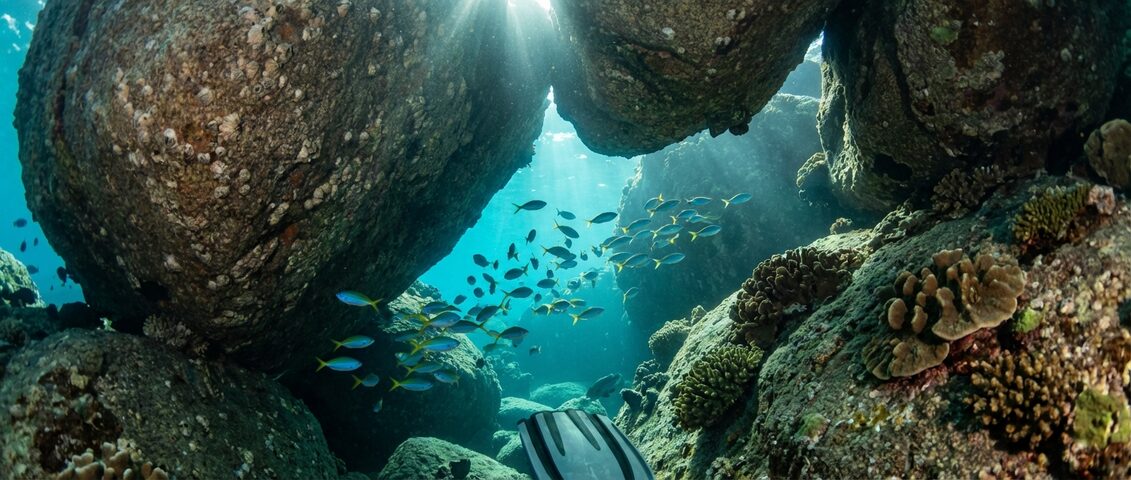
Laem Thian sits on Koh Tao's quieter east coast, a granite headland that drops into two distinct underwater environments separated by a few dozen metres of rocky coastline. The bay side is shallow, sun-drenched, and forgiving. The cape side is where it gets interesting: a tumble of enormous granite boulders has created a network of caves, overhangs, and swimthroughs that feels closer to Similan Islands diving than anything else on Koh Tao.
The site rarely appears on the standard two-dive morning rotation. Most operators default to the big-name west coast sites (White Rock, Japanese Gardens, the Nang Yuan trio) because they are closer to Mae Haad pier and easier to sell to Open Water students. Laem Thian requires a longer boat ride around the island's southern tip or a shuttle from Hin Wong Bay, and that extra 15 minutes of transit time is enough to keep it off the regular schedule. Their loss. The divers who make it here find a site with better topography than half the island's marquee spots and a fraction of the boat traffic.
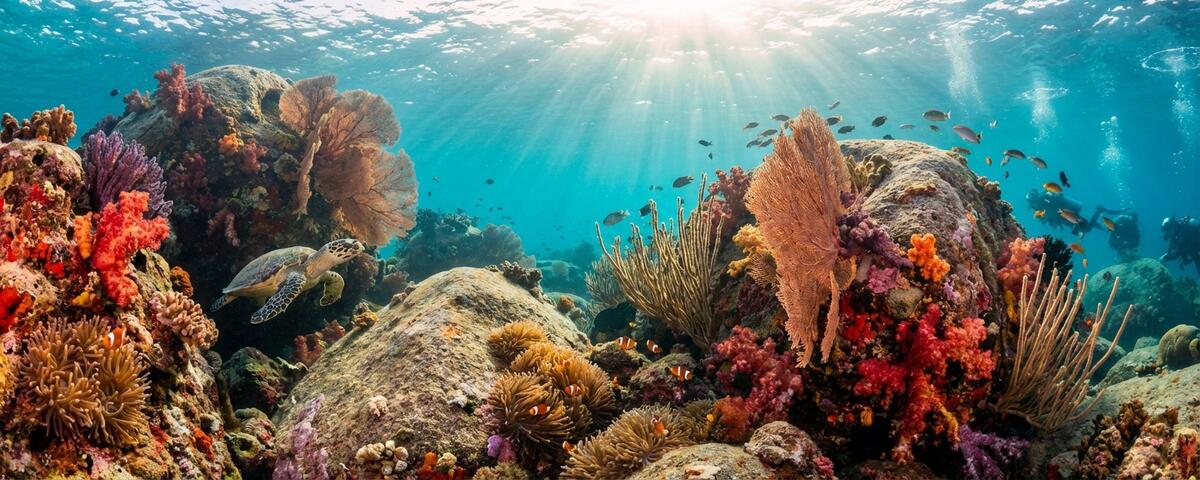
What separates Laem Thian from Koh Tao's other east coast sites is the vertical dimension. Tanote Bay and Aow Leuk are essentially sloping boulder fields with interesting bits scattered across a gradual incline. Laem Thian's granite has stacked differently. Boulders the size of shipping containers lean against each other at odd angles, leaving gaps wide enough to swim through and caverns tall enough to hover inside with your torch aimed at the ceiling. Where sunlight penetrates the openings, it breaks into shafts that sweep across the rock as the surface chop shifts overhead. On a clear day in the caves section, the light alone is worth the trip.
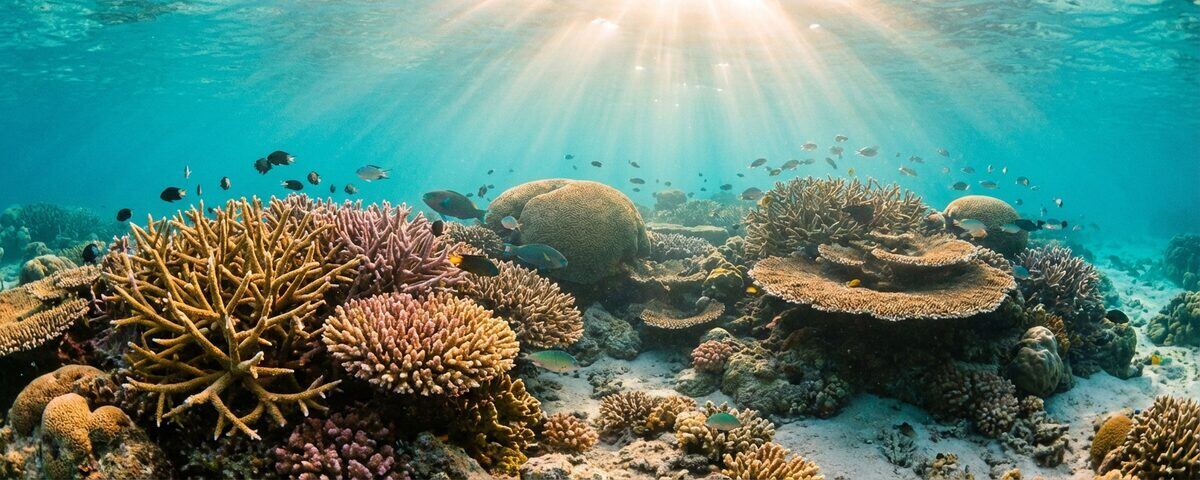
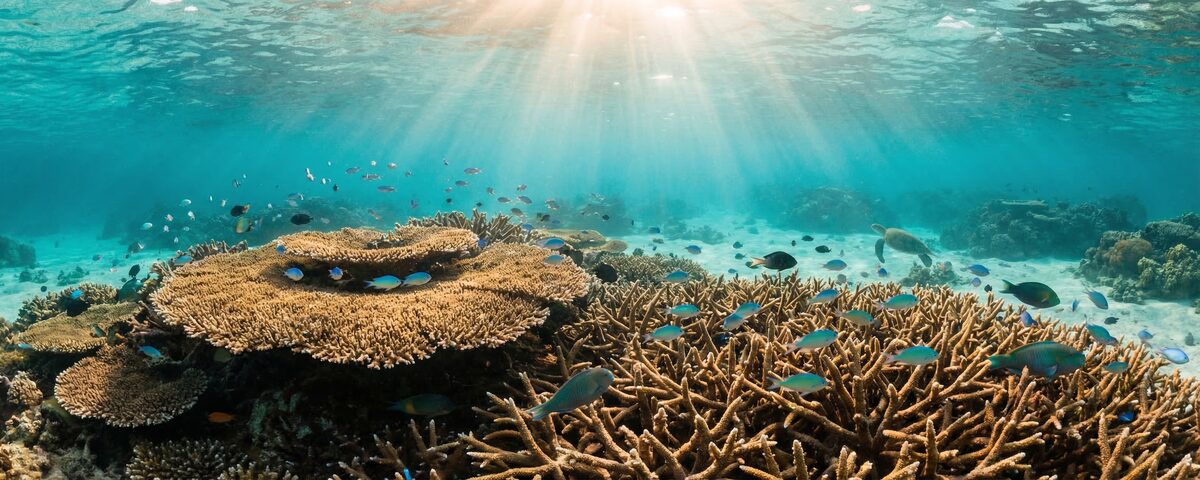
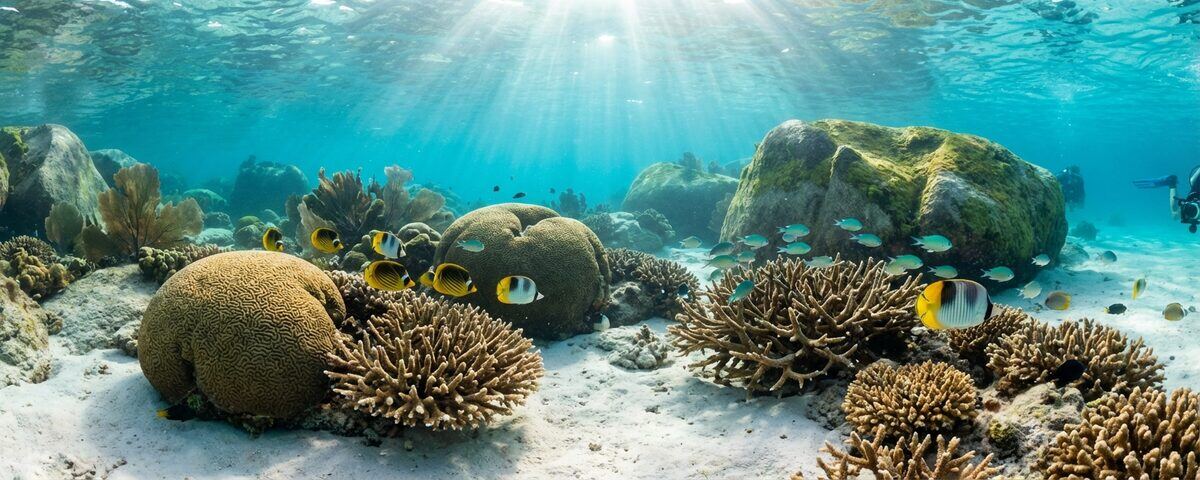
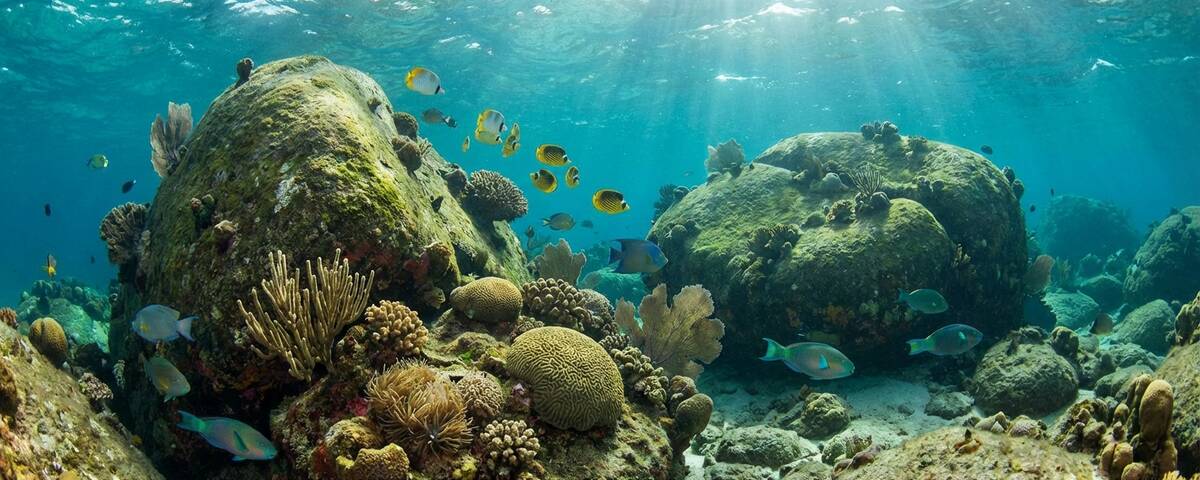
The bay portion is gentler altogether. Hard corals coat the boulder surfaces from about 3 metres down to the sandy bottom at 12 to 14 metres. Branching Acropora and brain corals dominate here, with enough coverage that the reef looks genuinely healthy rather than patchy. This section works well for newly certified divers and snorkellers who want to see reef without the current exposure of the offshore pinnacles.
Depths span a wider range than most Koh Tao sites. The bay section tops out at 14 metres, but the caves and outer boulders drop to 18 to 22 metres where the granite meets the sand. Advanced divers can push into the deeper swimthroughs at the base of the cape, where the rock formations are at their most dramatic and the resident groupers are at their largest. The depth profile gives instructors a natural multi-level route: deep caves first, then a gradual ascent through the boulders and into the shallow bay for a long safety stop among the coral gardens.
Marine Life at Laem Thian
Giant groupers are the signature residents. The caves at Laem Thian provide exactly the kind of overhead structure that large groupers favour, and several individuals well over a metre in length have been regulars here for years. They tend to sit motionless in the darker recesses of the swimthroughs, blending with the granite until a torch beam picks out their mottled pattern. Approach slowly and they hold position. Rush in and they vanish into the depths of the cavern with a single powerful tail beat.
Green sea turtles appear frequently, particularly in the bay section where algae growth on the shallower boulders provides reliable grazing. Hawksbill turtles turn up less often but regularly enough that guides mention them in the briefing. The turtles at Laem Thian tend to be less habituated to divers than those at busier sites like Tanote Bay, which means they spook more easily but also means the encounters feel more genuinely wild.
Bumphead parrotfish make occasional appearances at the outer edge of the cape. This is one of very few sites around Koh Tao where they show up at all, and a sighting still generates real excitement among the guides. The fish travel in small groups of three to five individuals, their distinctive bulbous foreheads and grey-green bodies unmistakable even from distance. When they are feeding on coral, the crunching is audible from several metres away.
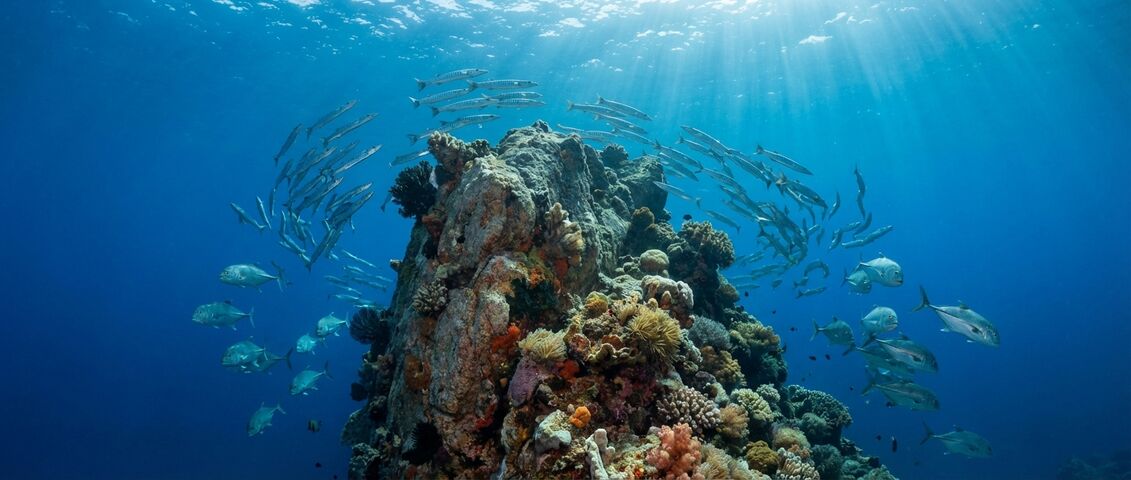
Schools of blue and gold fusiliers stream through the mid-water around the cape, particularly when gentle current brings nutrients from deeper water. Trevally patrol the same zone, occasionally darting into the fusilier schools in hunting runs that scatter the smaller fish in all directions. Yellowtail barracuda circle in loose formations near the surface, silhouetted against the light when viewed from below.
The boulder surfaces host a solid population of macro subjects. Multiple species of Chromodoris nudibranchs occupy the rock faces, their vivid colouring a natural contrast against the grey granite. Banded coral shrimp sit in crevices with their antennae waving in the slight current. Blue-spotted stingrays rest on sandy patches between boulders, often partially buried and easy to miss without a guide pointing them out.
Moray eels occupy holes throughout both sections of the site. Giant morays and white-eyed morays are the most common species, their heads protruding from gaps in the rock as they breathe with their characteristic open-mouthed gape. The deeper caves shelter a few larger specimens that have clearly been in residence for a long time.
Titan triggerfish nest in the sandy patches between boulders from roughly May to August. They are territorial during nesting season and will charge divers who stray too close. The standard avoidance technique applies: swim laterally rather than upward, since their territory is cone-shaped above the nest.
At night, the caves section transforms completely. Octopuses emerge to hunt across the rock surfaces, their colour changes visible in torchlight. Crabs of several species pick their way along the boulder faces. Sleeping parrotfish sit in their mucus cocoons among the coral, motionless and surreal-looking in the torch beam. Bioluminescence appears in the water column on moonless nights, sparking green-blue with every fin kick.
Dive Conditions
The two sections of Laem Thian offer distinctly different conditions, which is part of what makes the site work for mixed-ability groups.
The bay sits in a natural shelter created by the headland itself. Current inside the bay rarely amounts to more than a gentle drift, even when the offshore sites are running hard. On most days, the water in the bay is essentially still. This makes it one of the calmest dive environments on Koh Tao's east coast, comparable to Mango Bay for ease of diving.
The caves and outer boulders at the cape catch marginally more water movement. A mild current sometimes pushes across the outer faces of the rocks, and surge can develop in the swimthroughs when swell wraps around the headland. Neither condition is typically strong enough to trouble a competent diver, but the difference between the bay and the cape means that buoyancy control matters more on the caves portion. Bumping into the rock surfaces inside a swimthrough is not dangerous, but it damages coral growth and stirs sediment that reduces visibility for everyone behind you.
Visibility ranges from 5 metres on a bad day to 25 metres when the Gulf of Thailand cooperates. The average sits around 12 to 18 metres during the good season. Poor visibility usually follows heavy rain, which washes sediment from the hillside above the coastline. The caves section can hold clearer water than the bay after rain, since the deeper water exchanges more readily with the open sea.
Water temperature remains between 27 and 30 degrees Celsius year-round. No thermoclines to worry about at these depths. A 3mm shorty is standard kit; many divers go with just a rashguard from April to June when temperatures peak.
The best diving window runs March to September, when Koh Tao's east coast is sheltered from the prevailing southwest monsoon winds. The west coast takes the weather during this period, leaving eastern sites like Laem Thian in calm, clear conditions. October to December brings the northeast monsoon, which hits the east coast directly. Operators rarely schedule Laem Thian during the roughest monsoon weeks. January and February are transitional, with conditions improving as the wet season fades.
Depth management is straightforward throughout. The bay bottoms out at 14 metres on sand, with the boulder formations on either side reaching deeper. The caves section ranges from 10 to 22 metres, with the deepest swimthroughs at the base of the cape. No dramatic drop-offs or unexpected depth changes. The graduated profile makes multi-level dive planning easy, and most divers spend the majority of their bottom time between 8 and 16 metres where the structure is most interesting.
⚓ Divemaster Notes
I split Laem Thian into two dives when I can, but it works as a single dive with decent routing. For a single-dive visit, I start at the caves section of the cape in deeper water (16 to 20 metres) and work gradually shallower through the swimthroughs before crossing into the bay section to finish among the coral gardens at 6 to 10 metres. This gives you the dramatic topography first while your air supply is fresh, then a relaxing shallow finish with plenty of bottom time remaining for the safety stop.
The main swimthrough at the cape runs roughly north to south between two massive granite slabs at about 14 metres. It is wide enough for single-file divers with fins clearance on both sides. I brief groups to keep hands tucked and maintain neutral buoyancy through the passage. The exit opens onto a small sandy amphitheatre surrounded by boulders, and this is where the giant groupers typically sit. I hold the group at the exit and let people look rather than swimming directly into the clearing, which spooks the fish.
For the caves, the largest cavern has a ceiling at around 10 metres and a floor at 16 to 18 metres. Natural light enters from two sides, so it never feels enclosed. The light shafts are best between 10am and noon when the sun is high enough to penetrate at steep angles. I time morning dives to arrive at the caves section by 10:30 if possible.
The bay section gets my attention with groups who want macro. I route them slowly along the boulder line at 8 to 12 metres, checking each crevice for nudibranchs and shrimp. The rocks on the northern edge of the bay tend to have the highest nudibranch density, possibly because that section gets less boat traffic and the coral is slightly healthier.
Buoyancy is the critical skill here. The swimthroughs are not tight enough to be genuinely hazardous, but poor buoyancy ruins visibility for everyone and damages the coral growth inside the passages. I assess buoyancy over the first few minutes in open water and only take the group through the swimthroughs if everyone demonstrates reasonable control. Groups with newly certified divers get the bay section instead, which is still a solid dive.
Air consumption at this site varies more than at most Koh Tao sites because of the depth range. I brief groups to expect 40 to 50 minute dives, but divers who go deep into the caves section early may hit reserve faster. I carry a pony bottle when guiding Advanced divers through the deeper swimthroughs as a precaution, not because it is commonly needed but because the overhead environment makes it sensible practice.
One thing to brief specifically: the titan triggerfish nesting zones in the sandy patches. May to August, the nesting females defend a wide territory and will charge. Swim sideways, not upward, if one comes at you. Their territory extends in a cone shape above the nest, so ascending actually takes you deeper into their defended space.
How to Get to Laem Thian
Koh Tao sits in the Gulf of Thailand, part of Surat Thani province. Reaching the island means mainland transport followed by a ferry crossing.
From Bangkok, the most common route is a night train or bus to Chumphon (8 to 10 hours), then a Lomprayah or Songserm high-speed catamaran to Koh Tao (roughly 1.5 to 2 hours). Combined tickets cost around 1,000 to 1,500 THB. Flying from Bangkok to Chumphon or Surat Thani airport cuts the overland leg to a couple of hours, though you still need the ferry from the coast.
From Koh Samui, the catamaran takes about 2 hours and costs 600 to 800 THB. From Koh Phangan, roughly 1 hour. Inter-island ferries run multiple times daily during high season, with reduced schedules during the monsoon months.
Once on Koh Tao, Laem Thian is on the east coast. There is no road access directly to the headland. The nearest road end is at Tanote Bay, about 15 minutes by motorbike from Mae Haad pier. From Tanote, a hiking trail leads south along the coast to Laem Thian (roughly 30 to 40 minutes on foot through jungle), but almost nobody uses this route for diving.
The standard approach is by boat. Most operators run east coast trips from Mae Haad pier (about 30 to 40 minutes) or from Hin Wong Bay pier on the northeast coast (15 to 20 minutes). Some operators use Hin Wong as a shuttle point, meeting divers with a taxi transfer and a smaller longtail boat. The extra logistics are why Laem Thian stays off the regular schedule and why you usually need to request it specifically rather than expecting it to appear on the daily dive board.
For shore diving, the coastal trail from Tanote Bay is technically possible, but carrying dive gear through the jungle is unpleasant and the entry point at the cape involves scrambling over rocks. Boat access is the only practical option for most divers.
Motorbike rental on Koh Tao runs 150 to 250 THB per day. Taxi trucks (songthaews) run between Mae Haad, Sairee, and the east coast for 100 to 200 THB per person.
Gear Recommendations
A 3mm shorty or full wetsuit handles the temperature range. The full wetsuit is the better choice at Laem Thian specifically because of the caves and swimthroughs. Brushing against granite inside a passage is likely if your buoyancy is anything less than perfect, and exposed skin picks up scrapes quickly. The wetsuit earns its keep as abrasion protection more than thermal insulation.
Reef booties or hard-soled dive boots matter here, particularly if entering from a longtail boat near the rocks. The granite at the waterline is rough and barnacle-covered.
A dive torch is strongly recommended, even during the day. The caves and overhangs create pockets of deep shadow where the most interesting marine life tends to sit. Without a torch, you will swim past resident groupers, resting morays, and macro subjects hiding in the darkness. A small backup light is sensible for the caves section; losing your primary torch inside a swimthrough is not dangerous (natural light is always visible) but it is inconvenient.
Dive computer is recommended. The depth range (3 to 22 metres) and the potential for rapid depth changes between the caves and the bay mean that a computer makes multi-level profile tracking significantly easier than relying on tables or a timer.
Surface marker buoy is worth carrying, particularly if current picks up while you are on the outer boulders. For boat pickups on the east coast, where boat traffic is lighter and your captain may be watching multiple groups, a visible SMB makes collection faster.
For photography, this is primarily a wide-angle site. The caves, light shafts, and boulder formations are the main subjects and they need a wide lens to capture properly. A fisheye or rectilinear wide-angle in the 10 to 16mm equivalent range works best. Macro shooters will find subjects in the bay section, but the caves section is where Laem Thian's real photographic potential sits. A video light helps fill shadows in the caverns and shows the true colours of the coral and sponge growth on the rock surfaces.
Gloves are prohibited at Thai dive sites. Reef hooks are not used on Koh Tao.
Recommended Dive Operators
Big Blue Diving includes Laem Thian in their east coast rotation, typically scheduling it as the second dive on morning trips to Shark Island or Hin Wong Pinnacle. Their guides know the caves section thoroughly and brief each swimthrough before the dive, including hand signals for the route through. Based in Sairee Beach with a large boat fleet. Crystal Dive is one of Koh Tao's biggest PADI centres and runs trips to the east coast regularly, including Laem Thian when conditions and demand align. Their fun dive guides route mixed-ability groups efficiently, splitting the bay and caves sections based on certification level. New Heaven Dive School has particular knowledge of the east coast sites through their coral conservation work. Their guides can explain the reef ecology in detail, pointing out species interactions and coral recovery patterns that add a dimension beyond standard site guiding. Based in Chalok Bay on the south coast, they have a shorter boat ride to Laem Thian than operators running from Mae Haad. Coral Grand Divers operates from Mae Haad with regular east coast trips. Ask specifically for Laem Thian when booking; they are more likely to schedule it if a few divers request it rather than defaulting to the standard sites. Their briefings are detailed and include route suggestions for both sections.
Liveaboard Options
Koh Tao is a shore-based destination and no liveaboards operate specifically around the island. A small number of Gulf of Thailand liveaboard itineraries pass through the area between Chumphon and Ang Thong Marine Park, but Laem Thian would not typically feature on these routes. The offshore pinnacles (Chumphon Pinnacle, Southwest Pinnacles, Sail Rock) are the sites that liveaboards prioritise when they include Koh Tao in their schedule. For visiting divers, staying on Koh Tao and diving Laem Thian by day boat is the only practical approach.