Lang Kha Bay Dive Site
Koh Tao, Thailand · Near Chalok Baan Kao
Overview
Lang Kha Bay diving on Koh Tao occupies a stretch of southeast coastline that most visitors to the island never see. The bay sits between Aow Leuk and the rocky headlands that define the island's quieter eastern shore, tucked behind steep hills covered in scrubby jungle. Getting here by road means a rough dirt track that bottoms out most scooters, and by boat it is a 15 to 20 minute run from Mae Haad that passes several more popular stops. This inaccessibility is precisely why Lang Kha Bay remains one of Koh Tao's best kept diving secrets.
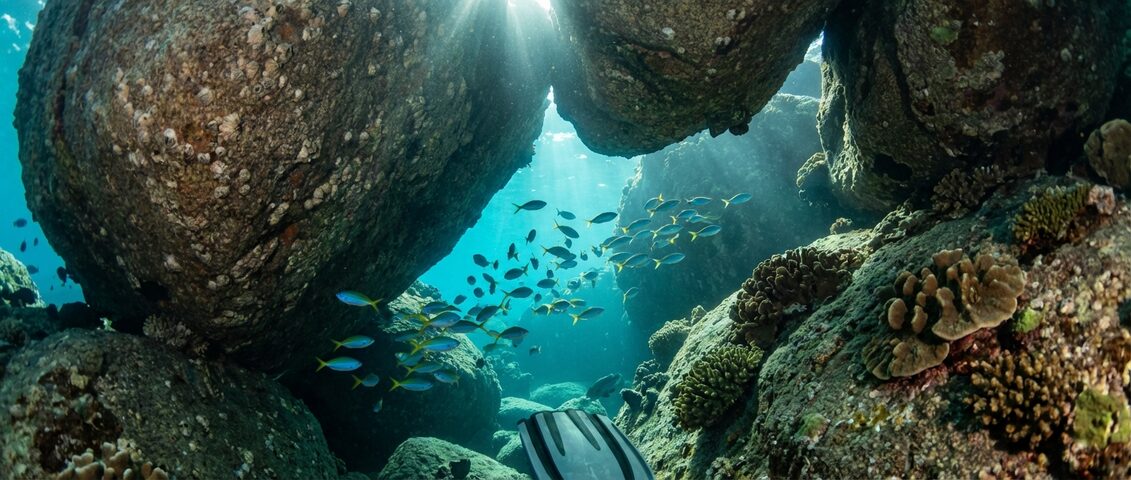
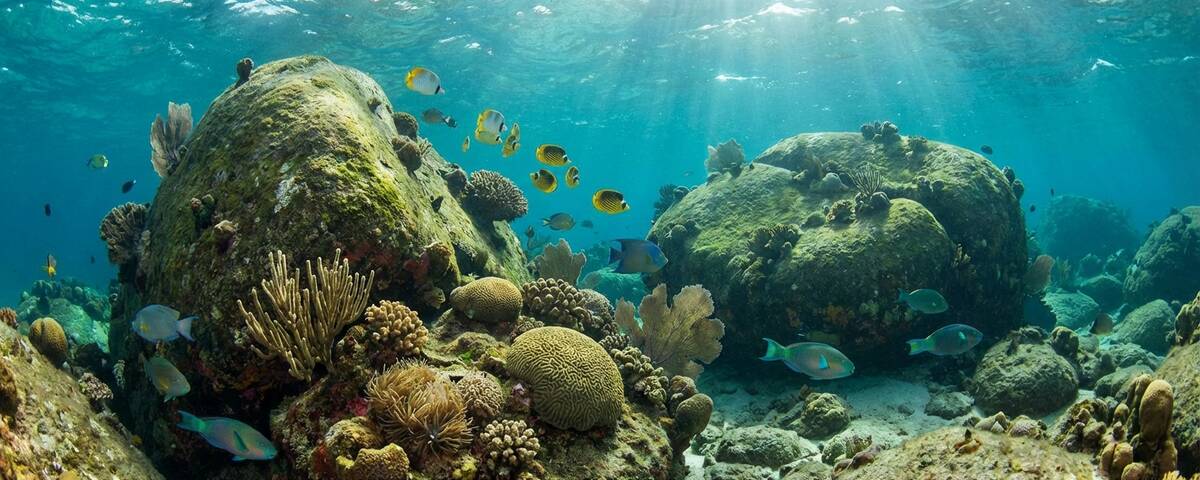
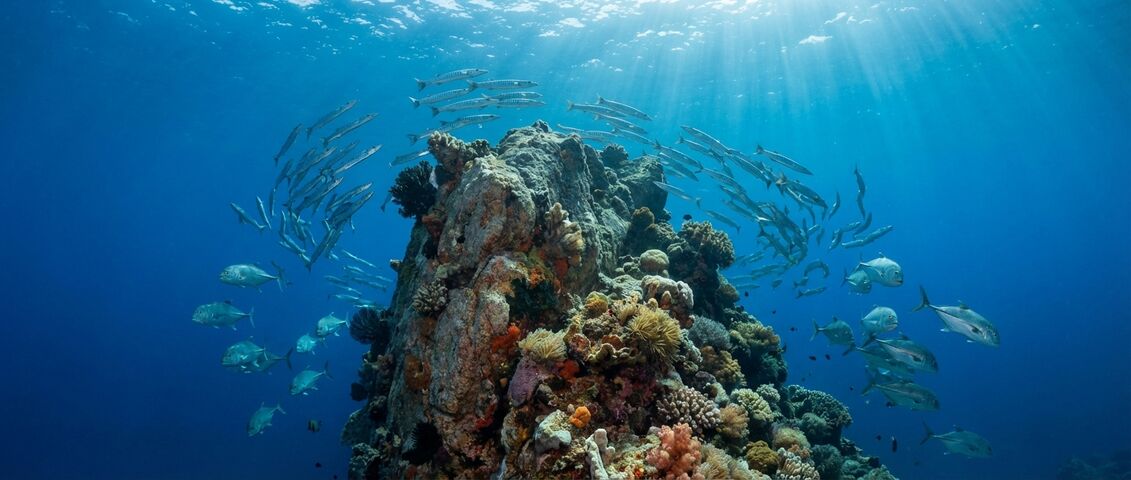
The underwater landscape here is defined by granite. Enormous boulders, some the size of minibuses, tumble from the hillside into the sea and continue down to 18 metres. These rocks create a complex three-dimensional reef structure that you simply do not get at the island's sandy-bottom coral gardens. Every surface is colonised: hard corals encrust the flat tops, sea whips and gorgonian fans extend from the vertical faces, and anemones cluster in the sheltered gaps between boulders where current funnels through.
What really sets Lang Kha Bay apart is the site known locally as King Kong Rock. The name has nothing to do with the shape of anything underwater. It honours Kampanat Na Songkhla, known as Uncle Kong or King Kong among the foreign dive community, who discovered the site roughly 30 years ago. Kong was Koh Tao's first Thai divemaster with his own dive school and one of the earliest voices for marine conservation on the island. He died of cancer in 1998 at just 35 years old. The site that carries his name remains one of the least dived on Koh Tao, which feels like both a loss and a fitting tribute. The reef has had decades to grow undisturbed.
The bay also features something genuinely unusual for Koh Tao: three underwater cracks. These are half-submerged caverns carved into the rocky northern shoreline, each roughly 2 to 3 metres wide and 10 metres long. They sit at depths of 3 to 5 metres and are shallow enough for confident snorkellers and freedivers, though scuba divers can explore them too on calm days. One of the cracks opens onto a tiny hidden beach at its far end, accessible only by swimming through. It is the kind of feature that makes you wonder what else you have been missing on an island where everyone dives the same ten sites.
The southeast orientation gives Lang Kha Bay its seasonal character. From February through September, when the prevailing winds blow from the southwest, the bay sits in a natural wind shadow. The surface goes glassy, visibility clears, and the morning sun illuminates the reef from directly overhead. During the northeast monsoon from October through January, the bay catches swell and some operators skip it entirely. Even in those months, the boulder formations break up the worst of the surge underwater, and the site remains diveable on all but the roughest days.
Marine Life at Lang Kha Bay
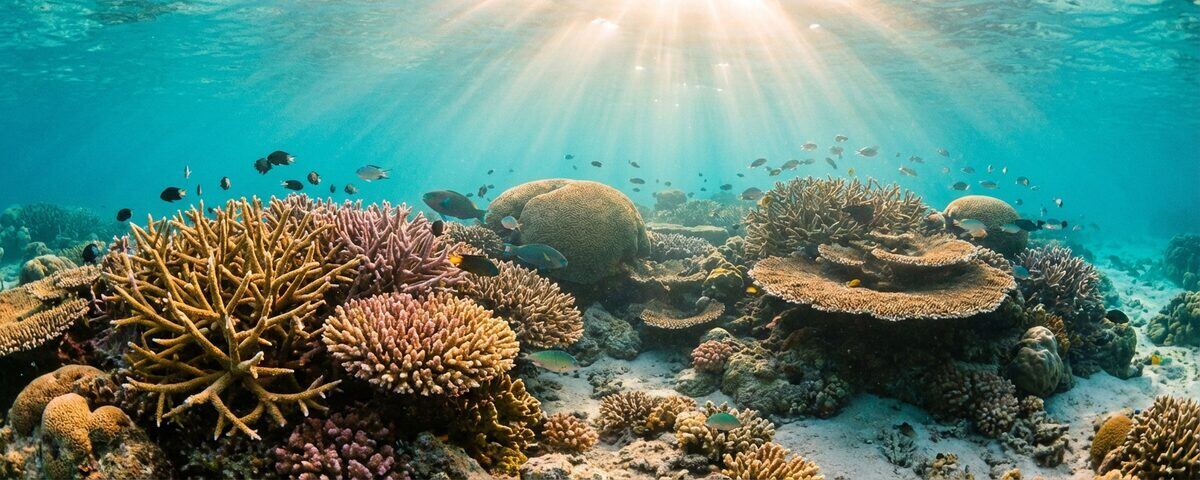
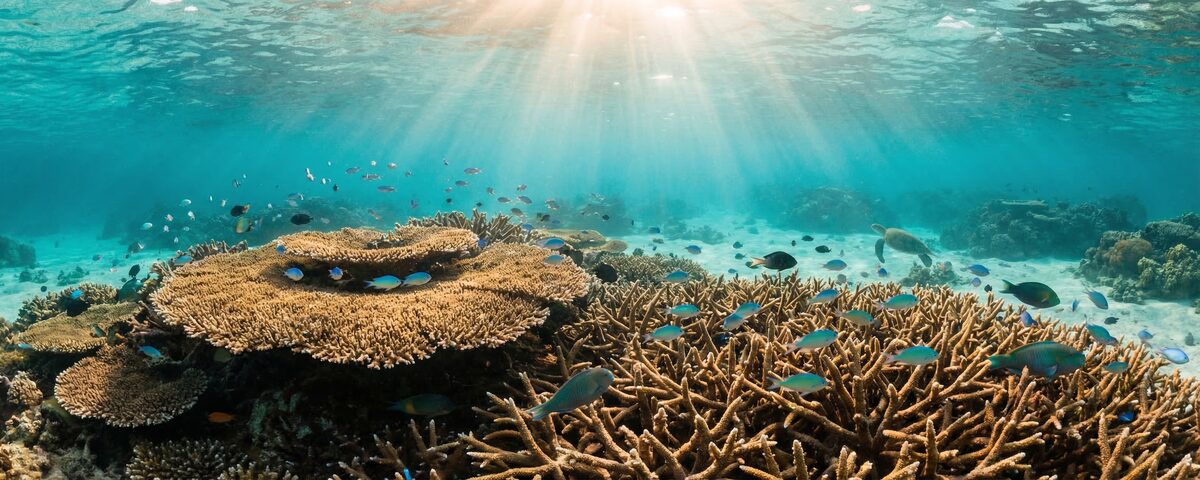
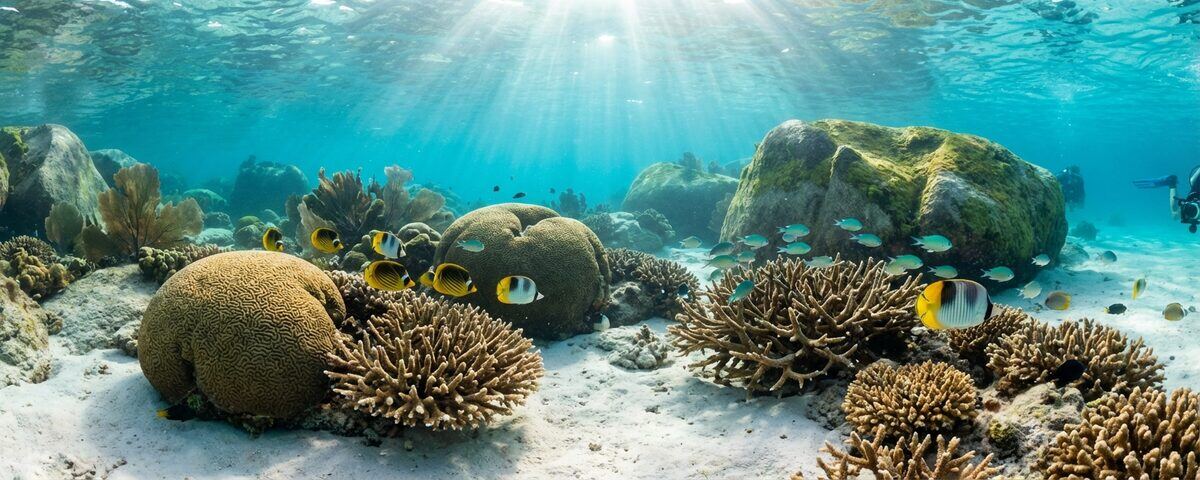
The boulders are the main event. Granite formations stacked and scattered across the seabed create swim-throughs, overhangs, and vertical walls within a single dive. Hard corals cover every horizontal surface: brain corals, massive Porites formations, and patches of branching Acropora growing in the gaps where sediment cannot settle. Starting from around 12 metres, harp coral (Ctenactis echinata) appears on the sandy patches between boulders, its distinctive elongated form lying flat on the substrate like ribbed fans.
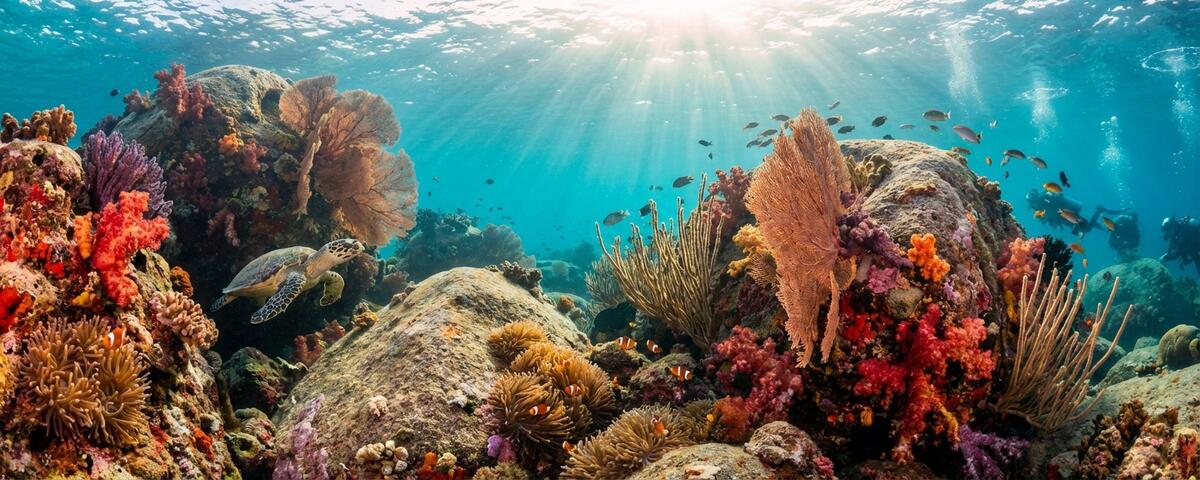
Sea whips and gorgonian fans extend from the vertical rock faces, particularly on the deeper boulders below 10 metres where the current delivers plankton. These are some of the best gorgonian displays on Koh Tao, rivalling what you would find at Green Rock or the pinnacle sites. The fans range from deep red to bright orange and provide excellent foreground subjects for wide-angle photography.
Hawksbill turtles are the headline residents. At least two individuals are regularly spotted here, usually resting under ledges or cruising slowly between boulders. They are less habituated to divers than the turtles at busier sites like Shark Island, which means they tend to be slightly more cautious but also more natural in their behaviour. You will see them actually foraging rather than posing.
Blacktip reef sharks patrol the deeper sandy channels between boulder clusters. Sightings are not guaranteed, but they are frequent enough that the locals consider Lang Kha Bay one of the more reliable blacktip sites on the southeast coast. The sharks tend to appear in the first 10 minutes of a dive before boat noise pushes them to deeper water.
Giant groupers hold station in the larger overhangs, sometimes two or three wedged into the same crevice. These are proper Epinephelus lanceolatus specimens, not the smaller coral groupers you see everywhere. Porcupinefish and yellow boxfish occupy the mid-depth overhangs, and moray eels thread through the gaps between rocks at every level.
Anemones with resident clownfish are scattered across the reef, mostly Clark's anemonefish in bulb-tip anemones. The sheltered spots between boulders harbour nudibranchs for patient macro hunters. Chromodoris species and Phyllidia varicosa are common on the rocky surfaces.
Damselfish and butterflyfish work the coral in the usual Koh Tao quantities, but the boulder structure adds variety you do not get on flat reef. Longnose hawkfish perch on sea fans. Beaked coralfish hover near the reef crest. Blue-spotted ribbontail rays sit half-buried on sandy patches between the formations.
The underwater cracks on the northern side of the bay add a dimension beyond typical reef diving. Swimming into a narrow cavern with light filtering through the surface overhead is atmospheric at any depth, and the rock walls inside support encrusting sponges and soft corals that thrive in the low-light environment. Painted spiny lobsters hide in the back recesses.
Dive Conditions
Lang Kha Bay is moderately sheltered by its orientation and the surrounding boulder formations. Current inside the bay is minimal for most of the year, rarely exceeding a gentle drift that actually helps with air consumption by carrying you along the reef. Occasionally a light current pushes through from the south during tidal changes, but it never reaches a strength that would trouble even newly certified divers.
Depths range from 3 metres in the shallows near the cracks to 18 metres at the base of the deepest boulder formations. The typical dive profile works between 5 and 14 metres, which gives comfortable bottom times of 50 to 60 minutes on a standard 12-litre tank.
Visibility varies with the seasons in the usual Gulf of Thailand pattern. February through June delivers the clearest water, regularly hitting 15 to 20 metres. The southeast-facing bay avoids the worst of the plankton blooms that sometimes affect the western coast during these months. From October to December, monsoon runoff and increased plankton drop visibility to 5 to 10 metres. This reduced visibility brings a trade-off: nutrient-rich water increases feeding activity, and the blacktip sharks become more active in murkier conditions.
Water temperature mirrors the rest of Koh Tao: 28 to 30 degrees from March through October, dropping to 27 degrees between December and February. A 3mm shorty handles most conditions comfortably. Longer dives in the cooler months benefit from a full 3mm suit.
Surface conditions are the primary constraint. The bay faces southeast, making it vulnerable to the northeast monsoon (October to January). During these months, surface chop can make boat entries uncomfortable, and operators with flexible schedules move to west-coast alternatives. From February through September, the surface is typically calm. Morning dives before the afternoon thermal winds pick up offer the flattest conditions.
The bottom is a mix of sand and granite boulders. Sand between the formations is relatively coarse, so fin kicks cause less silt-out than at Koh Tao's muddier sites. That said, the overhangs and swim-throughs punish poor buoyancy, so frog kicking is the way to go near the rock structures.
There is no practical shore entry for scuba. The coastline is steep rocks and the dirt track access is unreliable. All scuba diving arrives by boat. Snorkellers can access the shallows from a small rocky beach, but most arrive by longtail boat or kayak.
⚓ Divemaster Notes
The boulders are what make this site special, so plan the dive to maximise time weaving through the formations rather than swimming along the reef edge. Start at the deeper boulders around 14 to 18 metres where the gorgonians and blacktip sharks are most likely, then work gradually shallower through the stacked granite to finish in the 5 to 8 metre zone near the cracks.
Brief your group on the swim-throughs before they enter. Some of the gaps between boulders look wider than they are, and a diver with a bulky BCD or dangling gauges can get momentarily stuck. Nothing dangerous at these depths, but it is stressful for less experienced divers and damaging to the coral growing on the rock surfaces. If anyone in the group is newly certified, skip the tighter swim-throughs and stick to the wider channels.
The underwater cracks on the northern side are worth visiting in the last 15 minutes of the dive as you ascend into the shallows. They sit at 3 to 5 metres, which makes them a natural extension of the safety stop. Brief divers to enter single file and not to touch the walls. The encrusting growth inside the cracks is slow-growing and easily damaged.
Morning dives get the best light. The bay faces southeast, so direct sunlight hits the reef from about 8am, and the boulders throw dramatic shadows that add depth to photographs. Afternoon light is flat and washed out by comparison.
The hawksbill turtles here are less accustomed to divers than those at high-traffic sites. Keep your group at a respectful distance (3 metres minimum) and do not chase. A turtle that feels pressured will leave the area for hours. If you hang back and wait, they often come closer on their own.
For macro-focused divers, point out the nudibranchs on the boulder surfaces early in the dive. The Chromodoris species tend to sit on the vertical rock faces between 8 and 12 metres, and they are easy to swim past if nobody is looking. A torch helps enormously for spotting colour in the overhangs.
Lang Kha Bay pairs naturally with Aow Leuk as a second dive. The boat transit is under 5 minutes, and the contrast between Aow Leuk's sandy coral garden and Lang Kha's boulder reef makes for a varied two-dive morning. Shark Island is another 10 minutes south for operators wanting to stay on the southeast coast all morning.
How to Get to Lang Kha Bay
Koh Tao sits in the Gulf of Thailand, roughly 70 kilometres east of the Surat Thani coastline. Most visitors arrive by ferry from Chumphon (1.5 to 2 hours by catamaran) or from Surat Thani via Don Sak pier (2 hours by catamaran through Koh Phangan, or 6 hours by night ferry). Lomprayah and Seatran Discovery run the main catamaran routes with multiple daily departures.
Flights connect through Chumphon Airport (Nok Air from Bangkok) or Surat Thani Airport (AirAsia, Thai Lion Air, Nok Air from Bangkok). Combined flight-and-ferry packages run between 1,500 and 2,500 THB. Bangkok Airways flies direct to Koh Samui, adding a ferry connection for those willing to pay the premium for a smoother journey.
Once on Koh Tao, Lang Kha Bay is a 15 to 20 minute boat ride from Mae Haad pier. The site sits on the island's southeast coast, past Aow Leuk, which means it is further from the main piers than the popular west-coast dive sites. This is part of why it gets less boat traffic. All dive operators include boat transfers in their dive package pricing.
Overland access exists but barely qualifies as a road. A dirt track runs south from the Tanote Bay area, eventually reaching the hills above Lang Kha Bay. You need a motorbike with proper tyres or a willingness to walk the last stretch. The track is more useful for reaching the bay's small beach and the bouldering rocks above than for dive logistics. From the neighbouring Lad Bay, a walkway descends from the Moondance Magic View Resort on the cliff to King Kong Rock's snorkelling area below.
Taxi boats from Sairee Beach or Mae Haad charge 200 to 400 THB per person for the southeast coast, depending on season and negotiation.
Gear Recommendations
A 3mm shorty wetsuit covers February through October. The cooler months from December to February, when water temperature drops to 27 degrees, call for a full 3mm suit, especially for the 50 to 60 minute dives that the moderate depth profile allows.
Bring a torch, even for daytime dives. The overhangs and swim-throughs between boulders harbour critters that are invisible without added light, and the underwater cracks are genuinely dark once you get a few metres in. For night diving, a primary torch and backup are standard.
Wide-angle photography equipment gets good results at Lang Kha Bay. The boulders, gorgonians, and swim-throughs suit wide compositions, and the turtles are large enough subjects to fill a wide frame. That said, a macro wet lens earns its place for the nudibranchs and small reef life hiding in the crevices. If you can only bring one setup, go wide and use cropping for the macro subjects.
A reef hook is not necessary here. Current is almost never strong enough to warrant one, and clipping onto rocks would damage the coral growth.
Reef-safe sunscreen matters at every shallow site on Koh Tao, but Lang Kha Bay's relative pristineness makes it worth being especially careful. Mineral-based alternatives with zinc oxide are the responsible choice. Several operators on the island now specifically ask divers to avoid chemical sunscreens before entering the water.
Most dive shops on Koh Tao rent gear at reasonable rates. If you own your own mask and computer, bring them. Everything else is rental-grade and perfectly adequate for an 18 metre maximum depth.
Recommended Dive Operators
New Heaven Dive School has the deepest connection to Lang Kha Bay of any operator on Koh Tao. Their founder, the late Kampanat Na Songkhla, discovered King Kong Rock, and the school continues to run conservation surveys in the area. Their marine biology and Eco Diver speciality courses use the bay's boulder reef as a teaching site. Based in Chalok Baan Kao on the south coast, they have the shortest boat run to the southeast sites.
Crystal Dive Koh Tao holds PADI 5 Star IDC Centre status and schedules southeast coast trips that include Lang Kha Bay when conditions favour the east side of the island. Their boats run the east coast route most of the year outside monsoon season, and the bay features in their Advanced Open Water deep dive options.
Big Blue Diving has operated on Koh Tao since the mid-1990s and includes Lang Kha Bay in their fun dive rotations. Their conservation programme involves reef monitoring across the island's less-visited sites, and the bay's low traffic makes it a useful baseline for tracking reef health.
Ban's Diving Resort, another PADI 5 Star CDC based at Mae Haad pier, runs boats to the southeast coast for both training and fun dives. Their Discover Scuba Diving programme occasionally uses the bay's sheltered shallows for introductory dives.
Coral Grand Divers operates smaller group trips from Sairee that include southeast coast sites. Lower diver-to-guide ratios suit the boulder reef environment where the interesting things hide in crevices and overhangs rather than cruising past in open water.
Liveaboard Options
Koh Tao is not a liveaboard destination. The island functions as a land-based dive hub with day boats servicing all sites within 30 to 90 minutes of the piers. Lang Kha Bay is a 15 to 20 minute ride from Mae Haad.
Several Gulf of Thailand liveaboard routes do include Koh Tao as a stop, typically on itineraries connecting Chumphon Pinnacles, Sail Rock, and the Ang Thong Marine Park. MV Nautica, The Junk, and DiveRACE operate multi-day trips through the Gulf that occasionally schedule a Lang Kha Bay dive when southeast conditions allow, usually as a relaxed shallow stop or checkout dive.
For divers targeting Koh Tao specifically, staying on the island and booking day trips offers far better flexibility and value. Accommodation ranges from 300 THB dorm beds to 5,000 THB boutique bungalows, and most include dive package discounts that bring the per-dive cost lower than almost anywhere else in Southeast Asia.