Mango Bay Dive Site
Koh Tao, Thailand · Near Mae Haad
Overview
Mango Bay diving on Koh Tao is where roughly 80% of the island's dive schools send their students for a first open water experience, and there is a good reason for that statistic. The bay sits on the northwest tip of the island, a horseshoe of granite headlands shielding a sandy floor and coral garden from the prevailing currents that make Koh Tao's offshore pinnacles so exciting and so unsuitable for anyone still learning to clear a mask.
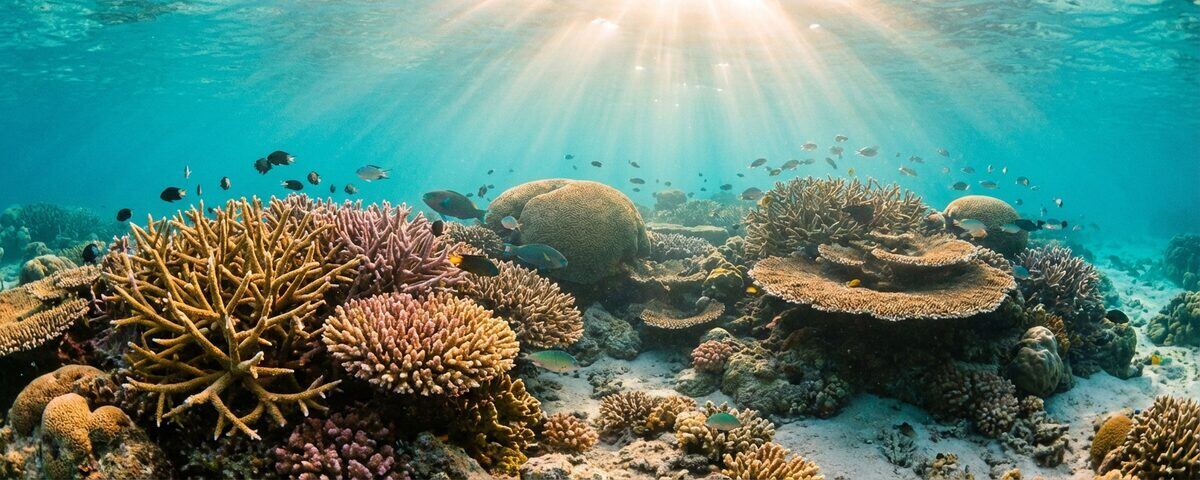
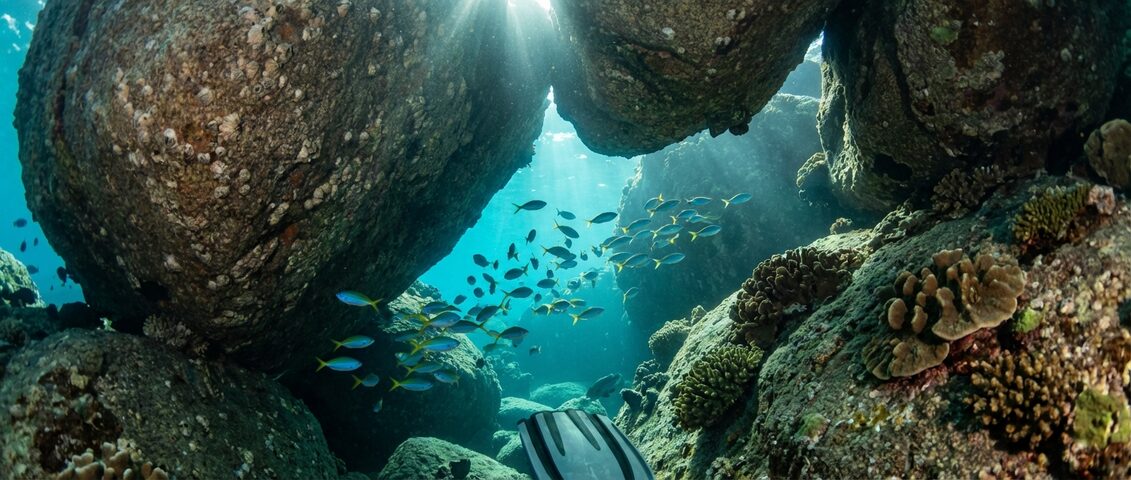
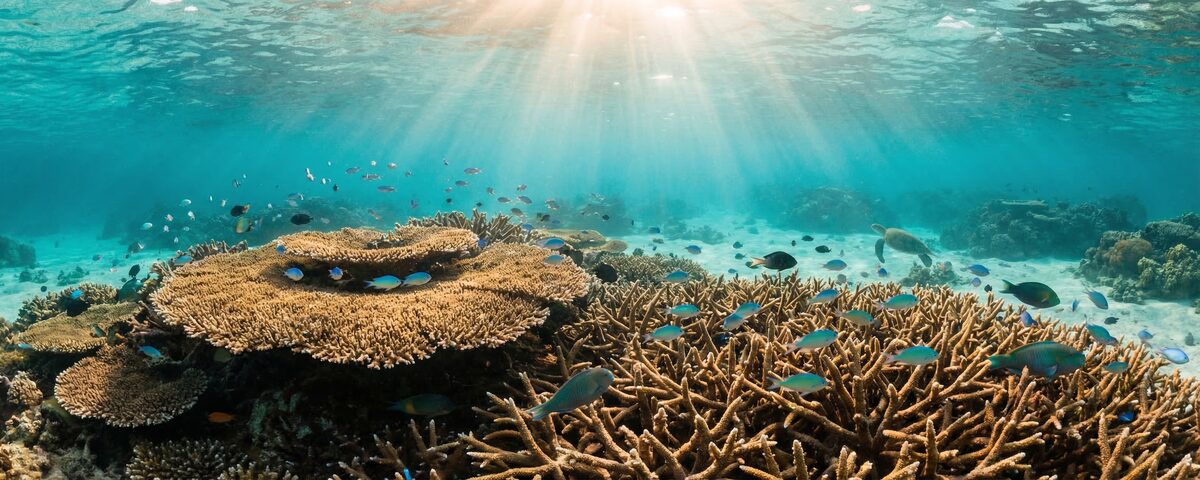
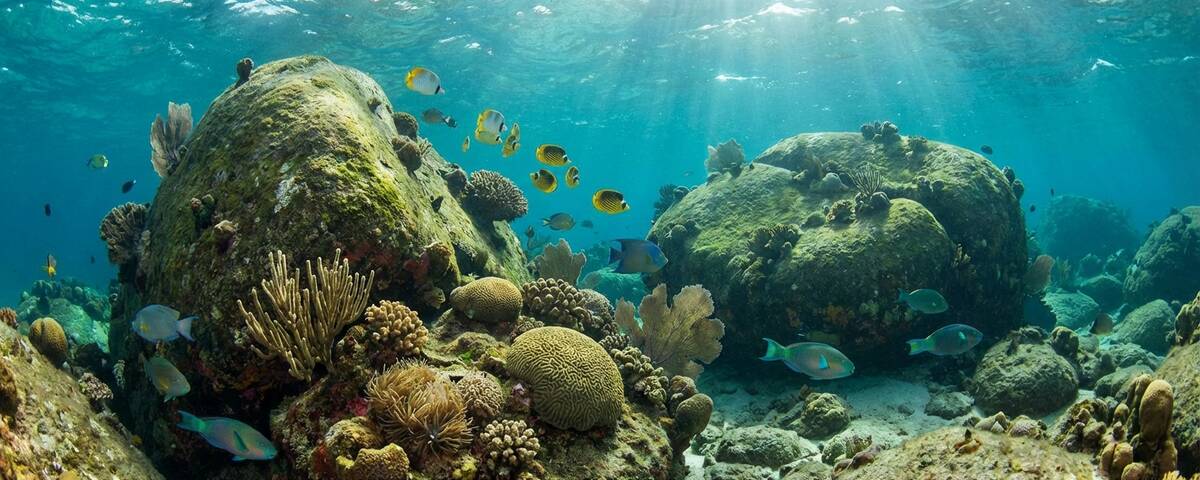
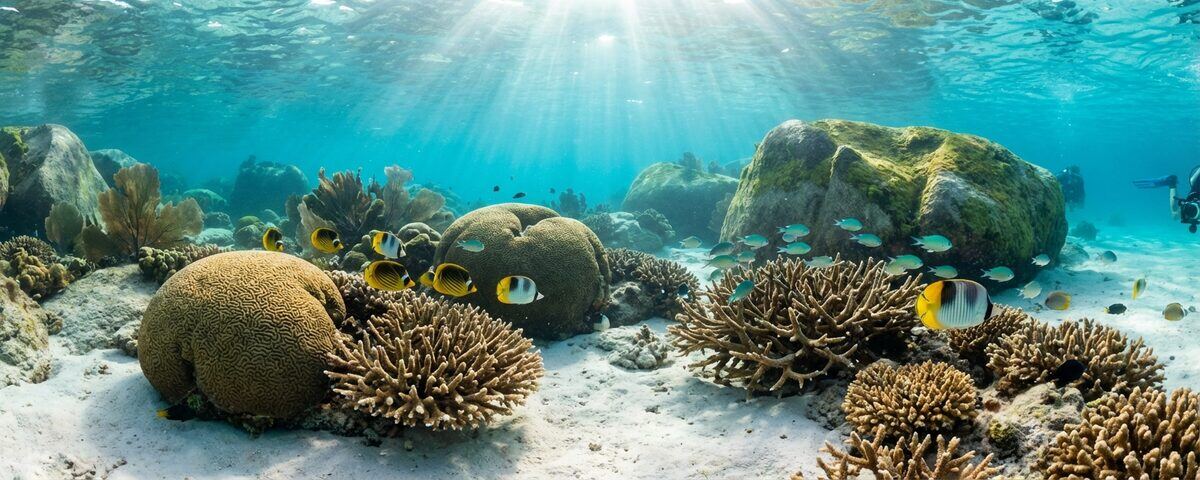
But writing Mango Bay off as a training puddle misses the point entirely. The reef here is genuinely healthy, with around 35 documented hard coral species and an estimated 65% live coral coverage across the eastern slope. Brain corals the size of dining tables anchor the substrate, surrounded by branching staghorn formations and patches of Porites that have been growing undisturbed for decades. The western side of the bay is rockier, with granite boulders tumbling from the headland into the shallows and creating overhangs where moray eels coil up during the day.
The bay earned its name from the distinctive mango-shaped coral formations scattered across the seabed, though first-time visitors are forgiven for not spotting the resemblance immediately. What they do notice is the light. On a calm morning, the shallow sandy centre of the bay catches the sun like a swimming pool, turquoise and transparent, with visibility regularly pushing past 20 metres. It is one of the most photogenic shallow dives in the Gulf of Thailand, the sort of place where even a phone in a cheap housing produces something worth posting.
Two sets of concrete reef blocks sit on the sandy bottom at around 8 to 10 metres depth, deployed as artificial reef structures and now thoroughly colonised by encrusting corals and sponges. Dive schools use them for buoyancy exercises because they provide visual reference points in the open sand, but they have also become genuine habitat. Juvenile fish swarm around the blocks in clouds, and the occasional blue-spotted stingray parks itself underneath.
For certified divers, Mango Bay works best as a relaxed second dive or a night dive. The eastern slope drops gradually to 16 metres and holds more complexity than the sandy centre, with coral bommies rising from the sand and narrow channels between boulder formations. At night the bay transforms completely: shrimp eyes glow red in torch beams, parrotfish sleep in mucus cocoons wedged into coral crevices, and the reef's nocturnal hunters emerge from holes they spent the daylight hours hiding in. Night diving here is underrated because the bay's reputation as a beginner site overshadows everything else it offers.
The 15-minute boat ride from Mae Haad pier barely counts as a journey, though the approach by water is half the appeal. The bay opens up between two rocky headlands covered in scrubby tropical vegetation, with a narrow white sand beach at the back and a single resort perched on the hillside above. Longtail boats anchor in the shallows for snorkelling trips most mornings, so early arrivals get the reef to themselves before the day-trippers show up around 10am.
Marine Life at Mango Bay
The species list at Mango Bay reads shorter than the offshore pinnacles but makes up for it in accessibility. Everything here is close, slow-moving, and cooperative with cameras.
Butterflyfish are the bay's signature residents. Copperband butterflyfish pick at coral polyps along the eastern reef wall while eightband butterflyfish patrol in pairs between the bommies. Longfin bannerfish hang in loose groups above the reef crest, their trailing dorsal filaments impossibly elegant for fish that spend most of their time hovering in place.
Damselfish own the shallows. Blue chromis and sergeant majors form the backdrop to every dive here, so numerous they become visual noise within the first five minutes. The blue-ringed angelfish is the prize find on the eastern slope, large enough to spot from a distance and striking enough to make divers pause mid-kick.
Parrotfish graze across the coral gardens in small groups, their scraping audible underwater on quiet dives. Bumphead parrotfish occasionally visit from deeper water, though sightings are sporadic rather than reliable.
Blue-spotted ribbontail rays rest on the sandy patches between coral heads, and patient divers who hover quietly over the sand will spot Jenkins whiprays gliding along the bottom. Neither species is rare in the Gulf of Thailand, but Mango Bay's calm conditions make them easier to observe than at current-swept sites.
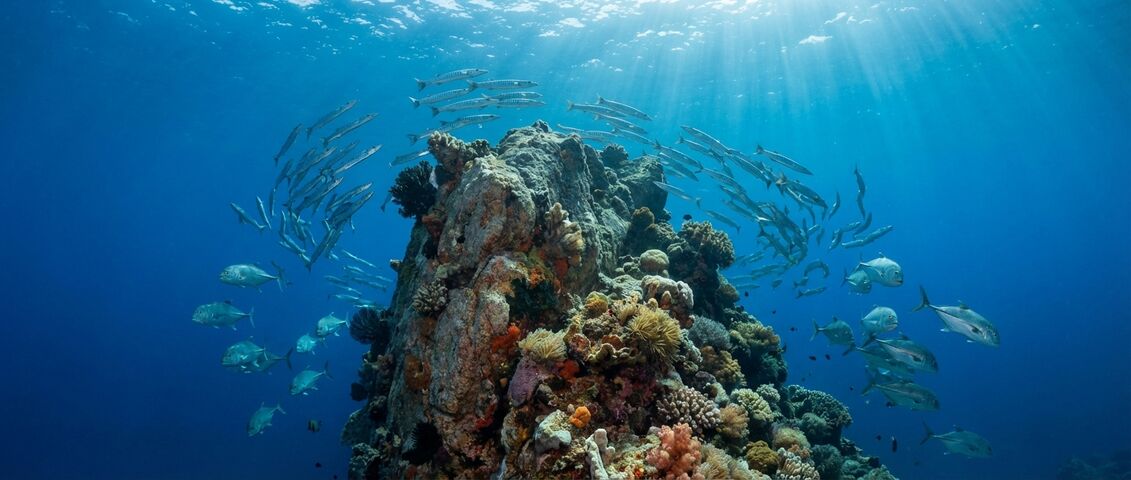
The artificial reef blocks attract their own community. Juvenile barracuda school tightly around the structures, orbiting in silver loops. Porcupinefish wedge themselves into gaps between the concrete forms. Moral eels, mostly white-eyed morays, peek from crevices in the boulder formations along the western wall.
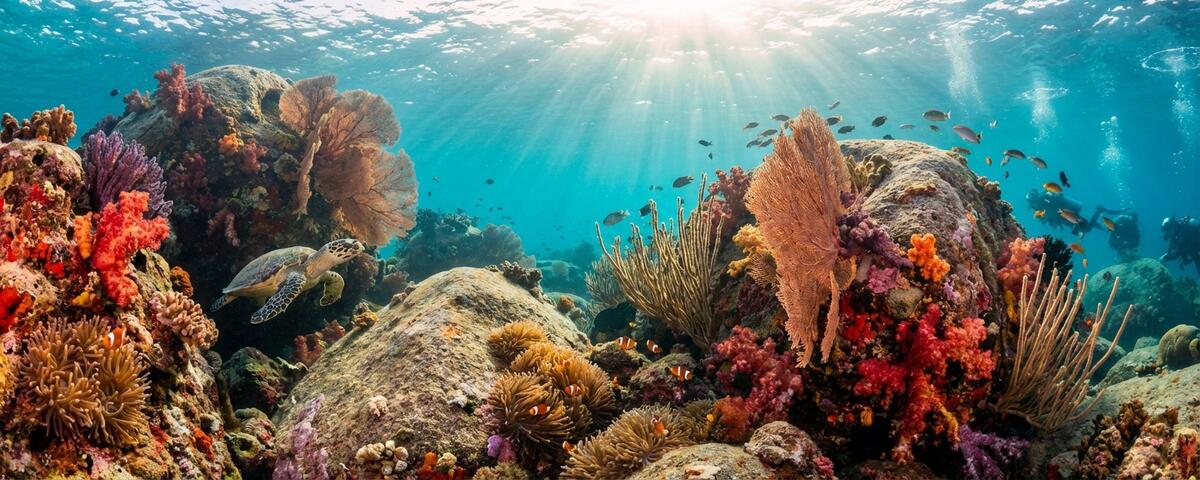
Clownfish living in anemones scattered across the reef provide reliable macro subjects. The bay hosts both Clark's anemonefish and the skunk anemonefish, both tolerant of hovering cameras. Cleaner shrimp stations operate from several of the larger coral heads, and watching a grouper hold still while a tiny shrimp picks parasites from its gills is one of those small moments that keeps divers coming back to easy sites.
At night, the cast changes entirely. Painted spiny lobsters emerge from the rocks, their purple and white markings vivid under torch light. Hermit crabs march across the sand in surprising numbers. Box crabs and decorator crabs appear on the reef blocks. The occasional sleeping green turtle rests on the eastern slope, wedged into a coral overhang with its head tucked under a flipper.
Seasonal visitors include barramundi cod during the cooler months and the very occasional whale shark transit across the mouth of the bay, though anyone who dives Mango Bay specifically hoping for a whale shark will be disappointed.
Dive Conditions
Mango Bay is about as forgiving as the Gulf of Thailand gets. The horseshoe shape of the bay blocks current from every direction except directly from the northwest, which only happens during the strongest monsoon surges between October and December. Even then, the current inside the bay itself rarely exceeds a gentle drift.
Depths range from 1 metre at the beach entry point to 16 metres at the deepest section of the eastern slope. The vast majority of the dive takes place between 4 and 10 metres, which means air consumption is a non-issue for almost everyone. A typical dive runs 50 to 60 minutes without coming close to tank limits.
Visibility varies more than current does. During the best conditions from March to June, visibility regularly exceeds 20 metres and occasionally hits 30. From October to December, when the Gulf receives runoff and plankton blooms, visibility can drop to 5 to 8 metres. This reduced visibility actually brings better marine life, as the nutrient-rich water attracts filter feeders and the fish that follow them.
Water temperature stays between 27 and 30 degrees Celsius year-round. A 3mm shorty is standard kit for most divers, though some instructors prefer a full 3mm suit for the slightly cooler water between December and February when temperatures dip to 27 degrees.
Surface conditions are the main variable. The bay faces northwest, so it catches wind chop during the northeast monsoon season from late October through December. Dive operators switch to east-coast sites like Tanote Bay and Aow Leuk when the northwest swell builds. From January through September, the surface is usually flat calm, and the boat ride from Mae Haad is smooth enough to read a book.
There is no shore entry for scuba from the beach itself without going through the resort, so all recreational diving arrives by boat. Snorkellers can access the reef from the beach, which means divers occasionally need to manage their ascent around floating tourists. This is more of a mild annoyance than a genuine safety concern.
Bottom composition is mixed sand and coral rubble in the centre, graduating to solid reef on both flanks. The sand can be silty in patches, so heavy fin kicks near the bottom reduce visibility for everyone behind you. Frog kicking or modified flutter kicks keep the silt settled.
⚓ Divemaster Notes
I always brief Mango Bay as two dives in one: the sandy centre for skills work and comfort building, and the eastern reef slope for the actual diving. Most groups spend the first 15 minutes in the sand, get comfortable, then migrate east where the coral starts and the fish density picks up sharply.
The artificial reef blocks at 8 to 10 metres are genuinely useful landmarks. I use them as waypoints for navigation exercises and as gathering points when groups spread out on the reef. The blocks also make excellent neutral buoyancy checkpoints because you can see exactly how high a diver is hovering above a known reference.
Head east first if you have a choice. The reef on the eastern slope is healthier, more complex, and holds more life than the western boulders. Save the west side for the return leg when air is getting shorter and the shallower boulders work better anyway.
Morning dives get the best light. The sun hits the eastern slope directly from about 9am, and the shallow sandy areas glow. Afternoon light falls behind the western headland and the bay loses its trademark turquoise colour earlier than you would expect.
For night dives, descend at the eastern reef blocks and work south along the slope. The coral overhangs at 12 to 14 metres on the eastern side consistently produce the best nocturnal finds, including sleeping turtles, Spanish dancers, and the occasional cuttlefish hunting over the reef.
Watch the snorkellers on the surface, particularly between 10am and 2pm when day-trip boats arrive. Do your safety stop away from the main snorkelling area near the beach to avoid popping up underneath a drifting swimmer.
Water clarity varies hugely by time of year. March through May is usually the clearest window. If you are visiting specifically for underwater photography, aim for those months. The November plankton bloom cuts visibility but the bay comes alive with feeding activity, so it is a trade-off worth considering.
How to Get to Mango Bay
Koh Tao sits in the Gulf of Thailand, roughly 70 kilometres east of the Surat Thani coast. Most visitors arrive by ferry from either Chumphon (1.5 to 2 hours by catamaran) or Surat Thani/Don Sak pier (4 to 6 hours by night ferry, 2 hours by catamaran via Koh Phangan). Lomprayah and Seatran Discovery operate the main catamaran services, with multiple daily departures.
Flights land at Chumphon Airport (Nok Air from Bangkok) or Surat Thani Airport (AirAsia, Thai Lion Air, Nok Air from Bangkok). Combined flight-plus-ferry packages are available through most booking platforms and typically cost 1,500 to 2,500 THB total. Bangkok Airways flies direct to Koh Samui, which adds a ferry connection but offers a smoother overall journey.
Once on Koh Tao, Mango Bay is a 15-minute longtail boat ride from Mae Haad pier, the island's main arrival point. All dive operators include boat transfers to dive sites in their pricing. The bay is also reachable by a rough dirt road from the north end of the island, though this route requires a motorbike or 4x4 and is more practical for visiting the beach than for hauling dive gear.
Taxi boats run from Sairee Beach and Mae Haad to Mango Bay throughout the day, charging around 100 to 200 THB per person each way. These are the same longtail boats that serve snorkelling day-trips.
Gear Recommendations
A 3mm shorty wetsuit covers most of the year. Between December and February, water drops to 27 degrees and a full 3mm suit or even a 5mm is more comfortable for divers who feel the cold. Most dive shops on Koh Tao rent gear cheaply, so travelling light is practical.
For photography, a compact camera with macro capability will get the most from Mango Bay. The reef life is small and close, so wide-angle setups are less rewarding than a good macro wet lens. Bring a focus light for the crevices and overhangs where the interesting critters hide.
Reef-safe sunscreen is worth mentioning because the bay is shallow enough that surface-applied sunscreen washes directly onto the coral. Several operators on Koh Tao now ask divers to avoid chemical sunscreens before diving Mango Bay specifically.
A torch is useful even on daytime dives for peering into the overhangs on the western boulders and the artificial reef blocks. Many of the moray eels and crustaceans are only visible when you add light to the shadows.
Recommended Dive Operators
Crystal Dive Koh Tao runs one of the largest operations on the island with PADI 5 Star IDC Centre status and regularly schedules Mango Bay for training dives. Their instructors know the site intimately.
Ban's Diving Resort is the other major operation, also a PADI 5 Star CDC, and uses Mango Bay extensively for Open Water courses. Located right at Mae Haad pier, the logistics are as simple as they get.
Chalok Reef Divers operates from Chalok Baan Kao on the south coast and offers a more personal feel with smaller group sizes. Their fun dive trips to Mango Bay run when conditions favour the north side of the island.
Roctopus Dive in Sairee is well-regarded for technical training and takes advanced students to Mango Bay for night diving. Their marine biology speciality course uses the bay's reef as a living classroom.
Big Blue Diving has been operating on Koh Tao since the early days and maintains a strong conservation focus, running regular reef monitoring surveys at Mango Bay alongside their course schedule.
Liveaboard Options
Koh Tao is not a liveaboard destination in the traditional sense. The island functions as a land-based dive hub with day boats servicing all sites within 30 to 90 minutes of the piers. Mango Bay is a 15-minute ride.
That said, several Gulf of Thailand liveaboard itineraries include Koh Tao as a stop, typically on routes connecting Chumphon Pinnacles, Sail Rock, and the Ang Thong Marine Park. MV Nautica, The Junk, and DiveRACE operate multi-day trips through the Gulf that may schedule a Mango Bay dive, particularly as a checkout or night dive stop.
For divers specifically targeting Koh Tao's sites, staying on the island and booking day trips offers far more flexibility and better value than a liveaboard. Accommodation ranges from 300 THB dorm beds to 5,000 THB boutique resorts, and most include dive package discounts.