Red Rock Dive Site
Koh Tao (Gulf of Thailand), Thailand · Near Koh Tao
Overview
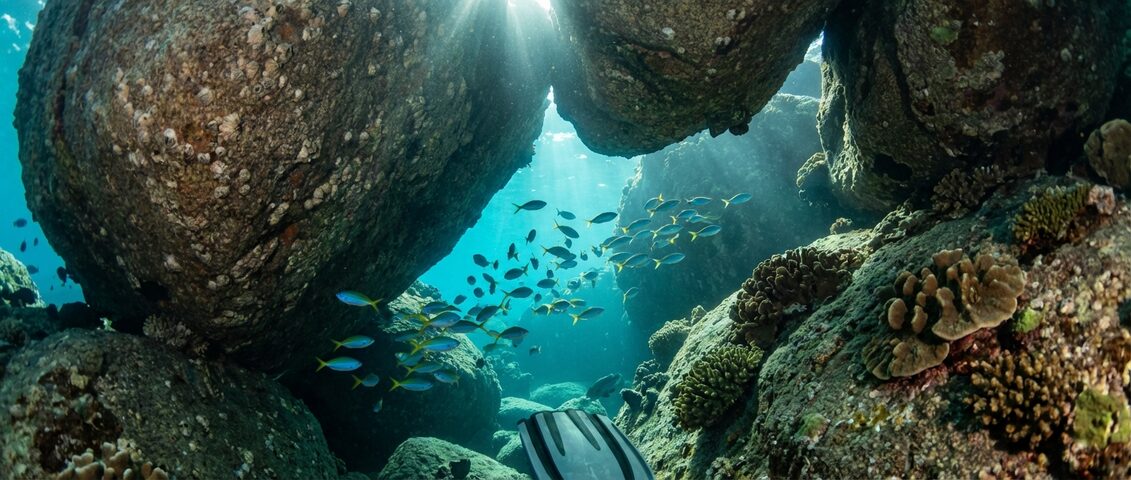
Red Rock sits off Koh Tao's northeast coast, roughly halfway between Hin Wong Bay and Mango Bay. The site takes its name from the rust-coloured granite boulders that break the surface at low tide, stained by iron-rich mineral deposits that have leached through the stone over millennia. Beneath the waterline, those same boulders tumble down a gentle slope to around 18 metres, creating a maze of swimthroughs, overhangs, and crevices that reward slow, curious divers far more than those racing to tick it off the list.
For a site that barely cracks 18 metres at its deepest, Red Rock punches well above its weight. The boulder formations create distinct microhabitats at every depth, which means the marine life here is disproportionately varied for such a compact footprint. Beginners get a genuine adventure without the stress of deep water or ripping currents, while experienced divers who take the time to poke around the nooks and crannies will find more than enough to fill a 60-minute dive.
Koh Tao's reputation as a factory for newly minted Open Water divers sometimes overshadows the fact that it has legitimately excellent diving. Red Rock is a good example. It's not famous, it won't make any top-ten lists, and that's precisely why it's worth your time. The site rarely feels crowded, even during peak season, and the topography gives you options: circumnavigate the main formation, explore the swimthroughs, or simply park yourself at 12 metres and watch the resident marine life go about its business.
Marine Life at Red Rock
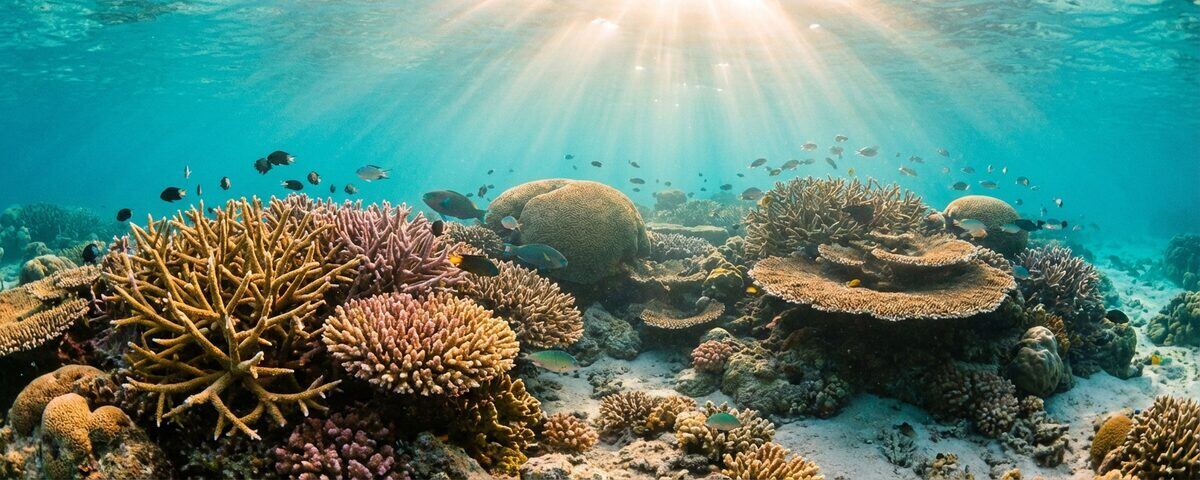
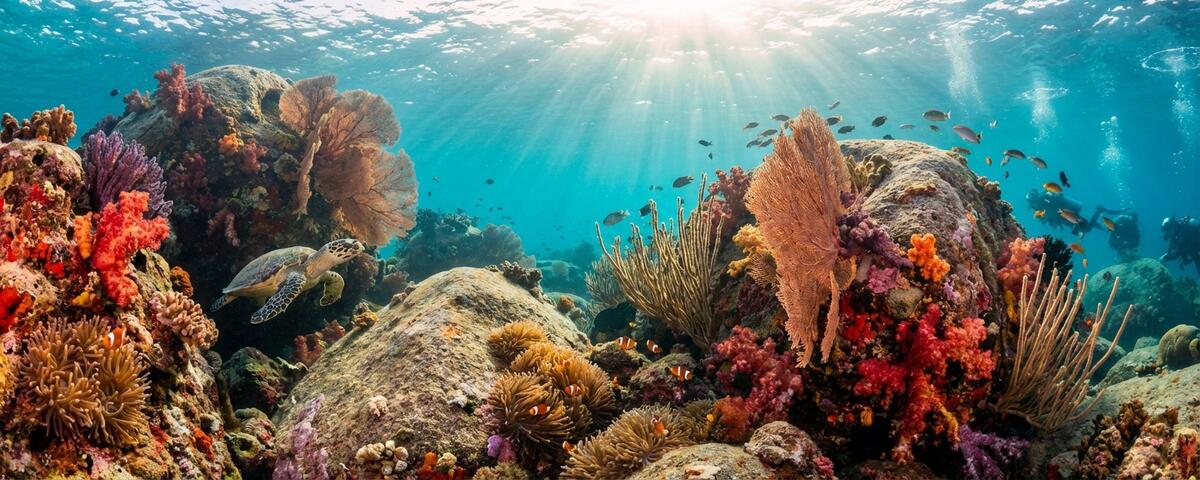
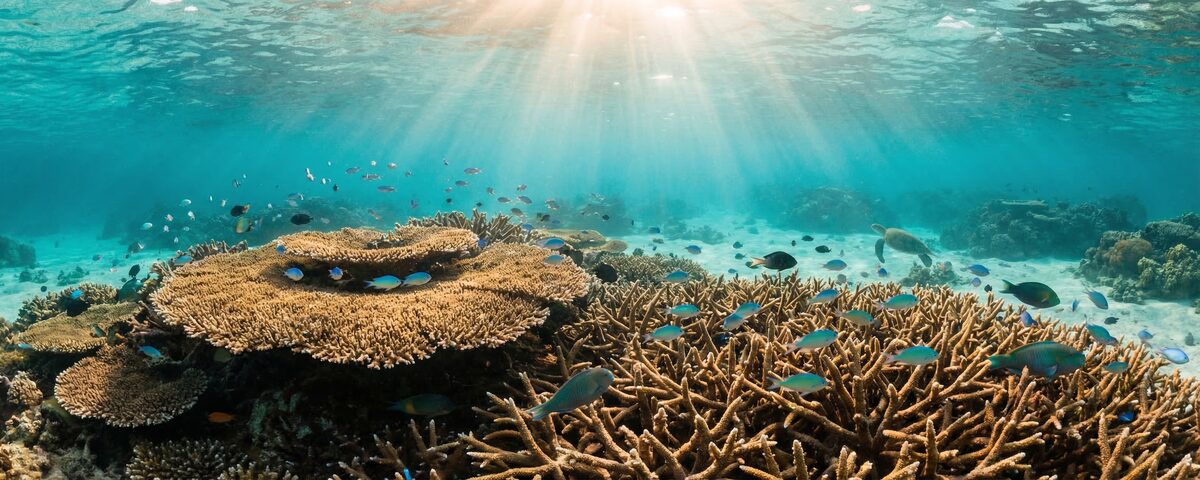
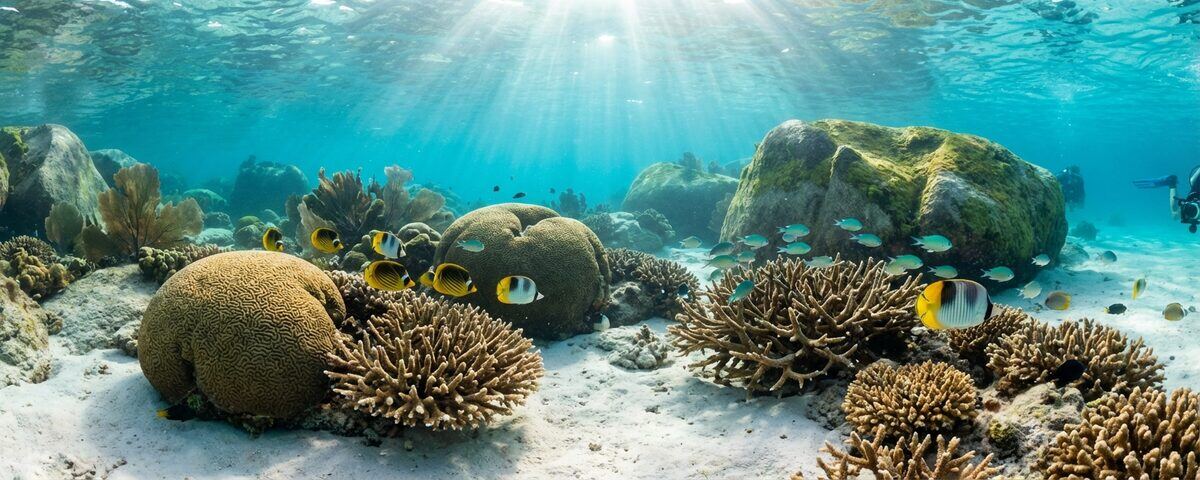
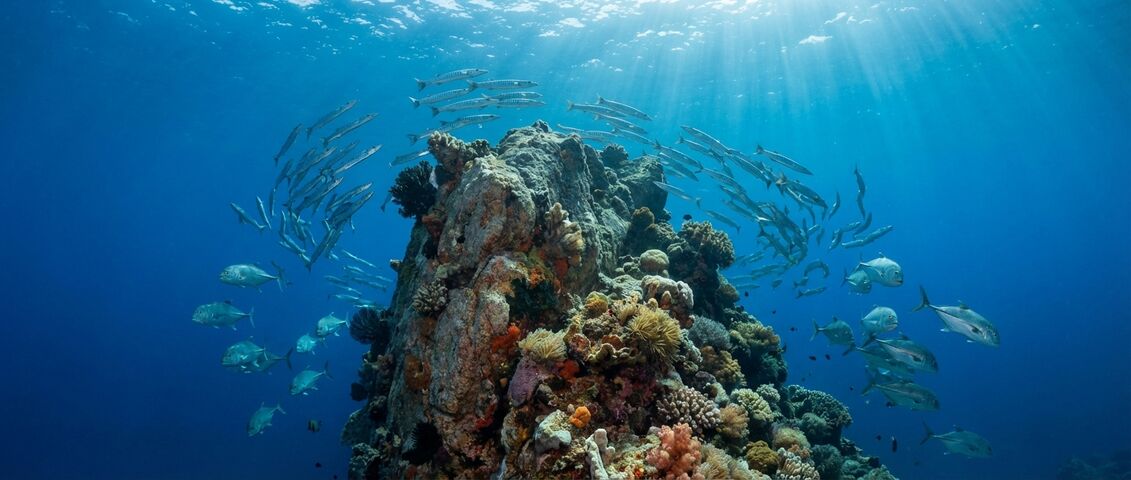
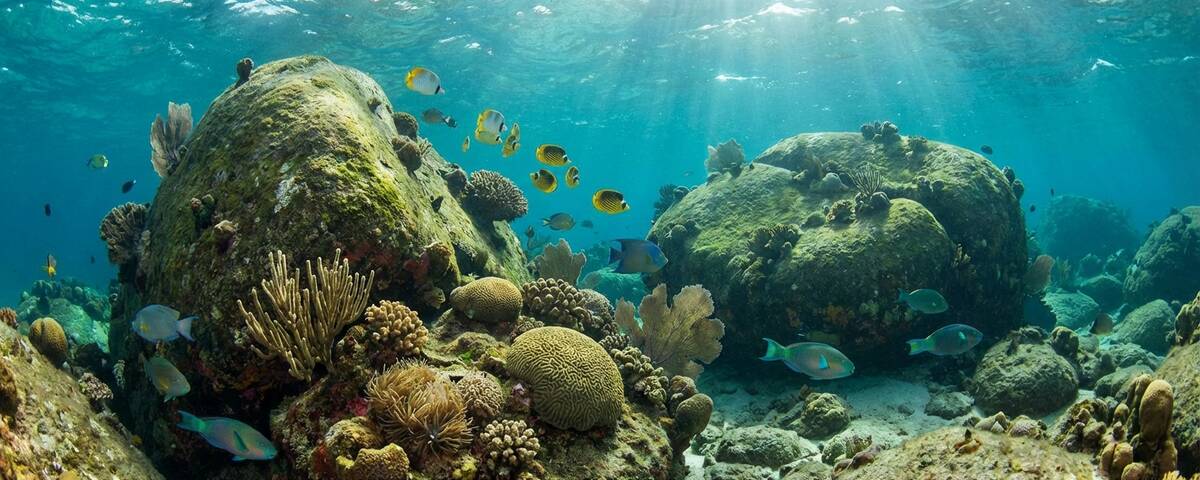
The boulders themselves are the main attraction. Massive granite formations, some the size of delivery vans, are stacked and tumbled in arrangements that create genuine swimthroughs wide enough for two divers side by side, plus tighter gaps where you'll need to tuck your arms in. Hard corals (mostly brain coral and staghorn varieties) coat the upper surfaces where sunlight reaches, while the shaded undersides host soft corals, sponges, and clusters of feather stars in reds and yellows.
Reef fish here are abundant and surprisingly confident. Schools of fusiliers sweep past in silvery curtains, yellow-tailed barracuda hang in loose formations at mid-water, and the crevices shelter moray eels (both giant and white-eyed varieties pop up regularly). Butterflyfish in at least four or five species patrol the coral heads in pairs. Porcupinefish wedge themselves into gaps and stare at you with those absurdly large eyes.
The sandy patches between boulder clusters are worth checking carefully. Blue-spotted stingrays rest on the bottom, sometimes two or three in a single clearing. Juvenile blacktip reef sharks occasionally cruise through, particularly in the early morning before boat traffic picks up. Titan triggerfish are resident and territorial during nesting season (roughly September to November), so watch your fins around their nests or you'll get a painful reminder of why they've earned their reputation.
Macro life is better than you'd expect. Nudibranch hunters can find several species on the coral-encrusted rock faces, and cleaning stations on the larger boulders attract groupers and sweetlips queuing patiently for their turn. At night, Red Rock transforms entirely. Hermit crabs swarm the sandy areas, sleeping parrotfish tuck into mucus cocoons among the coral, and the occasional Spanish dancer nudibranch makes an appearance if you're lucky.
Dive Conditions
Red Rock is one of Koh Tao's more forgiving sites, which is partly why it works so well for newer divers. Maximum depth tops out at roughly 18 metres on the sand, with most of the interesting topography concentrated between 5 and 14 metres. You could comfortably spend your entire dive at 10 metres and not feel like you're missing anything.
Currents are typically mild. Occasionally a moderate flow pushes through from the north, but nothing that should trouble a competent Open Water diver. When current does pick up, the boulders provide natural shelter on the lee side, so you can always tuck in and wait it out or simply work your way around to the calmer side of the formation.
Visibility ranges from about 5 metres on a murky day to 20 metres when conditions align. The Gulf of Thailand isn't known for gin-clear water (you want the Andaman side for that), but 10 to 15 metres is typical here between March and September. After heavy rain or during plankton blooms, visibility can drop to 5 metres, which honestly makes the swimthroughs more atmospheric even if it's less photogenic.
Water temperature hovers between 27 and 30 degrees Celsius year-round. Most divers are comfortable in a 3mm shorty; the thermally sensitive might prefer a full 3mm suit, particularly between November and February when it occasionally dips to 26 degrees at depth. Surface conditions can get choppy during the northeast monsoon (October to December), and some operators skip the site on particularly rough days, but it's diveable twelve months of the year.
⚓ Divemaster Notes
Work the swimthroughs slowly and carry a torch, even during daytime dives. The overhangs shelter sleeping nurse sharks on occasion, plus the torch picks up colours that the ambient light misses completely in the shaded sections. The largest swimthrough on the site's south side is wide enough to pass through comfortably, but check the exit before committing if you're guiding newer divers.
The site is small enough that you can circumnavigate the main formation in about 25 minutes at a relaxed pace, which leaves plenty of time to double back to anything that caught your eye. Start into whatever current exists and let it push you home on the return leg.
During nesting season, Titan triggerfish set up territories in the sandy patches on the east side. Brief your divers. A territorial Titan is no joke, and the bites draw blood. Give nesting fish a wide berth and ascend slightly to pass over their territory rather than through it.
Red Rock works brilliantly as a second dive after a deeper site like Chumphon Pinnacles or Southwest Pinnacles. The shallow profile means generous no-deco limits, so you can comfortably give divers 50 to 60 minutes here without anyone running low on bottom time. It's also a solid night dive option if your operator runs them on this side of the island.
How to Get to Red Rock
Koh Tao is a small island in the Gulf of Thailand, accessible by ferry from Chumphon (1.5 to 3 hours depending on the boat) or from Koh Samui and Koh Phangan via Lomprayah or Seatran catamaran services. Flights land at Koh Samui airport (USM), which connects to Bangkok, Kuala Lumpur, Singapore, and Hong Kong. The budget option is flying to Surat Thani (URT) and catching a combination bus-and-ferry transfer, which takes longer but costs a fraction of the Samui route.
Once on Koh Tao, Red Rock is reached by longtail or dive boat from any of the island's main piers. Mae Haad pier is the arrival point and where most dive shops are clustered. The boat ride to Red Rock takes 15 to 25 minutes depending on your departure point and sea conditions. Shops operating from Hin Wong Bay or Tanote Bay on the east coast have the shortest run.
Koh Tao has no cars and limited roads. Scooters are the standard transport, though the island is small enough to walk between most areas. Accommodation ranges from 200-baht fan bungalows to proper resort rooms. Most dive operators offer package deals bundling accommodation with diving, which is how the majority of visitors structure their stay.
Gear Recommendations
A standard tropical setup covers everything you need here. A 3mm shorty is the norm on Koh Tao; bring a full 3mm if you run cold, particularly for second dives or the cooler months. There's no need for anything thicker unless you're doing three or more dives in a day.
Carry a compact torch for the swimthroughs and overhangs, even on day dives. It makes a noticeable difference to what you spot in the shadows. A reef hook is unnecessary (no wall diving or strong current to warrant one), but a surface marker buoy is sensible if you're diving independently rather than with a group.
Photographers should bring a wide-angle setup for the boulder formations and swimthrough shots, plus a macro lens if you've got a second dive to dedicate to the smaller stuff. A 10-17mm fisheye or similar wide lens works well for capturing the swimthroughs with a diver model for scale. The shaded overhangs mean you'll want strobes rather than relying on ambient light.
Rental equipment on Koh Tao is generally decent quality, with most shops running Aqualung or ScubaPro gear that gets serviced regularly. If you're particular about fit, bring your own mask, computer, and exposure suit. Everything else rents fine.
Recommended Dive Operators
Koh Tao has over 50 registered dive centres, which is staggering for an island you can drive around in 20 minutes. Quality varies, but competition keeps standards reasonably high. For Red Rock specifically, look for operators that run smaller boats (6 to 12 divers maximum) and don't rush between sites.
Crystal Dive is one of the island's largest and longest-running operations. They're a PADI 5-Star IDC Centre with multilingual staff and well-maintained equipment. Good for courses and fun diving alike. Ban's Diving Resort has been operating since the early days of Koh Tao diving and runs trips to Red Rock regularly as part of their east-coast rotation. Big Blue Diving offers a laid-back atmosphere with experienced guides who know the site's best swimthroughs and critter spots.
For a quieter experience, the smaller shops along Sairee Beach (Davy Jones' Locker, Buddha View, or Simple Life Divers) tend to have lower diver-to-guide ratios. If you're already certified and just want fun dives, ask specifically for Red Rock rather than accepting the default itinerary, as some shops default to the more popular west-coast sites.
Pricing is fairly standardised across the island. Expect to pay 800 to 1,200 THB per fun dive, with discounts for multi-dive packages. Most shops include equipment rental in the price.
Liveaboard Options
Koh Tao is primarily a land-based diving destination, so dedicated liveaboards aren't the standard way to dive here. However, several Gulf of Thailand liveaboard itineraries include Koh Tao as part of a broader route that covers Sail Rock, Chumphon Pinnacles, and Ang Thong Marine Park.
The MV Sawan and similar vessels run 2 to 4 night trips from Koh Samui or Koh Tao that hit the region's headline sites. These trips make sense if you want to maximise bottom time at sites like Sail Rock and Chumphon Pinnacles without the 1.5-hour boat ride each way from Koh Tao's pier. Red Rock might appear on the itinerary as a shallower afternoon or night dive option.
For most divers, staying on Koh Tao and diving from day boats is the more practical and affordable approach. The island's dive infrastructure is excellent, and you'll have more flexibility to choose your sites each day based on conditions.