Light House Bay Dive Site
Koh Tao, Thailand · Near Mae Haad
Overview
Light House Bay diving on Koh Tao sits at the northeastern tip of the island, tucked behind a rocky headland that most visitors never bother reaching. The bay takes its name from the small navigation light perched on the point above, a squat concrete structure that fishing boats use as a bearing when running the northeast coast at night. It is not a lighthouse in any dramatic sense. But the reef below it is quietly one of the best coral gardens on the island.
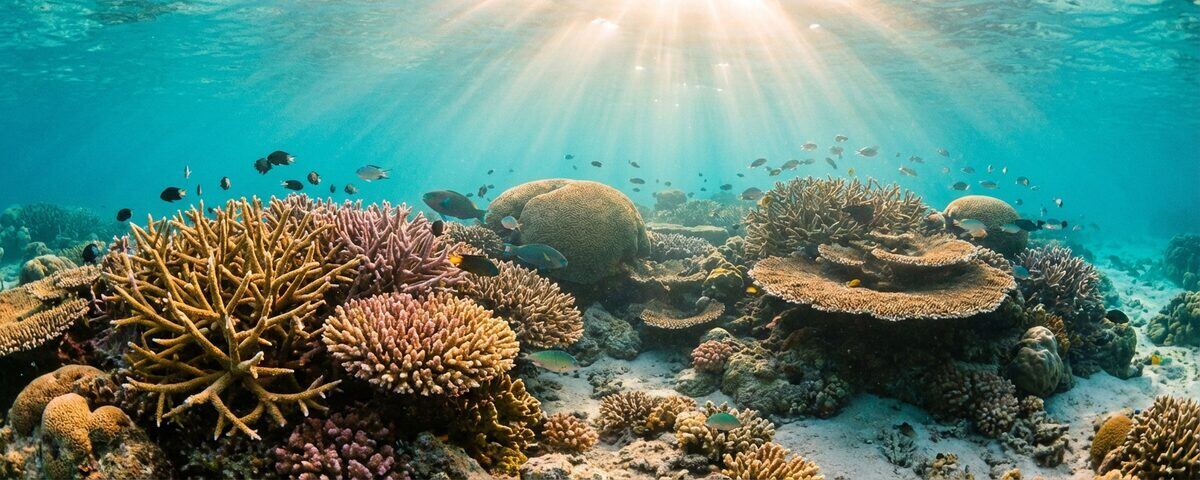
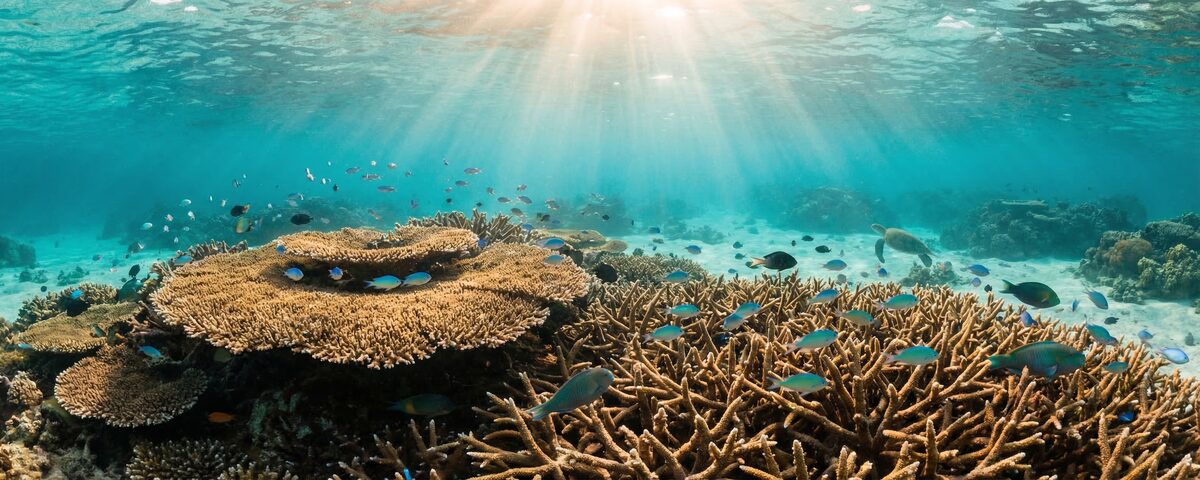
What sets Light House Bay apart from Koh Tao's more famous sites is the table coral. Enormous Acropora formations spread across the reef flat between 4 and 10 metres, some of them exceeding two metres in diameter. These are the largest table corals you will find anywhere around Koh Tao, and they have been growing undisturbed for decades in the bay's sheltered water. The formations overlap and layer like a series of enormous dinner tables arranged across the seabed, creating shaded habitat underneath where smaller fish congregate and crustaceans pick through the rubble.
The bay faces east, which gives it a specific seasonal personality. From February through September, when the prevailing weather comes from the southwest, Light House Bay sits in a pocket of calm. The surface stays flat, visibility clears up, and the morning sun hits the reef directly, lighting up the coral in colours that the west-coast sites only get in the afternoon. During the northeast monsoon from October through January, the bay catches more weather and some operators shift their boats elsewhere. But even in rougher months, the reef itself remains protected enough for diving on all but the stormiest days.
The shallowness of the site makes it a training favourite, and there is nothing wrong with that. PADI Open Water students practise skills here on calm sand at 6 metres before swimming out to the reef for a tour. The issue is that this reputation as a classroom has led many certified divers to skip it entirely, which is a mistake. The coral coverage here is genuinely impressive, the macro life rewards patience, and the ease of the dive means you can spend 60 minutes at 8 metres just watching the reef without thinking about air or decompression.
The remoteness helps too. Light House Bay is a 20 to 25 minute boat ride from Mae Haad, further than the popular west-coast sites, and the road access from Tanote Bay involves a rough track that deters casual visitors. On most days, you will share the bay with one or two dive boats and a handful of snorkellers. By Koh Tao standards, that counts as solitude.
Marine Life at Light House Bay
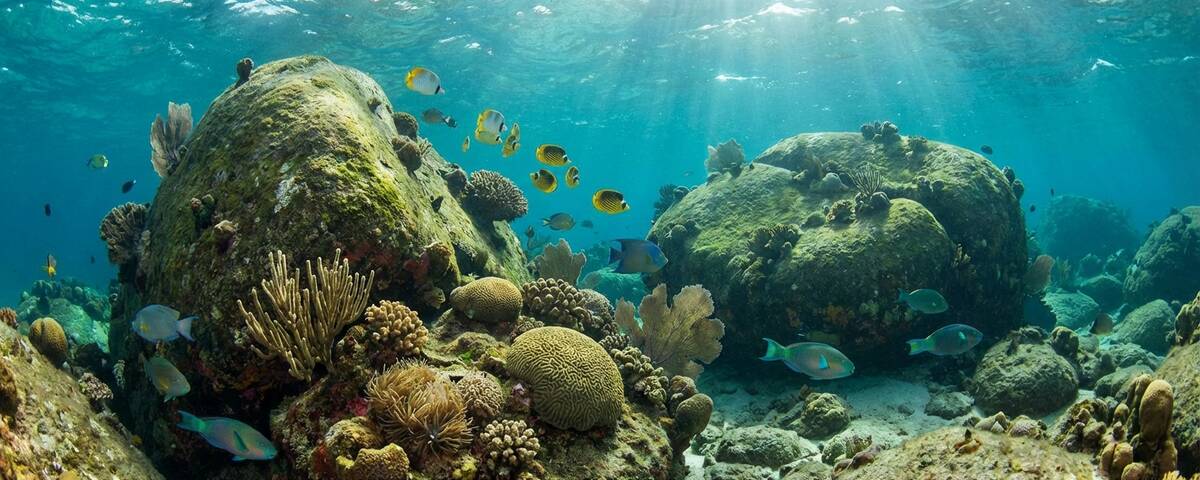
The table corals are the headline. Massive Acropora hyacinthus formations dominate the reef flat, their flat tops catching sunlight and creating a layered landscape that photographs beautifully from any angle. Underneath and between the tables, the reef structure is more complex than it first appears: branching staghorn coral fills the gaps, barrel sponges anchor themselves to the rocky substrate, and toadstool soft corals sway gently in whatever minimal current the bay produces.
Christmas tree worms are everywhere here. Their feathery spirals dot the surface of mottled Porites corals in reds, blues, yellows, and whites, and they retract instantly when a shadow passes over them. Photographers can burn half a tank trying to get the timing right on a Christmas tree worm shot, which is either meditative or infuriating depending on your temperament.
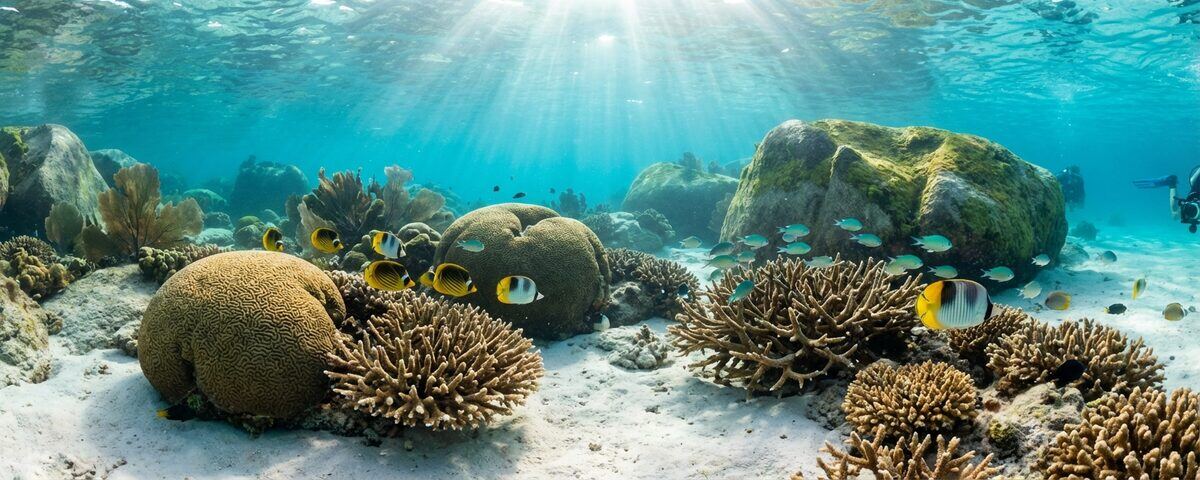
Butterflyfish work the coral in pairs. Weibel's butterflyfish and lined butterflyfish are the most common, picking at polyps along the edges of the table formations. Beaked coralfish hover near the reef crest where current occasionally delivers plankton. The resident blue-ringed angelfish is large, conspicuous, and entirely unbothered by cameras.
Damselfish own the shallow zones. Blue chromis, sergeant majors, and various species of damsel form the constant backdrop of movement across the reef. They are so numerous that your brain tunes them out within minutes, which means you start noticing everything else: the red-breasted wrasse cruising along the sand margin, the one-spotted snapper holding station under a coral overhang, hexagon groupers watching from the shadows.
The sandy patches between coral heads harbour blue-spotted ribbontail rays. They sit half-buried in the substrate and spook only when you get within a metre or two. Jenkins whiprays glide across the open sand on occasion, and the odd cuttlefish drifts through the bay's centre during quieter periods.
Parrotfish graze across the coral gardens in small groups, their scraping audible on quiet dives. You can hear them before you see them. Porcupinefish wedge themselves into crevices along the rocky northern edge of the bay, inflating slightly when approached but rarely bothering to swim away.
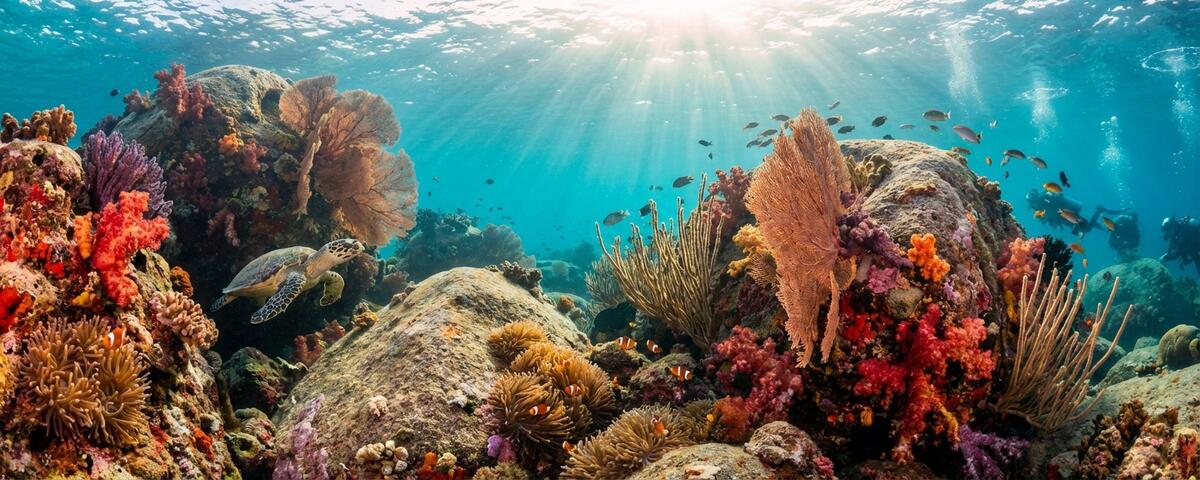
Clownfish in bulb-tip anemones are scattered across the reef and provide easy, cooperative macro subjects. Both Clark's anemonefish and skunk anemonefish are present. Cleaner shrimp stations operate from several of the larger coral bommies.
Night diving at Light House Bay reveals painted spiny lobsters, hermit crabs marching across the sand, and the occasional sleeping green turtle wedged into a coral crevice on the eastern side. Box crabs and decorator crabs appear on the rock surfaces. It is not a dramatic night dive, but it is a reliable one.
Dive Conditions
Light House Bay is one of the most sheltered dive sites on Koh Tao's east coast. The rocky headland to the north and the reef structure itself break incoming swell from most directions. Current inside the bay is negligible for the vast majority of the year. On rare occasions, a light drift pushes through from the north, but it never reaches a strength that would concern even the most inexperienced diver.
Depths range from 2 metres at the snorkelling zone near shore to 14 metres at the deepest section of the reef's outer edge. The typical dive profile sits between 4 and 10 metres, which means air consumption is barely a factor. Dives routinely last 55 to 65 minutes without any pressure on tank limits.
Visibility swings with the seasons. From February through June, the clearest months, visibility regularly reaches 15 to 25 metres. The bay's east-facing orientation means it avoids the plankton blooms that sometimes cloud west-coast sites during the same period. From October to December, monsoon runoff and plankton reduce visibility to 5 to 10 metres, though this also brings nutrient-rich water that increases feeding activity across the reef.
Water temperature is consistent with the rest of the Gulf of Thailand: 28 to 30 degrees from March to October, dipping to 27 degrees between December and February. A 3mm shorty handles most conditions. Some divers prefer a full 3mm suit during the cooler months, particularly on longer dives where the shallowness means you spend the entire time in the slightly cooler upper water column.
Surface conditions are the main operational variable. The bay faces east-northeast, so it catches wind and chop during the northeast monsoon (October to January). Dive operators with flexible scheduling move to west-coast sites like Mango Bay or Japanese Gardens during these months and return to Light House Bay when conditions settle. From February through September, the surface is typically flat calm.
Bottom composition varies across the site. The centre is sandy with scattered coral heads, graduating to dense reef on the northern and southern flanks. The sand is not particularly silty, so fin kicks cause less visibility damage than at some of Koh Tao's other shallow bays. That said, frog kicking is still the polite choice when diving in a group.
There is no practical shore entry for scuba. All recreational diving arrives by boat. Snorkellers access the shallows from a small beach at the back of the bay, and their floats occasionally drift into diving areas during peak snorkelling hours between 10am and 2pm.
⚓ Divemaster Notes
The table corals are the reason to bring people here, so plan the dive to spend the most time in the 4 to 8 metre zone on the northern half of the reef where the largest formations sit. It is tempting to push deeper towards the 14 metre edge, but the coral coverage thins out below 10 metres and the sand takes over. The best stuff is shallow.
Morning dives get the best conditions. The sun hits the east-facing reef directly from about 8am, and the shallow table corals glow in a way that afternoon light simply cannot replicate. If you are running a photography trip or a leisurely fun dive, request the first boat of the day.
Brief your divers on buoyancy before they get anywhere near the table corals. The formations are large but fragile at the edges, and a misplaced fin kick or dangling console can snap off years of growth in a second. I usually do a buoyancy check over the sandy centre at 6 metres before letting the group move onto the reef.
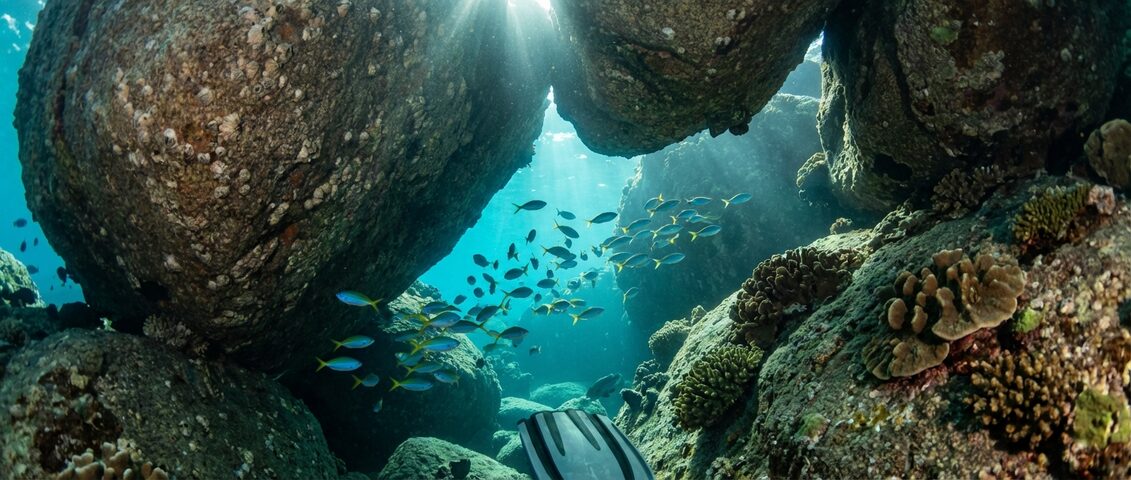
The northern rocky edge of the bay is worth exploring on the return leg. Granite boulders create overhangs and small swim-throughs at 6 to 10 metres, and this is where the groupers, porcupinefish, and moray eels tend to hide. It is a different reef environment from the open coral garden and adds variety to a dive that might otherwise feel uniform.
For macro-focused divers, the Christmas tree worms on the Porites corals are the star attraction. Point them out early in the dive so people can practise their approach before wasting too many shots. The trick is moving your hand slowly above the worm to cast a shadow without triggering it, then pulling back and waiting for it to re-emerge.
Snorkellers concentrate near the beach between 10am and 2pm. Do your safety stop over the deeper sandy area rather than the shallow reef to avoid surfacing underneath a drifting swimmer. Not dangerous, but annoying for everyone involved.
Light House Bay pairs naturally with Tanote Bay or Hin Wong Pinnacle as a second dive, since all three sites are on the east coast and the boat transit time between them is under 10 minutes.
How to Get to Light House Bay
Koh Tao sits in the Gulf of Thailand, roughly 70 kilometres east of the Surat Thani coastline. Most visitors arrive by ferry from Chumphon (1.5 to 2 hours by catamaran) or from Surat Thani via Don Sak pier (2 hours by catamaran through Koh Phangan, or 6 hours by night ferry). Lomprayah and Seatran Discovery operate the main catamaran routes with multiple daily departures.
Flights land at Chumphon Airport (Nok Air from Bangkok) or Surat Thani Airport (AirAsia, Thai Lion Air, Nok Air from Bangkok). Combined flight-and-ferry packages run between 1,500 and 2,500 THB. Bangkok Airways flies direct to Koh Samui, which adds a ferry connection but makes the overall journey smoother for those willing to pay the premium.
Once on Koh Tao, Light House Bay is a 20 to 25 minute boat ride from Mae Haad pier, the island's main arrival and departure point. The site sits further from the piers than the popular west-coast dive sites, which is partly why it receives less traffic. All dive operators include boat transfers in their pricing.
Overland access is possible but rough. A dirt track runs from Tanote Bay on the east coast around the northeastern headland to the bay. It requires a motorbike with decent tyres or a 4x4, and it is more useful for visiting the beach than for diving logistics. Taxi boats run from Sairee Beach and Mae Haad, charging 150 to 300 THB per person depending on the season and your negotiating skills.
Gear Recommendations
A 3mm shorty wetsuit covers February through October. During the cooler months from December to February, when water drops to 27 degrees, a full 3mm suit or even a 5mm is more comfortable, especially for the longer dives that the shallow profile allows.
Macro photography equipment gets the most out of Light House Bay. A compact camera with a macro wet lens will produce better results than a wide-angle setup at this site. The table corals photograph well with a wide lens, but the real subjects here are the Christmas tree worms, nudibranchs, and clownfish that reward close focus. Bring a focus light for peering into the overhangs and crevices along the northern rocks.
A torch is useful even on daytime dives. The underside of the table coral formations and the rocky overhangs on the northern edge hide critters that are invisible without added light. At night, a primary torch and a backup are standard.
Reef-safe sunscreen matters here more than at deeper sites. The bay is shallow enough that chemical sunscreen washes directly onto living coral at diving depth. Several Koh Tao operators now specifically request that divers avoid chemical sunscreens before diving Light House Bay. Mineral-based alternatives with zinc oxide are the responsible choice.
Most dive shops on Koh Tao rent gear at reasonable rates, so travelling light is practical. If you own your own mask and computer, bring them. Everything else is rental-grade and perfectly adequate for a 14-metre maximum depth.
Recommended Dive Operators
Crystal Dive Koh Tao holds PADI 5 Star IDC Centre status and schedules Light House Bay regularly for both training dives and fun dive trips. Their boats run to the northeast coast when conditions favour the east side of the island, which is most of the year outside monsoon season.
Ban's Diving Resort, another PADI 5 Star CDC, uses Light House Bay for Open Water training and runs fun dive boats there during the calmer months. Located directly at Mae Haad pier, the departure logistics are straightforward.
Big Blue Diving has operated on Koh Tao since the mid-1990s and maintains an active conservation programme that includes reef monitoring surveys at Light House Bay. Their marine biology speciality course uses the bay's coral gardens as a teaching reef.
New Heaven Dive School stands out for its marine conservation focus. They run regular reef health surveys at Light House Bay and their Eco Diver speciality course involves hands-on reef restoration work. If you want to understand the ecology of what you are looking at rather than just swimming past it, New Heaven is the operator to book with.
Coral Grand Divers operates from Sairee and includes Light House Bay in their east-coast fun dive rotations. Smaller group sizes than the larger schools, which matters at a site where the whole point is slowing down and looking closely.
Liveaboard Options
Koh Tao is not a liveaboard destination. The island functions as a land-based dive hub, with day boats servicing all sites within 30 to 90 minutes of the piers. Light House Bay is a 20 to 25 minute ride from Mae Haad.
That said, several Gulf of Thailand liveaboard routes include Koh Tao as a stop, usually on itineraries connecting Chumphon Pinnacles, Sail Rock, and the Ang Thong Marine Park. MV Nautica, The Junk, and DiveRACE operate multi-day trips through the Gulf that occasionally schedule a Light House Bay dive, particularly as a relaxed shallow dive or checkout stop.
For divers targeting Koh Tao specifically, staying on the island and booking day trips offers far better flexibility and value than a liveaboard approach. Accommodation ranges from 300 THB dorm beds to 5,000 THB boutique bungalows, and most include dive package discounts that make the per-dive cost surprisingly low.