Twin Peaks Dive Site
Koh Tao (Gulf of Thailand), Thailand · Near Koh Tao
Overview
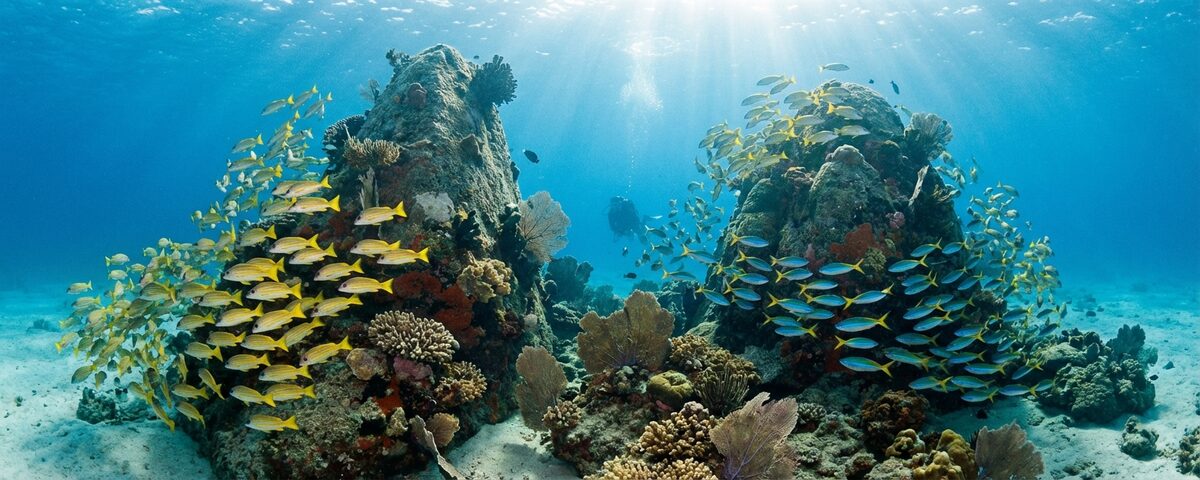
Twin Peaks is one of Koh Tao's most reliable shallow dives, sitting just off the southern tip of Koh Nang Yuan where the three linked islands taper into open water. The site gets its name from two granite pinnacles that rise from a sandy bottom at around 18 metres to within 4 metres of the surface, close enough together that you can see both from the saddle between them. Most dive schools on the island use Twin Peaks for Advanced Open Water deep skill sessions and fun dives alike, which tells you something about its versatility: interesting enough for experienced divers to enjoy, forgiving enough for students to learn on without drama.
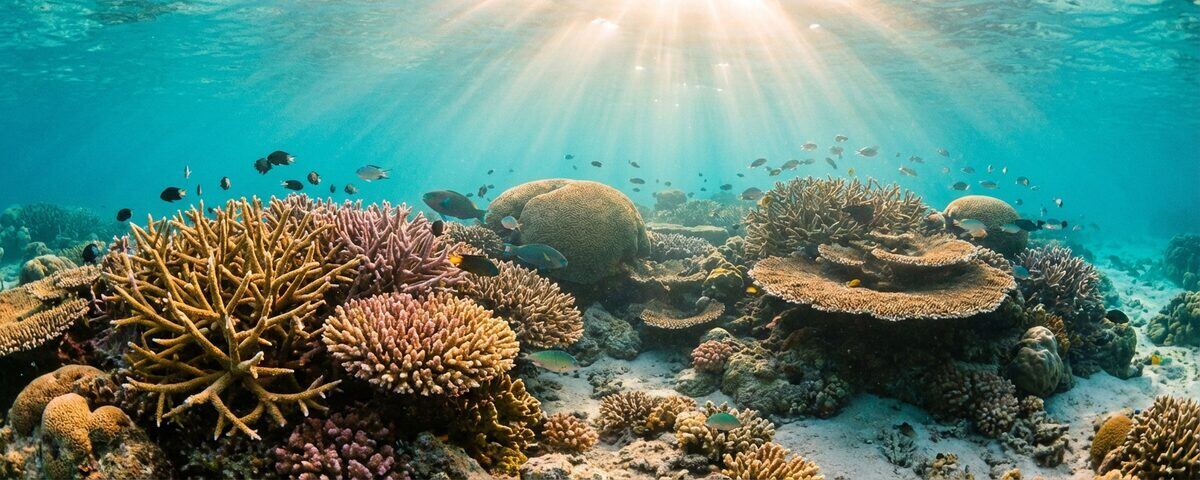
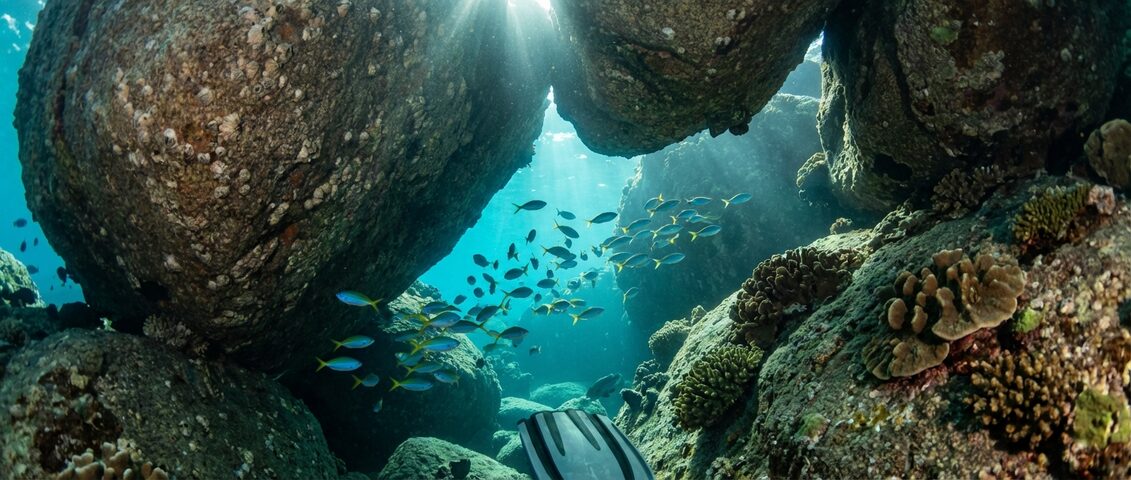
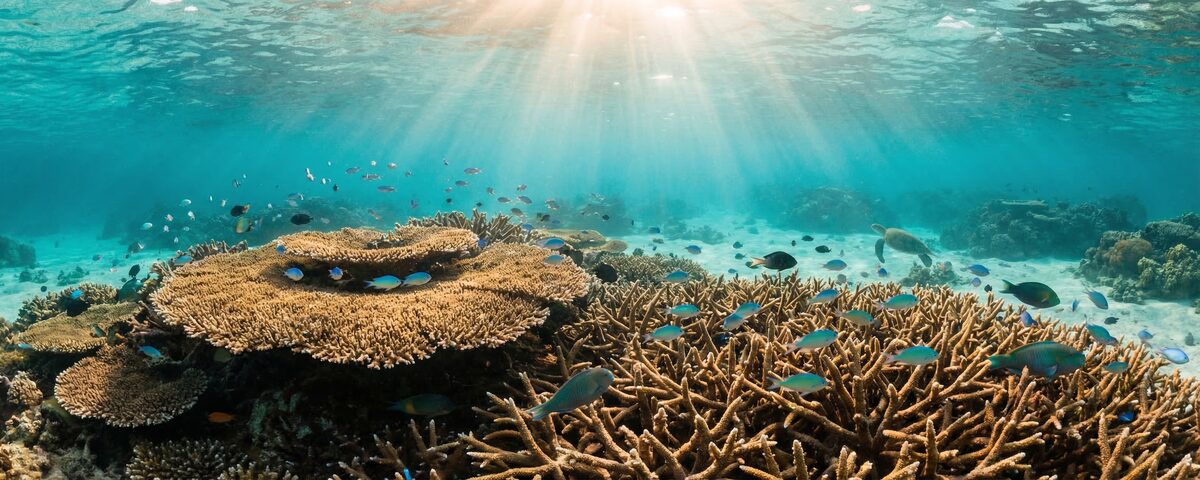
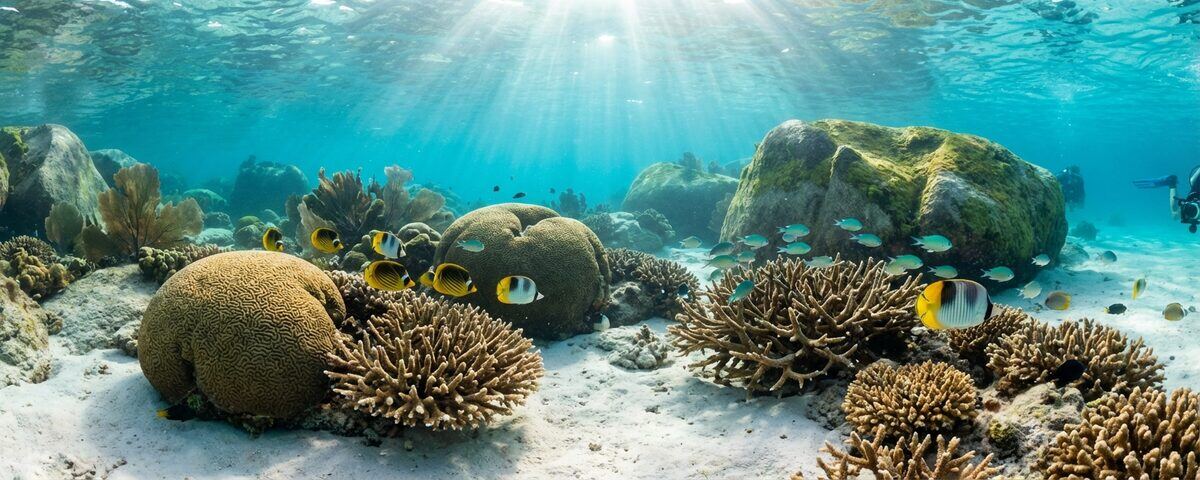
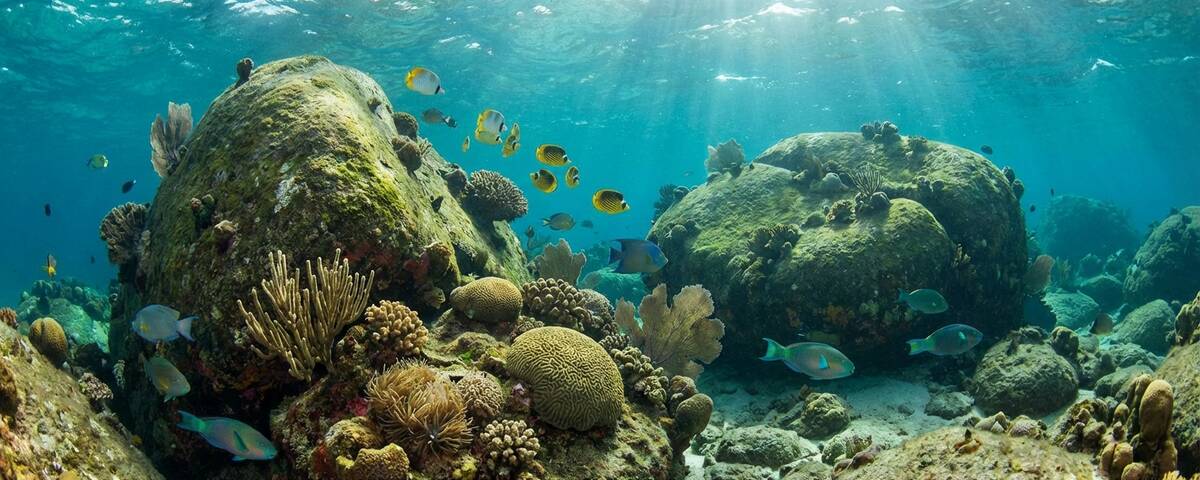
The pinnacles themselves are granite boulders stacked and tumbled into formations that create overhangs, crevices, and small swimthroughs on every side. Decades of coral growth have covered almost everything. Hard corals dominate the shallower sections where light penetrates well, while soft corals and sponges take over in the shadier undercuts and north-facing surfaces. Between the two main pinnacles, a coral garden fills the saddle at roughly 10 to 12 metres, and this is where most of the action happens.
What separates Twin Peaks from the busier sites like White Rock or Japanese Gardens is its position. Tucked behind Koh Nang Yuan, it catches less boat traffic despite being only a few minutes' ride from the main pier. Morning boats heading to the west coast sites pass right by it, and afternoon boats coming back tend to skip it in favour of closer mooring. The result is a site that feels quieter than its neighbours, with fewer fin-kicks stirring up the sand and more opportunities to find the resident marine life going about its business undisturbed.
The topography also lends itself to longer dives. With a maximum depth of 18 metres and plenty to see between 6 and 14, air consumption is not a major concern. Most divers surface with 80 to 100 bar still in the tank, making this an excellent choice for photographers who burn through air while hovering over subjects, or for anyone who simply prefers a relaxed pace over ticking off depth records.
Marine Life at Twin Peaks
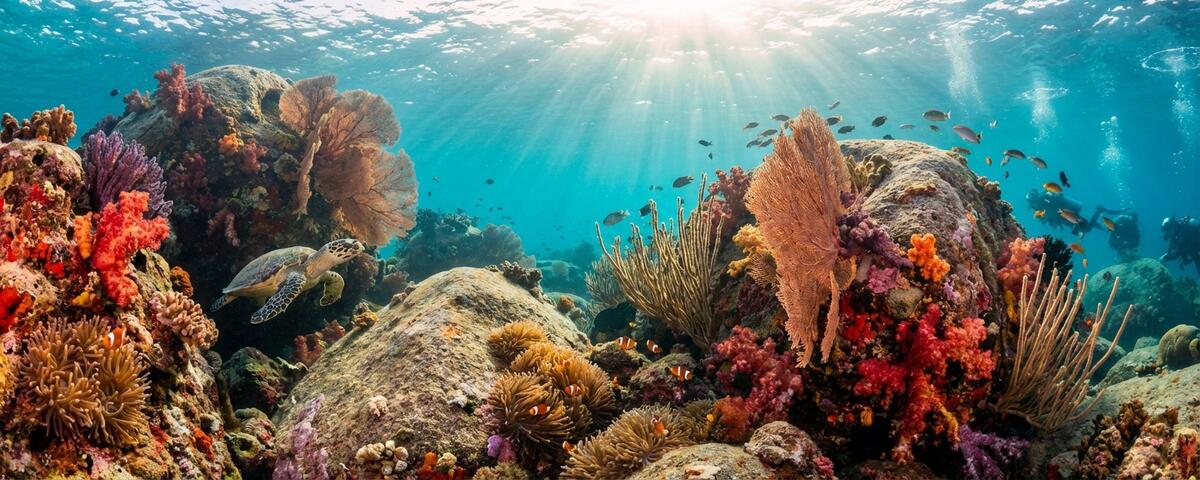
The resident hawksbill turtle is the headline act at Twin Peaks. She has been around for years, apparently unfazed by the parade of divers, and spends most of her time grazing on sponges along the western face of the larger pinnacle. Seeing her is not guaranteed, but the odds are better here than at most sites around the island.
Beyond the turtle, Twin Peaks is a macro site disguised as a reef dive. The crevices between boulders are packed with nudibranchs if you know where to look. Christmas tree worms spiral across the hard coral surfaces in blues, oranges, and reds. Banded coral shrimp hide in pairs under overhangs, waving their white antennae at passing torches. Octopus are common, particularly around the base of the pinnacles where rubble meets sand, and watching one change colour as it flows over rock to rubble to sand is worth the entire dive.
Schooling fish use Twin Peaks as a gathering point. Yellow-tail barracuda form loose balls in the water column above the pinnacles, and fusiliers stream through in shimmering blue ribbons when the current pushes food past the site. Sergeant majors carpet the shallow tops of the rocks, and territorial triggerfish patrol their patches with the aggressive confidence of a nightclub bouncer.
At depth, around the sand line at 16 to 18 metres, blue-spotted ribbontail rays rest in the open or half-buried beside boulders. Moray eels, both giant and white-eyed, occupy holes in the rock and will sit with their mouths open for as long as you care to watch. Pipefish turn up along the coral edges, easy to miss unless you are actively searching.
Night dives at Twin Peaks reveal a completely different cast. Basket stars unfurl from crevices to feed, shrimp eyes glow red in torchlight, and the coral polyps extend into fuzzy halos that transform the texture of the entire reef. Sleeping parrotfish wrapped in their mucus cocoons look like they are sealed in cling film. It is one of the better night dive options on the island, partly because the shallow depth and manageable area make navigation straightforward even in the dark.
Dive Conditions
Twin Peaks benefits from the shelter that Koh Nang Yuan provides against the prevailing northeast monsoon. Between March and September, conditions are typically at their best: visibility stretches to 15 to 25 metres, currents stay gentle, and surface chop is minimal. This is when you will see the site at its finest, with clean water and calm descents.
During the southwest monsoon months from October to February, conditions become more variable. Visibility can drop to 5 to 10 metres after rain, and the current occasionally picks up enough to make the dive a gentle drift rather than a leisurely exploration. None of this makes the site undiveable; it just changes the character. Reduced visibility actually concentrates macro hunting, and a light current brings plankton that attracts more feeding activity.
Water temperature hovers between 27 and 30 degrees Celsius year-round. Most divers are comfortable in a 3mm shorty, though a full 3mm wetsuit is sensible if you are doing multiple dives in a day, particularly during the cooler months of December and January when temperatures occasionally dip to 26.
The bottom is sand at depth and rock everywhere else, so silting is only a problem when divers kick poorly near the base of the pinnacles. Buoyancy control matters here because the coral coverage is dense. Fin a bit low and you will break something that took years to grow. This is actually why instructors like the site for Advanced courses: it teaches students to control their buoyancy around real reef rather than over sand, but the consequences of a small error are limited compared to a fragile wall site.
⚓ Divemaster Notes
Start your dive on whichever pinnacle the boat drops you closest to and work around it clockwise before crossing the saddle to the second. This gives you the deeper exploration at the start of the dive when your air is freshest, and saves the shallow coral garden in the saddle for the end when you are extending your safety stop.
The best macro hunting is on the eastern face of the larger pinnacle, where a series of overhangs between 8 and 12 metres shelters nudibranch colonies that rotate with the seasons. Bring a torch even during the day, because the overhangs are deep enough to shade out ambient light, and the colours under there are spectacular when illuminated.
If you are after the hawksbill turtle, check the western face of the larger pinnacle first, particularly around the sponge growth at 7 to 10 metres. She tends to feed in the late morning, so the second dive of the day (usually departing around 13:00) gives better odds than the early morning boat.
Photographers should carry a 60mm or 100mm macro lens for this site. The wide-angle opportunities are decent but not exceptional compared to somewhere like Chumphon Pinnacles. Where Twin Peaks excels is in the small stuff: nudibranchs, shrimp, pipefish, and the patterns on the coral itself. A macro lens with a diopter for super-macro work will keep you busy for the entire dive.
Watch your depth at the base of the pinnacles. The sand slopes gently away, and it is easy to drift down to 20 metres without noticing while following a ray or investigating a hole. Not dangerous at recreational depths, but it shortens your bottom time unnecessarily.
How to Get to Twin Peaks
Koh Tao sits in the Gulf of Thailand, roughly 70 kilometres off the coast of Surat Thani province. Getting there involves either a ferry or a flight-and-ferry combination.
From Bangkok, the most common route is a flight to Surat Thani (1 hour) or Chumphon (1 hour), followed by a ferry. The Lomprayah catamaran from Chumphon takes about 1 hour 45 minutes and runs twice daily. From Surat Thani's Donsak pier, the ferry takes around 2 hours to Koh Tao via Koh Phangan. Seatran Discovery and Raja Ferry also run this route.
From Koh Samui, the Lomprayah catamaran takes about 2 hours via Koh Phangan. From Koh Phangan, the crossing is roughly 40 minutes.
Once on Koh Tao, Twin Peaks is a 5 to 10 minute boat ride from Mae Haad pier, the island's main harbour. Every dive operator on the island includes this site in their rotation, and boats depart twice daily, typically at 7:00 and 13:00. There is no shore access to Twin Peaks; it is a boat dive only.
Koh Nang Yuan itself charges a 100 baht entrance fee for day visitors arriving by boat, but this does not apply to dive boats that moor at the underwater site without landing on the island.
Gear Recommendations
A 3mm shorty is sufficient for most of the year, though a full 3mm suit makes sense in December and January or for multiple dives in a single day. Water temperatures rarely drop below 27 degrees, but wind chill on the boat between dives can leave you cold if you are only wearing neoprene shorts.
Bring or rent a torch for the overhangs and crevices. Even a small backup torch makes a significant difference for spotting macro life and revealing the true colours of the soft corals that grow in shaded areas.
Reef hooks and gloves are not needed and in fact are discouraged. The currents at Twin Peaks never warrant hooking in, and gloves tempt divers to grab things. Most operators on Koh Tao prohibit gloves for this reason.
A surface marker buoy (SMB) is good practice but not strictly necessary if you are diving with an operator who keeps the boat nearby. For independent divers on a private charter, carry one. Current can pick up unexpectedly and push you away from the mooring.
If you have your own camera, an underwater torch or strobe is the single most impactful accessory for this site. The macro subjects are tucked into shadows, and natural light alone produces flat, blue-washed images that do not do the site justice.
Recommended Dive Operators
Koh Tao has over 50 dive operators, which is both a blessing and a source of decision paralysis. For Twin Peaks specifically, any operator running boats to the Koh Nang Yuan area will include it.
Ban's Diving Resort is the largest PADI 5-star centre on the island and offers Twin Peaks as part of their Advanced Open Water course rotation. Their operation is well-oiled if slightly impersonal, which suits divers who want reliability over boutique vibes. Crystal Dive is another large operator with a solid reputation and a wide range of course options.
For a smaller group experience, Big Blue Diving keeps their boat ratios lower and tends to spend more time at each site. Coral Grand Divers runs from the north end of the island and reaches Twin Peaks quickly. New Heaven Dive School combines diving with marine conservation work, so if ecological impact matters to you, they are worth considering.
Prices on Koh Tao are remarkably standardised due to a gentleman's agreement between operators. Expect to pay around 1,000 baht per fun dive (roughly 25 GBP) or 9,800 baht for an Open Water course. Equipment rental is usually included in course prices but costs 200 to 500 baht extra for certified divers on fun dives.
Book directly rather than through third-party platforms. Most operators offer free accommodation when you book a dive course, which makes the overall package considerably cheaper than paying for lodging separately.
Liveaboard Options
Koh Tao is primarily a day-dive destination rather than a liveaboard hub. Most liveaboards in the Gulf of Thailand operate out of Koh Samui or Chumphon and visit Koh Tao sites as part of a broader itinerary that includes Sail Rock and Chumphon Pinnacles.
The MV Sawasdee Fasai runs Gulf of Thailand liveaboard trips that include Koh Tao, Sail Rock, Chumphon Pinnacles, and sometimes Ang Thong Marine Park. Trips typically run 2 to 4 nights and cost 15,000 to 30,000 baht depending on cabin type and duration.
Honestly, for Twin Peaks specifically, a liveaboard is unnecessary. The site is a short boat ride from shore, and Koh Tao's land-based diving is so affordable and well-organised that a liveaboard only makes sense if you want to combine it with more remote sites like Sail Rock or Southwest Pinnacles on consecutive days without the ferry commute.
Stay on the island, dive for a few days, and spend the surface intervals eating 60-baht pad thai on the beach. It is a better experience than a cabin, and your wallet will thank you.