Christmas Point Dive Site
Similan Islands (Andaman Sea), Thailand · Near Khao Lak
Overview
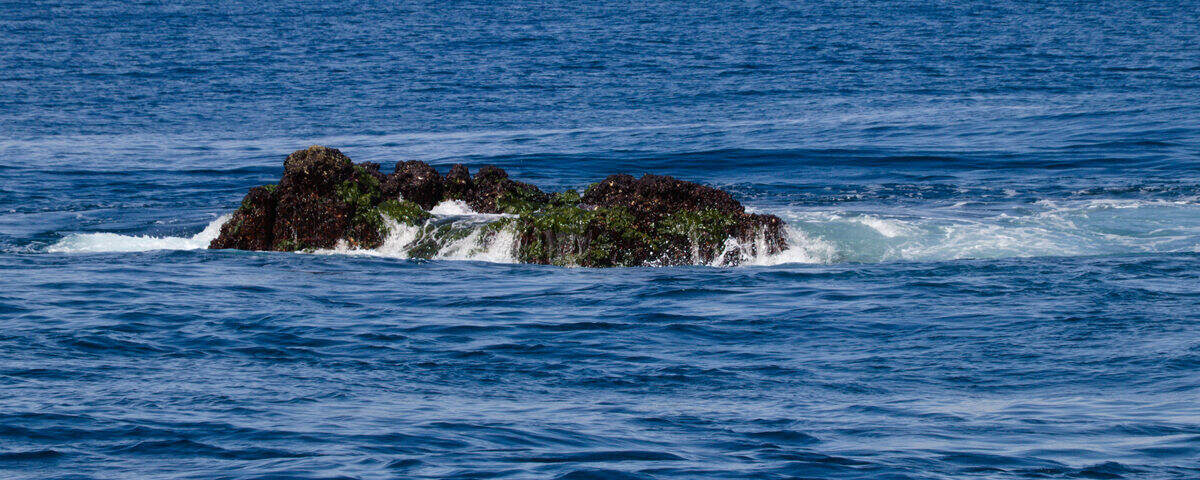
Christmas Point is the Similan Islands at their most dramatic. Perched on the exposed northwest tip of Koh Ba Ngu (Island 9), this site trades the sheltered coral gardens of the archipelago's eastern faces for a wild, boulder-strewn landscape where granite meets open ocean. Massive rocks the size of houses tumble from the island's shoreline down to a sandy seabed at 35 to 40 metres, creating a labyrinth of channels, overhangs, and swim-throughs that would keep an explorer busy for a dozen dives.
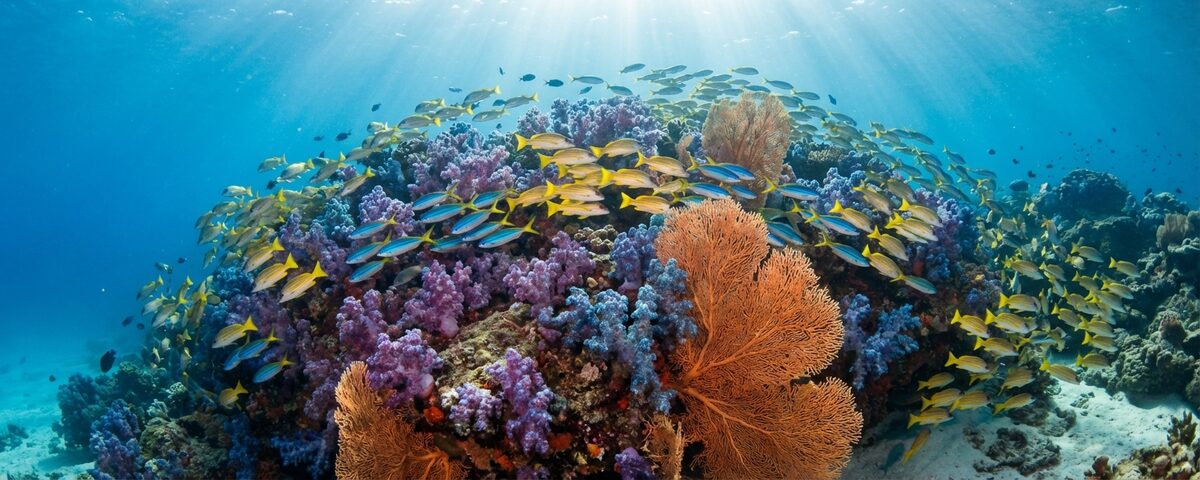
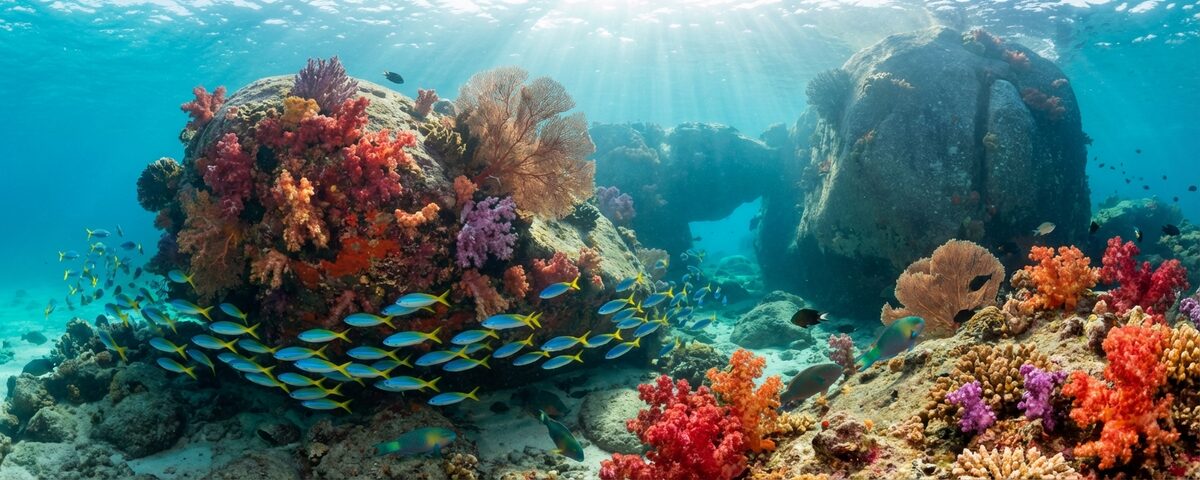
The signature feature is a broad arch formation at 24 metres. Two enormous granite boulders lean against each other, creating a passageway wide enough for two divers to swim through side by side. The ceiling and walls of this arch are plastered with soft corals and gorgonian sea fans, and the light filtering through the opening creates one of the most photographed scenes in the entire Similan archipelago. It is not the only swim-through here, either. The scattered boulder formations produce half a dozen navigable passages at various depths, each with its own character and resident marine life.
Unlike the eastern sites where calm waters attract beginners, Christmas Point faces the full force of the Andaman Sea. Currents sweep around the headland, sometimes predictably and sometimes not, delivering nutrients that fuel dense soft coral growth on the boulder surfaces and attracting pelagic species from the open water. This exposure is what gives Christmas Point its particular energy. The water feels alive here in a way that sheltered sites simply cannot replicate.
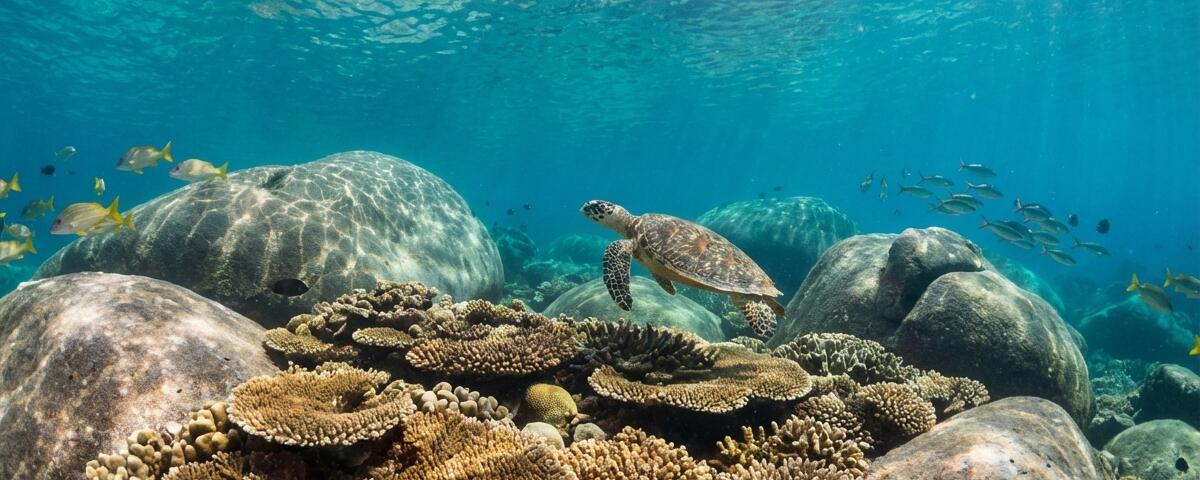
The site's topography creates distinct diving zones. The shallow section between 5 and 12 metres consists of hard coral gardens, staghorn formations, and bush corals that have colonised the spaces between the uppermost boulders. The mid-range from 12 to 25 metres is where the swim-throughs and the densest soft coral coverage sit. Below 25 metres, the boulders become more scattered across open sand, and the character shifts to a blue-water hunting ground where sharks and rays rest between the isolated rock formations.
Christmas Point sits within the Similan Islands National Park, which closes annually from mid-May to mid-October during the southwest monsoon. The site is accessible by liveaboard (the primary way most divers experience it) and by day trip boats departing from Khao Lak and Tab Lamu pier. The crossing takes roughly 90 minutes to two hours depending on sea conditions. During peak season from January through April, liveaboards anchor at the mooring buoy on the eastern side of the point and send divers down along the boulder field toward the northwest.
Marine Life at Christmas Point
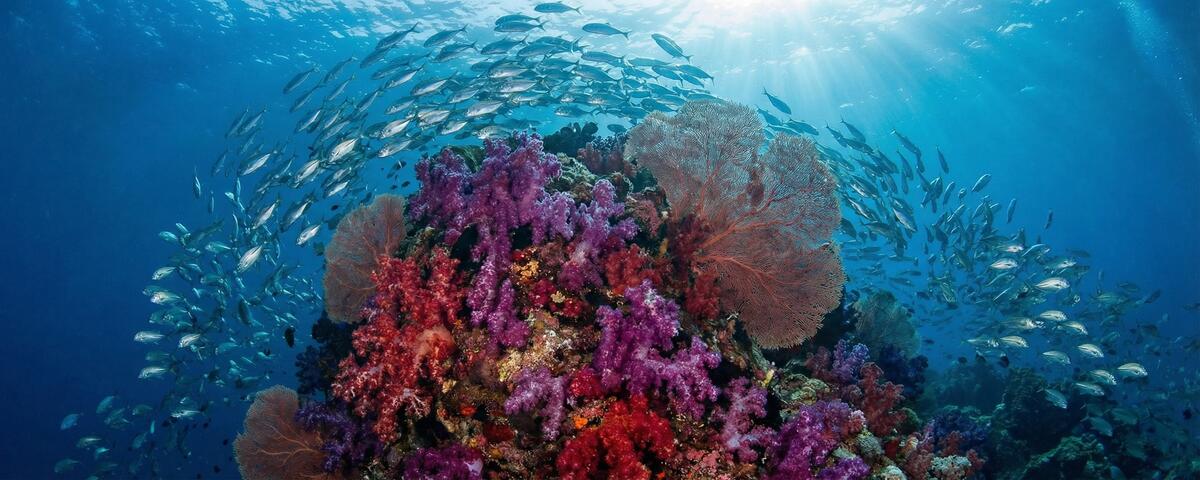
The granite boulders themselves set the stage. Some stand upright like sentinels. Others have toppled against their neighbours, creating the arches and channels that define the site. Every surface below 12 metres carries soft coral growth. Dendronephthya species in reds, oranges, and purples cluster beneath overhangs where currents deliver plankton. Gorgonian sea fans spread their latticed branches across the boulder faces, some exceeding a metre in diameter. The colour density inside the main swim-through at 24 metres is particularly intense, with the walls coated so thickly that bare rock is almost invisible.
The swim-throughs harbour their own ecosystem. Giant groupers shelter inside the arch, their bulk sometimes blocking half the passage. Oriental sweetlips hang in small groups beneath the ceiling, their spotted flanks almost motionless. Durban dancing shrimp and banded coral shrimp occupy cleaning stations on the walls, servicing moray eels and groupers that queue with surprising patience.
Ribbon eels are one of Christmas Point's standout residents. These slender, vividly coloured morays (electric blue with a yellow dorsal fin in their male phase) poke their heads from crevices between boulders, their jaws gaping in that characteristic breathing motion. They are shy and retract quickly if approached too fast, but patient divers who settle at a comfortable distance can watch them sway hypnotically in the current. Sightings are not guaranteed on every dive, but guides know the regular hiding spots.
Big fish patrol the outer boulder line. Napoleon wrasse cruise through with that slow, confident demeanour, their thick lips and prominent forehead bumps unmistakable. Giant trevallies hunt in packs across the deeper zones, accelerating through schools of fusiliers with explosive speed. Chevron barracuda form tight, spiralling schools in the water column above the boulders, their silver bodies catching the light as the formation rotates. Tunas pass through the blue water beyond the site's perimeter, particularly during the cooler months when nutrient upwelling peaks.
The deeper sandy areas between scattered boulders at 28 to 35 metres are where sharks rest. Leopard sharks (also called zebra sharks) lie flat on the sand, their spotted bodies blending with the substrate. Whitetip reef sharks tuck themselves beneath boulder overhangs, sometimes two or three stacked in the same shelter. Blacktip reef sharks patrol the shallower zones but are skittish and tend to keep their distance. On rare occasions, guitar sharks (shovelnose rays) have been spotted resting on the sand at the site's deepest points.
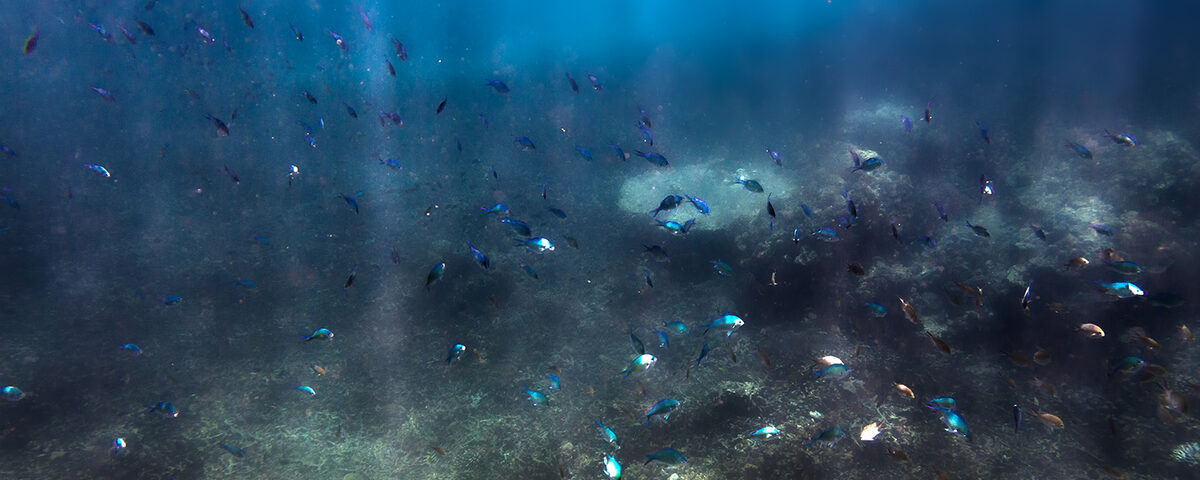
The shallow hard coral gardens above 12 metres provide a different experience entirely. Staghorn coral fields host clouds of damselfish and anthias. Anemones with Clark's anemonefish and skunk anemonefish dot the reef crest. Titan triggerfish nest in sandy patches between the coral heads from January onwards and will charge at divers who wander too close. Parrotfish graze across the hard coral, and hawksbill turtles cruise through to feed on sponges.
Macro life hides throughout the boulder labyrinth. Nudibranchs in dozens of species cling to rock surfaces and soft coral branches. Purple fire gobies and red fire gobies hover above their burrows between boulders, darting underground at the slightest disturbance. Cuttlefish hunt across the mid-depth zones, their skin cycling through colour patterns as they stalk prey. Octopuses are present but well camouflaged, usually spotted only by experienced guides.
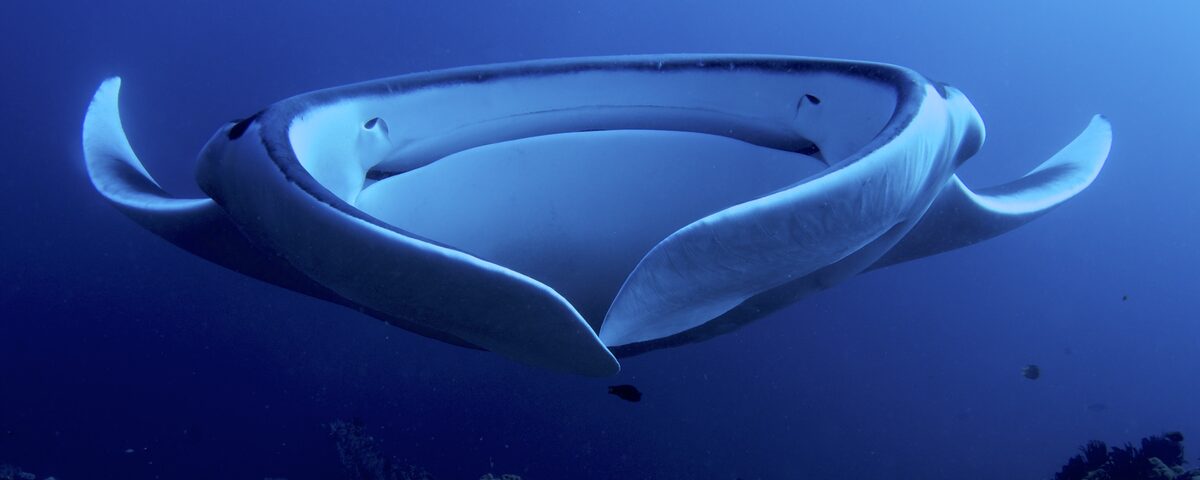
The headline encounters, when they happen, are manta rays and whale sharks. Christmas Point's position on the exposed northwest headland places it in the path of both species as they travel through the Similan archipelago. Mantas appear more frequently, cruising through the water column with their wings spanning two to four metres. Whale sharks are rarer but not unheard of, particularly between February and April when plankton concentrations peak.
Dive Conditions
Christmas Point's exposed position on the northwest headland means conditions vary more than at the sheltered eastern sites in the Similans. Currents are the primary consideration. Tidal flow sweeps around the point and can range from negligible on slack tide to genuinely challenging when the tide is running hard. Most operators check conditions before committing to the site and will substitute a more sheltered alternative if the current is too strong for the group's experience level.
On moderate current days, the site works as a drift dive. Divers descend at the mooring buoy, work their way northwest through the boulder field, explore the swim-throughs at depth, then drift back toward shallower water as the current carries them along the island's western face. The current brings the site to life: fish activity increases dramatically, soft corals extend fully to feed, and the chances of pelagic encounters rise sharply.
On slack tide, the site becomes more relaxed and navigable. Divers can take their time inside the swim-throughs, hover in front of ribbon eel burrows without fighting the water, and explore multiple boulder formations at their own pace. The trade-off is reduced fish action and soft corals that are partially retracted.
Depth is the other factor that elevates this site's difficulty. The most interesting features sit between 18 and 30 metres, and the main swim-through at 24 metres means divers accumulate nitrogen load quickly. Multi-level profiles are essential. Descend to the deepest point first (the outer boulder line at 30 to 35 metres if looking for sharks), then work progressively shallower through the swim-throughs and finally into the hard coral gardens above 12 metres for the safety stop.
Visibility ranges from 15 to 40 metres depending on season and plankton levels. The clearest conditions typically occur in February and March when the water column settles after the northeast monsoon transitions. During plankton blooms, visibility drops but the marine life responds with increased feeding activity, so neither condition is strictly better.
Water temperature holds between 27 and 29 degrees Celsius throughout the open season. Occasional thermoclines can drop temperatures by two or three degrees at depth, particularly in the 25 to 35 metre zone where cooler water sometimes pools between the boulders. A 3mm wetsuit is sufficient for most divers; those planning multiple deep dives per day may prefer 5mm.
The granite boulder topography is rough and unforgiving. Equipment snags are a genuine risk inside the swim-throughs, especially for divers carrying cameras or wearing dangling accessories. Streamlined configuration and solid buoyancy control are not optional here. The boulders also create localised surge in the shallower sections when swells are running, which can push inattentive divers into the rock face.
⚓ Divemaster Notes
I always check the current direction and strength before committing to Christmas Point because the dive plan changes completely depending on what the water is doing.
On a moderate incoming current from the northwest, I run the dive as a drift. We descend at the mooring buoy on the eastern side and kick northwest against light current toward the main boulder formations. By the time we reach the swim-throughs at 18 to 24 metres, the current has usually picked up enough to make the return journey effortless. We explore the arch at 24 metres first (deepest point), then work progressively shallower through the secondary swim-throughs before letting the current carry us back toward the mooring line. The drift back is the best part. You barely kick, the soft corals are fully extended, and the fish activity along the boulder line is at its peak.
On slack water, I plan a more methodical exploration. We drop directly to the outer boulder line at 28 to 30 metres and spend three to five minutes scanning the sand between the rocks for leopard sharks and whitetip reef sharks. Then we ascend to the main arch at 24 metres and take our time inside. Without current, you can position properly for photographs, wait for the groupers to settle back into their spots after the initial disturbance, and actually appreciate the soft coral coverage on the arch walls. I let the group set the pace through here because rushing defeats the purpose.
The ribbon eels have regular spots that shift between seasons. I keep a mental map and update it after each dive. When I find one that is cooperatively displaying, I bring divers over one at a time. Ribbon eels are sensitive to bubbles and sudden movements, so I brief the group beforehand: approach from the side, stay low, no exhaling directly above the hole, and keep your torch beam off the eel's face.
For the safety stop, I always use the shallow hard coral gardens between 5 and 10 metres on the eastern side of the point. There is genuinely good diving here with anemonefish, damselfish clouds, and the occasional turtle. It keeps divers occupied during the three to five minutes they need at shallow depth rather than staring into blue water.
One thing I always brief is the titan triggerfish situation from January through April. They nest in the sandy patches between the shallow boulders and will absolutely charge divers who enter their territory. The defensive zone is cone-shaped above the nest. Swim sideways to exit, not upward, because upward takes you deeper into their airspace.
Big groups of divers in the swim-throughs create problems. Silt from fin kicks reduces visibility inside the arch within minutes, and the cramped space means divers end up queuing, which wastes bottom time. I run Christmas Point with a maximum of four divers to keep the experience clean. If the boat has more divers, we stagger the entries by five minutes so each group gets fresh conditions inside the passages.
How to Get to Christmas Point
Christmas Point sits within the Mu Ko Similan National Park, roughly 70 kilometres offshore from the Phang Nga coast in the Andaman Sea. The primary gateway is Khao Lak, a quiet resort town about an hour north of Phuket International Airport.
Most divers reach Christmas Point on liveaboard trips departing from Tab Lamu pier near Khao Lak. These trips typically run two to four nights and cover multiple sites across the Similan archipelago, often extending north to Koh Bon, Koh Tachai, and Richelieu Rock. Liveaboards depart in the late afternoon or evening, motor overnight, and arrive at the Similans for a dawn dive. Prices range from THB 15,000 to 50,000 depending on the vessel, duration, and level of luxury.
Day trips from Khao Lak reach the Similan Islands in roughly 90 minutes by speedboat. These trips typically visit two to three sites per day and include Christmas Point when conditions allow. Day trip operators depart from Tab Lamu pier at approximately 7:30am and return by 5pm. Costs run THB 4,000 to 7,000 including equipment rental, park fees, and lunch.
Phuket International Airport receives direct flights from Bangkok (1.5 hours), Kuala Lumpur (1.5 hours), Singapore (2 hours), and seasonal connections from Europe and Australia. From the airport, Khao Lak is a 60 to 90 minute drive north. Most liveaboard operators and dive centres offer airport transfer packages.
The national park entrance fee is THB 500 for international visitors (THB 100 for Thai nationals) per entry. This fee is collected either at the pier or on the boat. The park is open from approximately 15 October to 15 May each year, with exact dates varying slightly depending on weather conditions. Outside this window, the islands are completely closed to visitors.
Booking during peak season (December to March) requires advance planning. Popular liveaboards sell out weeks or months ahead, particularly over Christmas, New Year, and Chinese New Year periods. Day trips are easier to book at short notice but may not reach Christmas Point if conditions on the northwest side of the archipelago are rough.
Gear Recommendations
Wide-angle lens is the primary recommendation for Christmas Point. The swim-throughs, boulder formations, and soft coral coverage all reward the widest field of view you can manage, and fisheye or rectilinear lenses in the 10 to 17mm range produce the most compelling images. A compact camera with a wide-angle wet lens attachment works well for recreational divers. Strobes are essential inside the swim-throughs where ambient light drops significantly. Torch useful for illuminating soft coral colours in overhangs and spotting ribbon eels in crevices. SMB (surface marker buoy) mandatory for drift dive profiles when current is running. 3mm wetsuit sufficient for most divers; 5mm recommended for those planning deep profiles or multiple dives per day. Nitrox strongly recommended as the productive zone sits at 18 to 30 metres and enriched air extends no-decompression limits considerably at these depths. Reef hook not required as the boulders provide natural shelter for holding position in current. Streamlined equipment configuration important for swim-through navigation; remove dangling accessories and clip off octopus regulators and gauges to prevent snags on the granite surfaces.
Recommended Dive Operators
Sea Dragon Dive Center in Khao Lak is one of the longest-established PADI 5 Star operations in the area, running both liveaboard trips and day excursions to the Similans. Their guides have extensive experience at Christmas Point and know the ribbon eel locations and optimal swim-through routes. Wicked Diving operates purpose-built liveaboards from Khao Lak with a strong reputation for small group sizes (maximum 4 divers per guide) and marine conservation focus. They include Christmas Point on virtually every Similan itinerary. Similan Dive Center runs a fleet of liveaboards ranging from budget to premium and offers the widest departure schedule during the season. Their trip coordinators match groups to appropriate sites based on experience level, ensuring divers at Christmas Point have the skills for current and depth. Khao Lak Explorer caters well to photographers with spacious camera rooms on their vessels and guides who understand the difference between a fish-watching dive and a photography dive at sites like Christmas Point where timing at the swim-throughs matters enormously.
Liveaboard Options
Christmas Point is primarily a liveaboard site. While day trips from Khao Lak can reach it, the site's position at the far northern end of the main Similan group makes it a natural fit for multi-day itineraries that work progressively northward through the archipelago. The MV Giamani offers budget-friendly liveaboard trips with Christmas Point as a standard stop on their three-night Similan itinerary. The MV Manta Queen fleet runs several vessels at different price points, all including the northern Similan sites. Deep Andaman Queen is a mid-range option with comfortable cabins and spacious dive decks that cater well to photographers. For premium experiences, the SY Diva Andaman and the MV Dolphin Queen offer higher-end accommodation with better food and smaller group sizes. Budget liveaboards from Khao Lak start at approximately THB 15,000 for a two-night trip including all diving, meals, and park fees. Mid-range vessels run THB 25,000 to 35,000 for three nights. Premium options range from THB 40,000 to 65,000 for four-night itineraries that extend to Richelieu Rock and Koh Tachai.