Koh Tachai Pinnacle Dive Site
Similan Islands (Andaman Sea), Thailand · Near Khao Lak
Overview
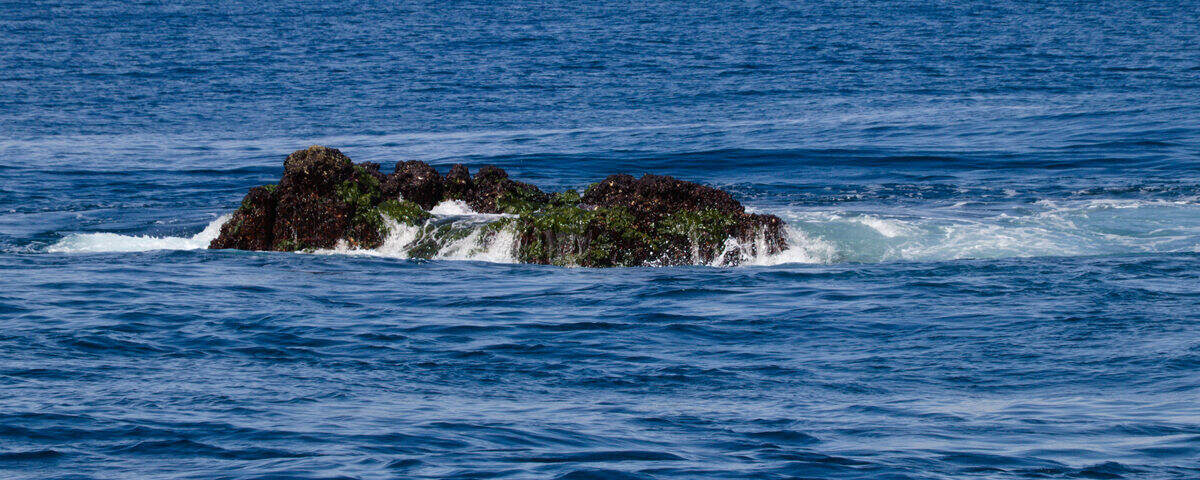
Koh Tachai Pinnacle sits about 25 kilometres north of Koh Bon and roughly 49 kilometres from the main Similan archipelago, making it the northernmost dive site within the Mu Ko Similan National Park. The pinnacle is a submerged granite plateau lying just south of Koh Tachai island, and it regularly produces encounters that divers remember for years. Mantas cruise through here with a frequency that rivals Koh Bon. Whale sharks pass through often enough that veteran liveaboard guides consider this site on par with Richelieu Rock for big animal encounters.
Two pinnacles form the dive site, though the southern one dominates most dive plans. Its dome-shaped top rises to around 12 metres, covered in hard corals that transition to dense soft coral growth on the flanks and overhangs. Massive granite boulders litter the surrounding seabed, creating channels, swim-throughs and sheltered corridors that extend down to sand at 30 metres and beyond. The northern pinnacle lies roughly 50 metres across a sandy gap at about 25 metres depth, and reaching it depends entirely on what the current decides to do that day.
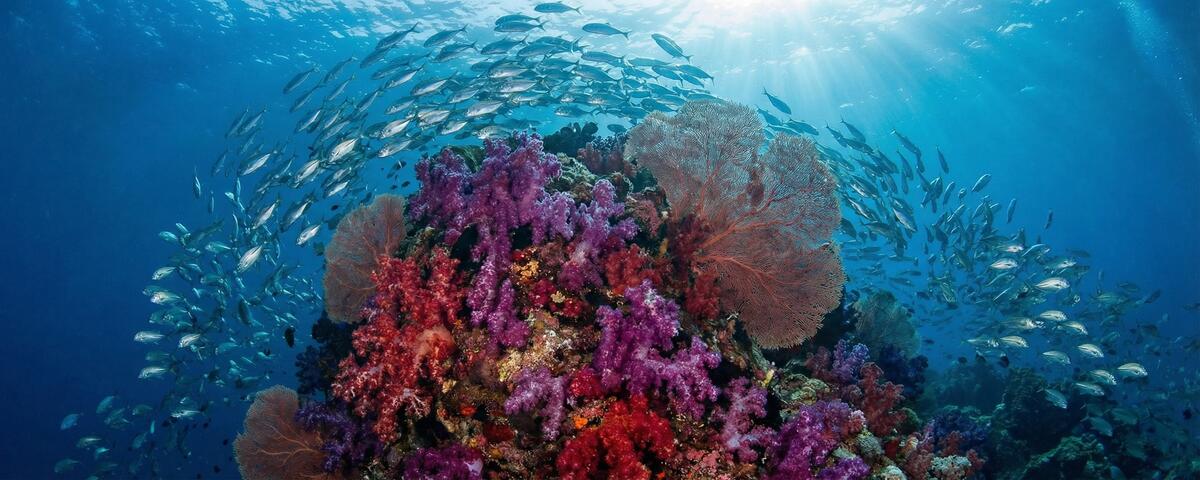
The exposed position between the Similan and Surin island chains means Koh Tachai catches open ocean current from multiple directions. That current is what makes the site exceptional. It delivers nutrients that sustain extraordinary soft coral coverage, pulls in plankton that attracts filter feeders, and concentrates schooling fish into dense formations around the pinnacle. On a strong current day, the water around the main pinnacle becomes a conveyor belt of marine life.
Liveaboard operators working the extended Similan routes include Koh Tachai on most itineraries, typically slotting it between Koh Bon and Richelieu Rock on the northbound leg. The site gets skipped when conditions are genuinely dangerous, but experienced crews know that moderate current at Koh Tachai often produces the best diving. The trick is working with the water rather than fighting it.
This is not a casual dive. The depth, current exposure, and distance from shore put it firmly in advanced territory. But for divers with solid buoyancy control and reasonable current experience, Koh Tachai Pinnacle delivers some of the most exhilarating diving in Thai waters. It combines the pelagic drama of an exposed oceanic site with the intricate reef life of a sheltered boulder garden, and that combination is genuinely rare.
Marine Life at Koh Tachai Pinnacle
The pelagic action at Koh Tachai Pinnacle is relentless when conditions cooperate. Schools of chevron barracuda form rotating cylinders above the pinnacle, hundreds of fish moving as a single organism that parts and reforms around ascending divers. Bigeye trevally congregate in the channels between boulders, their silver bodies packed so tightly they block out the blue behind them. Bluefin trevally and golden trevally patrol the edges in smaller hunting groups, bursting into sudden acceleration runs that scatter the smaller fish temporarily before everything reforms.
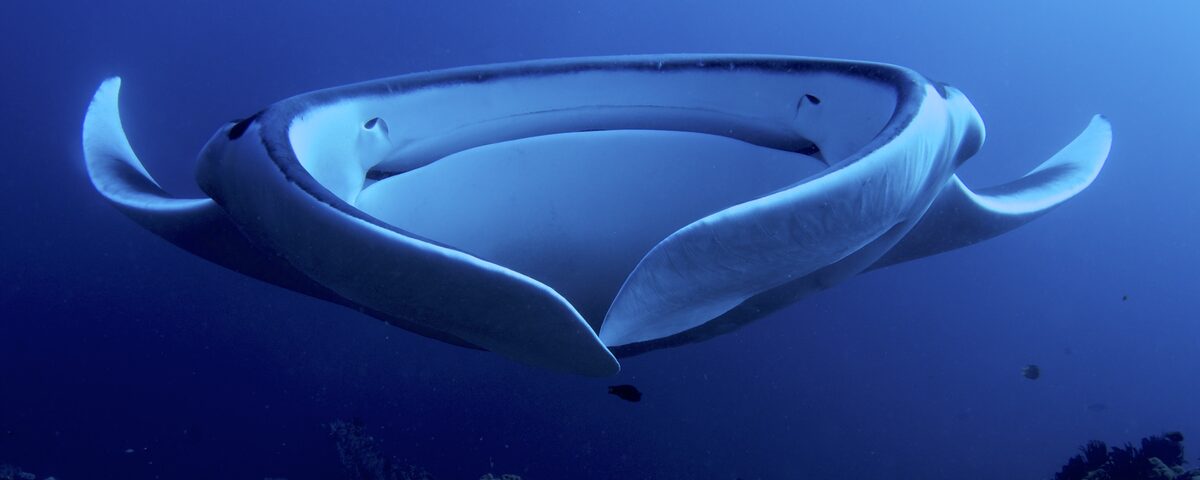
Manta rays are frequent visitors, not guaranteed but frequent enough that guides get genuinely excited when the first dark shadow appears in the blue. They cruise through the site on feeding runs when plankton density is high, circling the pinnacle in wide loops that bring them within a few metres of stationary divers. The encounters tend to be better here than at many cleaning stations because the mantas are actively feeding rather than hovering, and a feeding manta moving through current is one of the most impressive things in diving.
Whale sharks pass through Koh Tachai with surprising regularity, particularly from February through April. Some liveaboard guides quietly admit they have seen more whale sharks here than at Richelieu Rock over their careers. The encounters are fleeting and entirely luck-dependent, but the site's position in open water means anything can appear from the blue at any moment.
Blacktip reef sharks patrol the shallower sections above the main pinnacle. Leopard sharks rest on the sandy patches between the deeper boulder clusters, their spotted bodies barely visible against the substrate until you are directly above them. Whitetip reef sharks shelter under overhangs during the day, tucked into crevices between the larger boulders.
A resident group of longfin batfish hangs around the mooring lines and the upper sections of the pinnacle, seemingly unbothered by divers. They drift with the current in loose formation, occasionally approaching divers with the curious boldness that batfish are known for. During safety stops, they sometimes swim close enough to touch, though obviously you should not.
Brown-marbled groupers lurk in the shadows beneath boulders, their mottled bodies blending into the granite. Oriental sweetlips and Andaman sweetlips cluster in sheltered overhangs, their spotted bodies rhythmically pulsing. Giant morays and white-eyed morays occupy holes in the rock, their heads protruding and mouths gaping in the way that looks threatening but is just how they breathe.
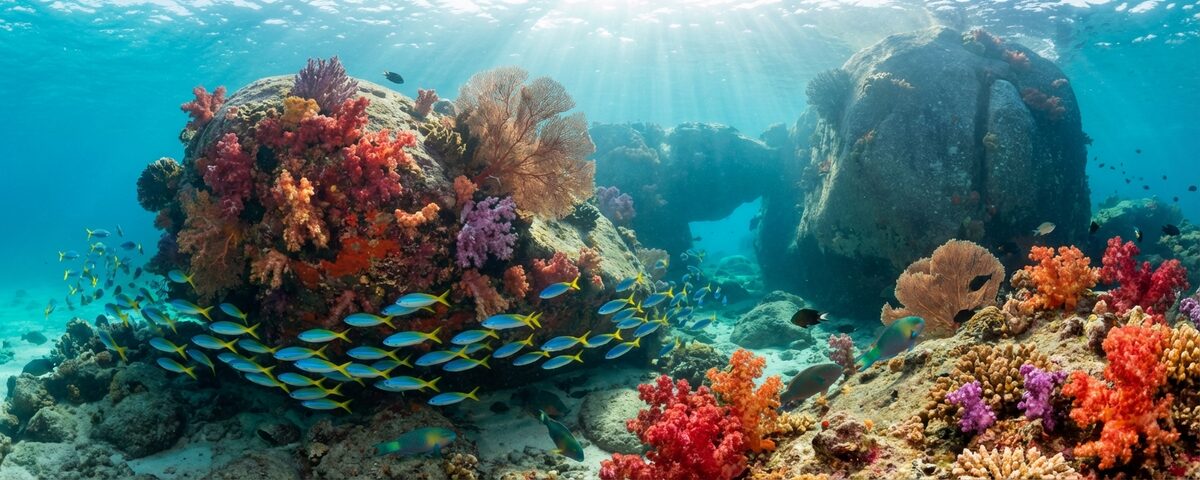
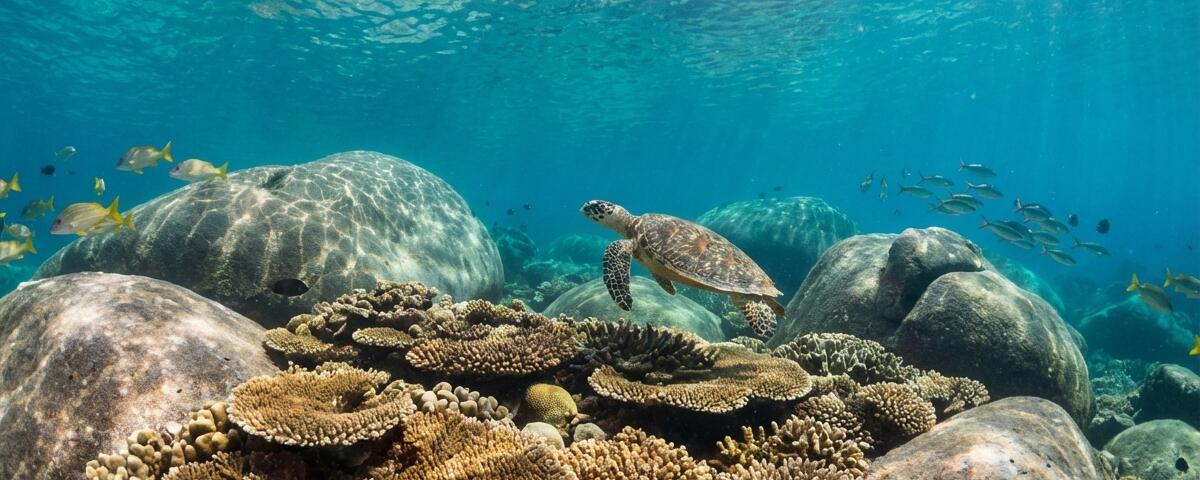
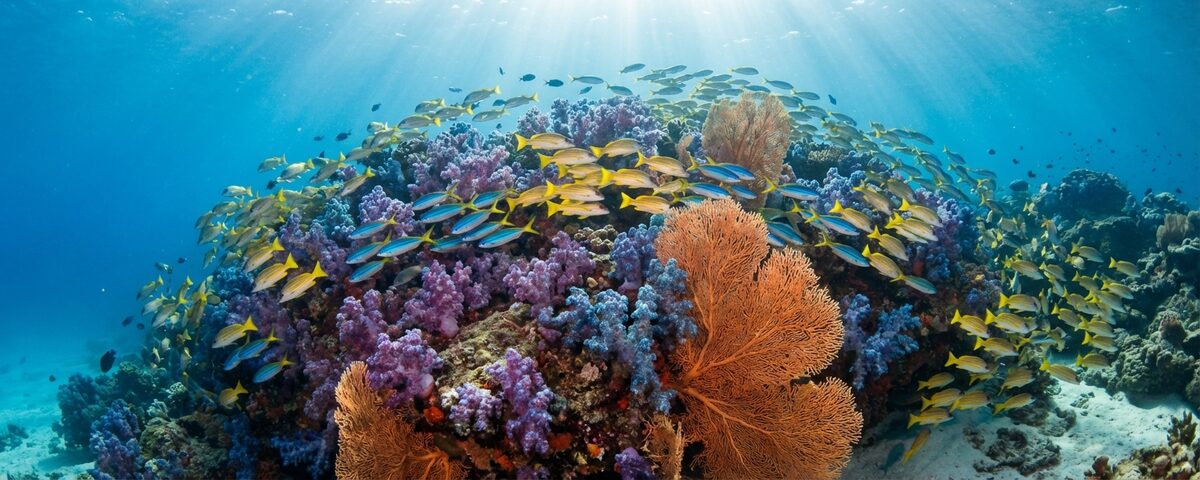
The soft coral coverage on the sheltered faces of the boulders is outstanding. Gorgonian sea fans in purple, red, and orange stretch into the current from every protected ledge. Dendronephthya soft corals cluster under overhangs in translucent pink and white. The hard coral on the pinnacle top supports anemones hosting families of clownfish, butterfly fish in half a dozen species, and angelfish picking at sponge growth.
Smaller residents fill every gap. Lionfish station themselves at overhangs. Scorpionfish hide on the boulder surfaces. Banded sea kraits hunt through crevices. On the sand, blue-spotted ribbontail rays shuffle away from approaching divers. Nudibranchs graze on sponges for photographers with the patience to look. The site is primarily about the big picture, but there is detail everywhere if you want it.
Dive Conditions
Koh Tachai Pinnacle is advanced diving, and the site enforces that classification through current alone. The exposed position means currents hit from multiple directions depending on tidal phase and season, and their strength varies from gentle drift to properly powerful flow that makes swimming against it a waste of air and energy. On calm days the pinnacle feels almost manageable for strong intermediates. On big current days, even experienced divers spend most of the dive sheltered behind boulders watching the show rather than trying to explore.
Depth ranges from 12 metres at the shallowest point on the main pinnacle dome to over 40 metres on the sand between the deeper boulder clusters. Most productive diving happens between 15 and 30 metres, which is deep enough that air consumption matters and no-decompression limits need constant monitoring. A typical dive runs 35 to 50 minutes depending on depth profile and how aggressively you manage your gas. Nitrox (EANx32) makes a significant difference here, extending bottom time by 10 to 15 minutes at working depth.
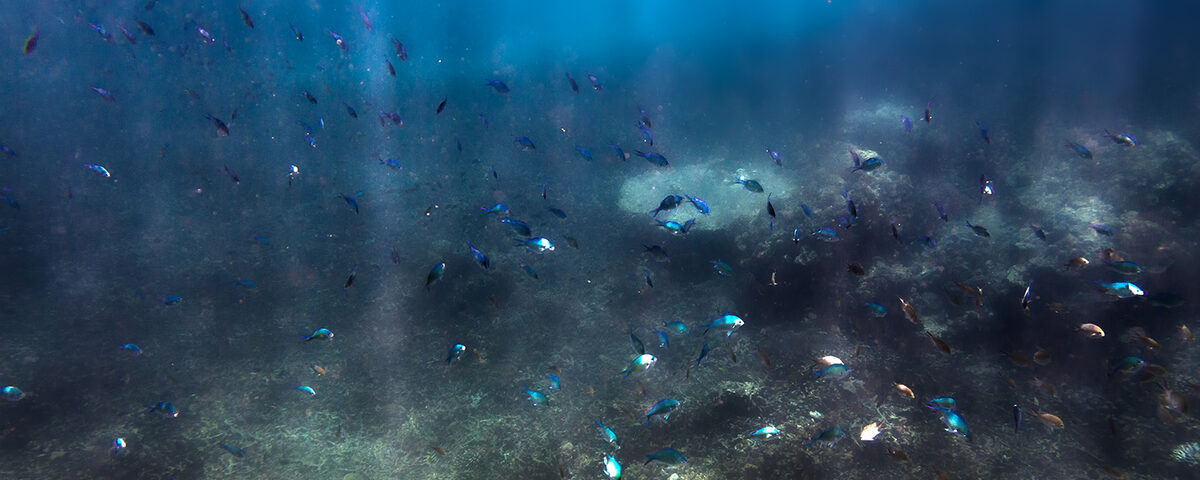
Visibility fluctuates more than at the main Similan sites. Clean oceanic water delivers 25 to 30 metre visibility on good days, typically from February through April. Early season dives in November and December can see plankton-rich water drop clarity to 10 or 15 metres, though that same plankton is exactly what brings the mantas and whale sharks. Late season (April into May) sometimes produces the clearest water of the year.
Water temperature holds between 27 and 30 degrees throughout the open season. A 3mm wetsuit handles single dives comfortably. On repetitive dive days aboard a liveaboard, a 5mm suit is sensible by the third immersion, particularly after deeper profiles where temperatures below 25 metres feel distinctly cooler.
Surface conditions can be rough. The open water position means swells build without the protection that the main Similan islands provide. Negative entries are common when surface current is running. Liveaboard crews assess conditions before each dive and will modify entry plans or relocate to the calmer island reef on the east side of Koh Tachai if the pinnacle is too exposed.
Night diving on the pinnacle is not conducted. The current strength and remote location make it unsafe for recreational night dives. Sunset dives, however, are spectacular when conditions allow, with trevally hunting runs intensifying as the light drops.
⚓ Divemaster Notes
Assess current strength and direction before anyone enters the water. Drop a weighted line or watch the boat's drift to gauge conditions. Strong current from the south pushes divers across the pinnacle towards the north, which can work as a productive drift if planned for. Cross-currents and shifting conditions mid-dive are common here, so brief contingencies clearly before descent.
Descent should be rapid and together. Use the mooring line whenever possible. In current, slow descenders get swept off the pinnacle before reaching the formation, and retrieving them burns time and air for the whole group. If anyone in the group struggles with ear equalisation, pair them with a patient buddy rather than risking a scattered descent.
The mooring lines attach near the top of the main pinnacle at around 12 to 14 metres. From there, work down the boulder field with the current rather than against it. The best pelagic viewing is from sheltered positions on the current-facing side of large boulders. Station the group behind a big rock and let the ocean deliver the show. Fifteen minutes of this can produce manta passes, trevally hunting runs, and barracuda walls, all from a single position.
Reaching the northern pinnacle is possible on slack tide but rarely worth attempting in moderate or strong current. The 50-metre swim across open sand at 25 metres depth burns air rapidly and leaves the group exposed without shelter if the current picks up. Save it for genuinely calm days.
Gas management is critical. Working depths of 20 to 30 metres mean air consumption runs higher than at shallower sites, and the current compounds the problem. Set a firm turn pressure of 120 bar and check each diver at the start. Anyone burning through gas quickly should be moved to the shallower pinnacle top early rather than dragged along at depth.
The swim-throughs between boulders are spacious enough for single-file passage but tight enough that poor buoyancy damages soft coral growth. Brief divers on streamlined profiles through narrow sections. Photographers should understand that stopping to shoot inside a swim-through blocks everyone behind them.
Safety stops can be done on the mooring line or free-hanging with SMBs. Surface current often runs differently from the deeper flow, so be prepared for drift during the stop. A hanging bar from the liveaboard makes this more comfortable. Watch for the resident batfish group during the stop; they provide entertainment and sometimes photo opportunities at 5 metres.
How to Get to Koh Tachai Pinnacle
Koh Tachai lies approximately 100 kilometres from the Andaman coast of Phang Nga province. All access is by boat from Khao Lak, and liveaboard is the only practical way to dive the pinnacle.
The journey starts with a flight to Phuket International Airport. Bangkok to Phuket takes about 90 minutes with frequent services on AirAsia, Thai Lion Air, Bangkok Airways, Nok Air, and Thai Smile. From Phuket Airport, Khao Lak is a 90-minute drive north along Route 4. Most liveaboard operators arrange transfers from Phuket Airport or Khao Lak hotels.
Liveaboards depart from Tab Lamu Navy Pier in Khao Lak, typically in the late afternoon or evening. The crossing to Koh Tachai takes significantly longer than reaching the main Similan Islands. Most itineraries dive the Similans first, then head north over one or two days through Koh Bon and Koh Tachai before reaching Richelieu Rock at the northern extent.
Trip options range from three-night runs covering the Similan Islands plus northern sites, to five-night extended itineraries that include everything from the southern Similans through to the Surin Islands. Koh Tachai features most prominently on four and five-night trips, which allow multiple dives on the pinnacle across different tidal phases.
Day trips do not reach Koh Tachai. The distance and the advanced nature of the diving make it exclusively a liveaboard destination. Even from Koh Bon, the nearest routinely dived site, Koh Tachai is another 25 kilometres north.
National park entry fees apply: 500 THB for foreign adults (2025/26 season), typically bundled into the trip cost. The park enforces strict environmental regulations, and since 2017 speedboat day trips to the island itself have been banned to protect the beach and surrounding reef.
Gear Recommendations
A 3mm wetsuit handles Koh Tachai's water temperatures for single dives, but the site's deeper profile means more time below 20 metres where the water feels cooler. A 5mm suit is sensible on repetitive liveaboard dive days, particularly for the third or fourth immersion after deeper profiles.
Nitrox certification is strongly recommended. Working depths of 15 to 30 metres mean recreational air limits are tight, and EANx32 extends no-decompression time meaningfully. Most liveaboards running the northern Similan route offer Nitrox for an additional daily fee. At a site where bottom time directly determines dive quality, the extra cost pays for itself.
Carry a surface marker buoy and reel as standard equipment. Current drifts can carry you well away from the mooring line during ascent, and the boat crew needs to spot you quickly in potentially choppy surface conditions. Bright orange or yellow SMBs with at least 1.2 metres length. A spool with 20 metres of line covers the safety stop depth.
A reef hook is genuinely useful at Koh Tachai. When the current is running and the pelagic parade is in full swing, hooking in behind a boulder lets you watch without fighting the water. Not every liveaboard supplies them, so bring your own. Clip to dead rock only, never to living coral or sea fans.
Wide-angle is the only lens worth carrying here. The boulder formations, swim-throughs, schooling fish, and potential manta encounters all demand the widest field of view you can get. A fisheye or rectilinear wide-angle behind a dome port captures the dramatic scale. Strobes are essential for colour below 15 metres. A focus light helps in the darker overhangs and swim-throughs.
A dive torch of at least 1000 lumens reveals the true colours of the gorgonians and soft corals on the sheltered boulder faces. Without artificial light, everything below 20 metres appears blue-grey, and you miss the reds and oranges entirely.
A dive computer with clear no-decompression limit and depth displays is essential. The variable depth profile, bouncing between 12 and 35 metres as you navigate the boulder field, makes accurate real-time tracking critical. Set conservative factors if your computer allows it.
Recommended Dive Operators
Sea Dragon Dive Center has operated from Khao Lak for over two decades and coordinates with multiple liveaboard vessels running the northern Similan route. Their guides know Koh Tachai's current patterns from thousands of dives and adapt plans on the spot when conditions shift. PADI 5 Star IDC Centre with instruction in English, German, and Thai.
Wicked Diving runs smaller group liveaboard trips that make a real difference at a current-swept site like Koh Tachai, where group cohesion matters. Their guides carry species identification slates and emphasise marine ecology alongside the diving. Active involvement in Similan marine conservation projects. A strong choice for experienced divers and underwater photographers.
The Manta Queen fleet operates multiple vessels from budget to mid-range. Manta Queen 3 and 6 are the better picks for advanced divers, with more cabin space and slightly higher guide-to-diver ratios. The fleet runs consistently through the season, and their standard four-night itinerary includes Koh Tachai as a core stop between Koh Bon and Richelieu Rock.
MV Giamani is a sailing vessel offering four-night itineraries with flexibility to spend extra time at sites when conditions are good. Smaller group sizes of 16 to 20 divers mean better ratios at current-exposed sites. The crew's experience means they read conditions accurately and adjust schedules to maximise the chance of good encounters.
Khao Lak Scuba Adventures focuses on advanced and technical diving, which means they treat experienced divers as experienced divers. Good option for competent divers who want to be pushed rather than hand-held at challenging sites.
Liveaboard Options
Koh Tachai Pinnacle is exclusively a liveaboard site. The distance from shore, depth profile, and current exposure make day trips impractical, and the diving rewards the flexible scheduling that multi-day trips provide. If conditions are wrong on one attempt, you return the next morning on a different tidal phase.
The Manta Queen fleet covers the broadest budget range. Manta Queen 2 runs three-night trips from approximately 12,000 to 18,000 THB covering the Similan Islands and northern sites. Manta Queen 3 and 6 offer upgraded cabins for 18,000 to 30,000 THB on similar routes. All vessels carry guides who have dived Koh Tachai hundreds of times and know the current patterns well.
MV Giamani offers a premium sailing vessel experience with four-night itineraries covering the Similans, Koh Bon, Koh Tachai, and Richelieu Rock. Pricing runs 40,000 to 60,000 THB depending on cabin selection. The smaller group size means more space at the site and better guide ratios, which genuinely matters at a current-swept advanced site. Camera facilities include rinse tanks and charging stations.
MV Sawasdee Fasai and MV Pawara are steel-hulled mid-range to premium liveaboards with air-conditioned cabins and full dive deck facilities. Four-night routes run 30,000 to 55,000 THB. Both have solid safety records and crews who know when to commit to a site and when to move on.
The Junk, a converted traditional sailing vessel, takes a relaxed approach with two and four-night itineraries from Khao Lak. The crew's decades of Similan experience means they read conditions accurately. The atmosphere is less polished than the steel-hulled boats but the diving knowledge compensates.
The Phinisi offers luxury-level diving with smaller groups, better food, and crew ratios that allow personalised dive planning. Four-night trips from 50,000 THB upwards.
Booking three to six months ahead is standard for peak season dates from January to March. February typically delivers the best combination of visibility, current activity, and pelagic encounters. November and late April offer lower prices and fewer boats on site, though weather reliability decreases at both ends of the season.