Donald Duck Bay Dive Site
Similan Islands (Andaman Sea), Thailand · Near Khao Lak
Overview
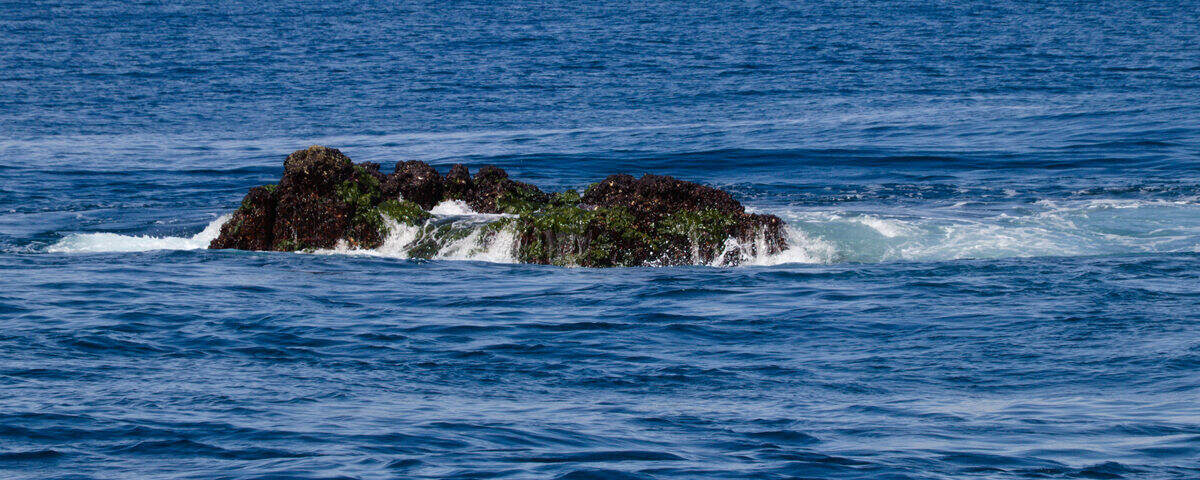
Donald Duck Bay is probably the most recognised landmark in the entire Similan archipelago, and for good reason. Sitting on the northwest corner of Koh Similan (Island 8), the bay takes its name from a granite boulder on its northern edge that bears an uncanny resemblance to the cartoon character's head. But the more famous feature is Sail Rock, a massive boulder perched at what looks like an impossible angle on the hillside above, visible from kilometres away and plastered across every Similan Islands brochure ever printed.
The diving here is different from the exposed, current-swept sites on the western faces of the archipelago. This is a sheltered bay. The water is calm, the depths are manageable, and the topography mixes boulder formations with sandy flats and hard coral gardens in a way that suits everyone from newly certified divers to experienced photographers hunting macro subjects between the rocks. It is not the place you come for adrenaline. It is the place you come for the kind of relaxed, exploratory diving that rewards patience and a slow fin kick.
What makes Donald Duck Bay genuinely special is the night diving. The bay's sheltered position makes it the preferred overnight mooring spot for liveaboards working the Similan circuit, and after dark this unassuming reef transforms into one of the best night dives in the Andaman Sea. Crustaceans that hide during the day emerge in extraordinary numbers. Giant morays leave their crevices to hunt. Cuttlefish and squid pulse with bioluminescent colour changes in torch beams. The site that seemed pleasant but unremarkable at 2pm becomes genuinely electric at 8pm.
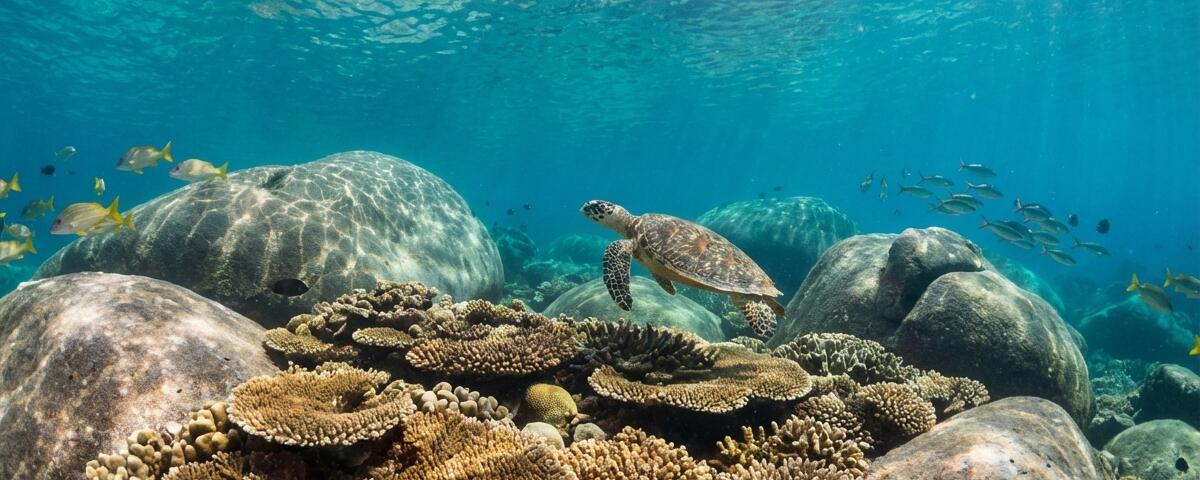
The bay also functions as a turtle sanctuary of sorts. Both green turtles and hawksbill turtles are resident here year round, and they have grown remarkably accustomed to human presence. You will almost certainly encounter at least one during any dive, sometimes resting beneath a boulder at 5 metres, sometimes cruising through the hard coral gardens or surfacing for air right beside the dive boat. They are habituated but still wild animals, and responsible operators maintain appropriate distance.
Donald Duck Bay sits within the Mu Ko Similan National Park, which closes annually during the southwest monsoon from mid-May to mid-October. During the open season, this bay is the busiest mooring spot in the entire park. Day trip boats, snorkelling tours, and liveaboards all converge here, which means morning dives can feel crowded. The smart play is a late afternoon dive when the day trippers have left, followed by a night dive after dark when you will likely have the reef entirely to yourself.
Marine Life at Donald Duck Bay
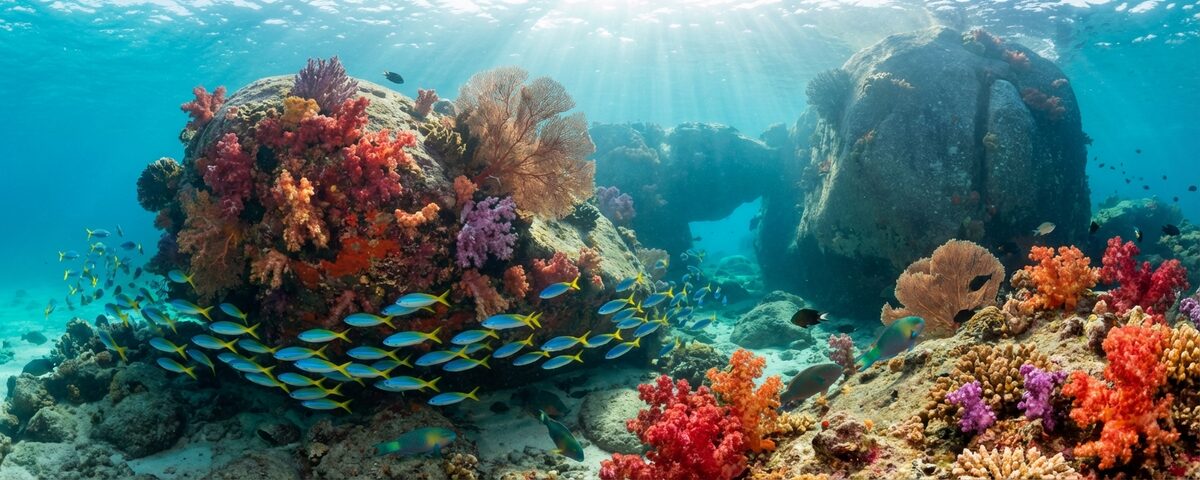
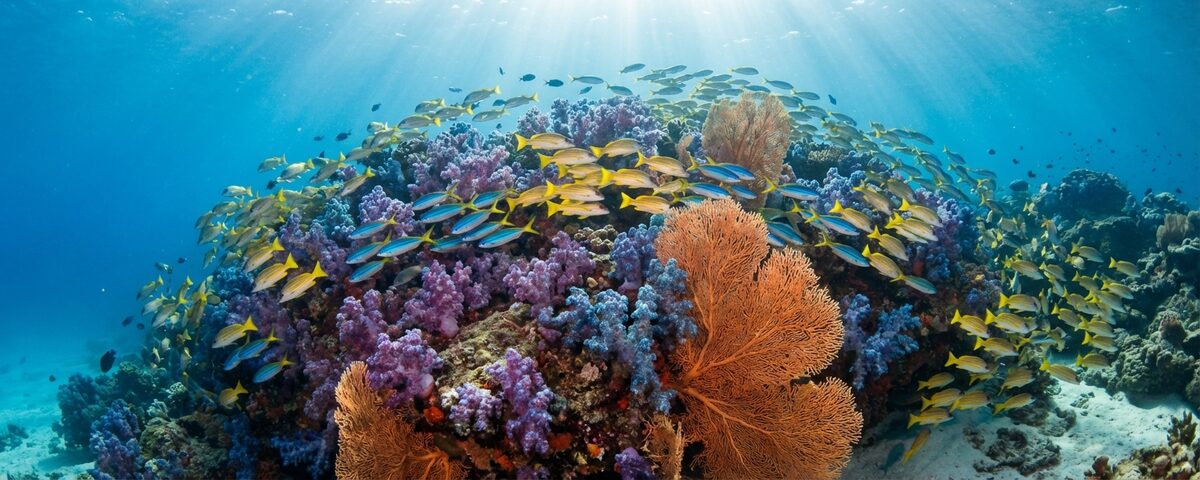
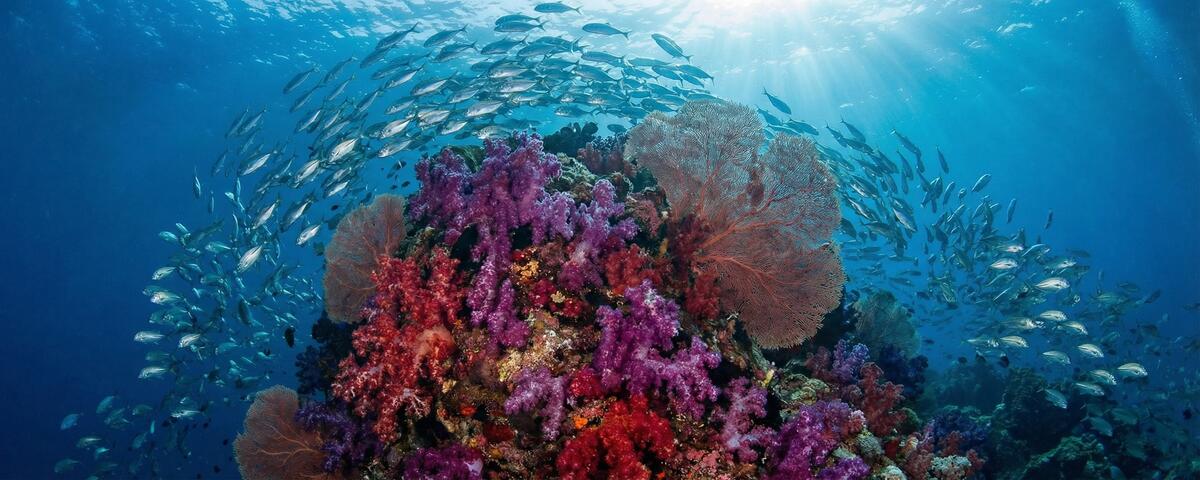
The granite boulders along the bay's northern edge form the most interesting underwater terrain. These are smaller and more scattered than the house-sized formations at Christmas Point or Elephant Head Rock, but they create a network of overhangs, crevices, and swim-throughs that concentrate marine life in a surprisingly compact area. Hard corals colonise every stable surface: staghorn formations in the shallows, table corals on the mid-depth boulders, and massive porites colonies that have been growing undisturbed for decades.
Turtles are the headliners during daylight hours. Green turtles here are large, some exceeding a metre in shell length, and they are remarkably tolerant of divers. They graze on algae across the hard coral flats, rest beneath boulder overhangs with their eyes half closed, and surface to breathe with an unhurried calm that suggests they have seen a thousand divers and find none of them particularly interesting. Hawksbill turtles are present too, usually spotted feeding on sponges around the boulder formations. On a single dive you might encounter three or four individuals, which is exceptional by any standard.
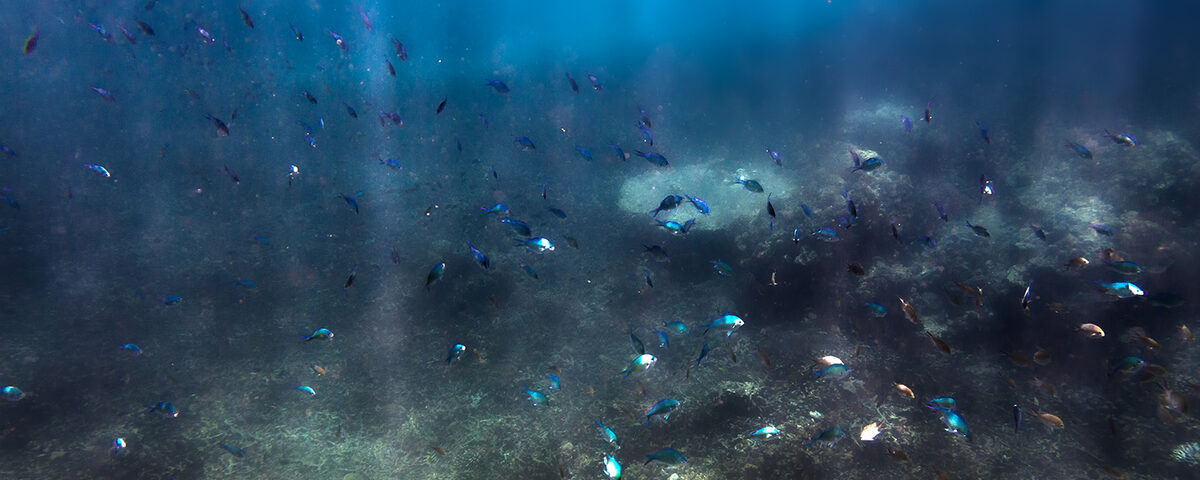
The reef fish population is typical of healthy Similan reefs but not spectacular by the archipelago's standards. Parrotfish in several species graze across the coral heads, their scraping audible underwater. Clouds of damselfish and anthias hover above the staghorn formations. Butterflyfish work in pairs along the reef edge. Moray eels, mostly giant morays and white-eyed morays, occupy permanent holes in the boulder formations and are easily found by guides who know the regular residents.
The northern boulder line is where things get more interesting. Swim-throughs between the rocks harbour cleaning stations where emperor shrimps, banded coral shrimps, and Durban dancing shrimps service visiting fish. Decorator crabs and red round crabs scuttle across the rock surfaces. Triton shells and cone shells sit in the crevices (look but never touch cone shells; the sting is medically serious). Nudibranchs in perhaps a dozen species cling to the undersides of boulders, rewarding anyone willing to look closely.
The sandy flats between 15 and 20 metres are sparse during the day but worth scanning for blue-spotted stingrays buried in the substrate and the occasional cuttlefish hovering motionless above the sand. Whitetip reef sharks sometimes rest in the deeper sections toward the bay's outer edge, though they are not common during daylight hours.
The night dive is where Donald Duck Bay earns its real reputation. The rubble bottom and boulder crevices come alive after dark. Spanish dancers, the largest nudibranchs in the world, unfurl their crimson mantles and swim through open water with undulating movements that justify the name completely. Spiny lobsters emerge from their daytime hiding spots, their antennae waving from beneath every overhang. Bull crabs the size of dinner plates scuttle across the rubble. Red octopuses hunt in the open, their skin flickering through colour changes as they move between prey items.
Giant morays leave their holes to hunt at night, and spotting one weaving between the boulders with its jaws open is a reliably thrilling moment even for experienced divers who have seen it before. Scorpionfish and lionfish become active, the lionfish spreading their pectoral fins to herd small fish into corners. Parrotfish encase themselves in mucus cocoons to sleep, and finding one wrapped in its transparent sleeping bag is one of those small pleasures that makes night diving addictive. Cuttlefish are often the highlight, their chromatophores producing rapid colour cascades when caught in a torch beam. Squid hover in the water column above the reef, their eyes reflecting green in the light.
On rare night dives, a whitetip reef shark will cruise through hunting. Their eyes reflect bright green in torch beams, and this is often how you spot them: twin green dots gliding through the darkness before the body becomes visible.
Dive Conditions
Donald Duck Bay is one of the most sheltered dive sites in the Similan archipelago, which is precisely why every liveaboard captain in the Andaman Sea uses it as a mooring spot. The bay faces northwest but is protected by the island's bulk and the boulder formations that frame its edges. Even when conditions on the exposed western sites are rough, the bay remains diveable.
Currents are typically mild. Tidal flow reaches the bay but rarely with any force, and most dives can be conducted as relaxed explorations rather than drift dives. Occasionally a moderate current runs along the northern boulder line, and this actually improves the diving by bringing in nutrients and encouraging the cleaning stations to become more active. On slack tide the water is essentially still.
The depth profile is gentle and forgiving. The beach slopes gradually to a sandy bottom at 15 to 20 metres, with the boulder formations along the northern edge reaching down to about 25 metres at their deepest. Most of the interesting diving happens between 5 and 18 metres, which means air consumption is efficient and bottom times are generous. Open Water divers can comfortably explore the majority of the site without approaching their certification limits.
Visibility ranges from 15 to 35 metres depending on season and conditions. The clearest water typically arrives in February and March. During plankton blooms, visibility drops, but the increased nutrients bring more feeding activity and better night diving. Sediment kicked up by snorkellers and day trippers in the shallows can reduce visibility in the top 5 metres during busy periods, which is another reason to time your dive for late afternoon or after dark.
Water temperature sits between 27 and 30 degrees Celsius. Thermoclines are uncommon in this sheltered bay, unlike the exposed sites where cold water upwellings sometimes surprise divers at depth. A 3mm wetsuit is plenty for a single dive. Night divers who plan to be in the water for 50 to 60 minutes may prefer a slightly thicker suit as the temperature drops fractionally after sunset.
The bottom composition requires some awareness. The sandy flats are fine-grained and silt up easily if you drag your fins or land on the bottom. Poor buoyancy control in the boulder swim-throughs kicks up sediment that takes minutes to clear in the calm water. Night diving amplifies this issue because visibility is already limited to your torch beam. Hovering cleanly is the single most important skill at this site.
Surface conditions in the bay are calm during the open season, making entries and exits straightforward. Giant stride from the liveaboard deck or the day trip speedboat, descend at the mooring line, and you are on the reef within two minutes. Night dive entries are equally simple, with the mooring line serving as a reliable reference in the dark.
⚓ Divemaster Notes
I always save Donald Duck Bay for the end of the day. The morning is when the day trip boats arrive and the snorkelling tours descend on the bay. By 3pm the speedboats have left and the bay quiets down. That is when the turtles are most relaxed and the visibility in the shallows recovers from the morning's foot traffic.
For the day dive, I run a clockwise loop starting at the mooring line and heading north along the boulder formations. The swim-throughs are the most interesting part of the site, and I let the group explore them at their own pace rather than rushing through. The cleaning stations on the northern rocks are worth five minutes of hovering. Emperor shrimps are tiny but once you spot one on a sea cucumber, you start seeing them everywhere.
I always brief the turtle situation properly. These animals are habituated to people, which means they will let you get close. That does not mean you should. Three metres minimum distance, no chasing, no touching, and absolutely no feeding. Some snorkelling boats still throw bananas to attract turtles for tourists, which is genuinely harmful. The turtles have started associating boats with food and approach them, which puts them at risk of propeller strikes. If you see feeding happening, report it to the national park rangers.
The night dive is where Donald Duck Bay truly shines and I tell my groups this during the afternoon briefing so they save their energy. I plan the night dive route along the rubble bottom between the boulders on the northern side, then loop back through the sandy flats. The rubble is where the crustaceans concentrate. Bull crabs, spiny lobsters, and hermit crabs in shells so large they look absurd. Red octopuses are reliable finds on the sand between boulders, usually hunting rather than hiding.
I always carry a red filter for my torch on Donald Duck Bay night dives. The marine life is less disturbed by red light, and cuttlefish in particular will hold position rather than jetting away when illuminated with red versus white light. Spanish dancers are the crown jewel of any Donald Duck Bay night dive, and they tend to appear in the second half of the dive when the reef has fully woken up.
One thing I always mention in the briefing: sleeping turtles. You will almost certainly encounter a turtle resting under a boulder at 5 to 8 metres during a night dive here. Do not illuminate them directly or get too close. If startled awake, they can become disoriented and have difficulty finding the surface to breathe. Give them a wide berth and enjoy the sighting from a respectful distance.
For newer divers or those doing their first night dive, Donald Duck Bay is ideal. The depth is manageable, the current is negligible, and the mooring line provides a reliable reference point for the entire dive. I always descend and ascend on the mooring line for night dives here.
How to Get to Donald Duck Bay
Donald Duck Bay is on the northwest corner of Koh Similan (Island 8), the largest island in the Similan archipelago and the one that gives the entire national park its name. The island sits roughly 70 kilometres offshore from the Phang Nga coast in the Andaman Sea.
Khao Lak is the primary gateway. This quiet resort town lies about 60 to 90 minutes north of Phuket International Airport by road, and virtually every Similan Islands operator runs from here. Transfers from Phuket Airport to Khao Lak are available through most dive operators or can be arranged independently via minivan or private car.
Liveaboards are the most common way to dive Donald Duck Bay. Multi-day trips departing from Tab Lamu pier near Khao Lak include Island 8 as a standard stop, and most boats moor overnight in the bay itself. Two to four night itineraries covering the full Similan chain, plus extensions north to Koh Bon, Koh Tachai, and Richelieu Rock, range from THB 15,000 to 50,000 depending on vessel, duration, and comfort level.
Day trips from Khao Lak reach the Similans in roughly 90 minutes by speedboat. These typically visit two or three sites including Donald Duck Bay for both diving and snorkelling. Day trip costs run THB 4,000 to 7,000 with equipment, park fees, and lunch included. Day trips depart from Tab Lamu pier around 7:30am and return by late afternoon.
Phuket International Airport connects directly to Bangkok (1.5 hours), Kuala Lumpur (1.5 hours), Singapore (2 hours), and seasonal routes from Europe, Australia, and the Middle East. From the airport, head north on Route 4 through Phang Nga province to reach Khao Lak.
The national park entrance fee is THB 500 for international visitors and THB 100 for Thai nationals per entry. The park operates from approximately 15 October to 15 May, with exact dates shifting slightly each year depending on monsoon conditions. No access is permitted outside this window.
Peak season bookings, particularly over Christmas, New Year, and Chinese New Year, require advance planning. Popular liveaboards sell out months ahead. Day trips are easier to arrange at short notice.
Gear Recommendations
Torch is the single most important piece of equipment at Donald Duck Bay, especially if you plan to night dive (and you absolutely should). A primary torch with at least 1,000 lumens and a backup torch are both essential for the night dive. A red filter attachment is strongly recommended for approaching cuttlefish and sleeping marine life without causing disturbance. Macro lens or close-up wet lens is the priority for photography here. The boulder formations and night dive subjects reward close focus over wide angle. Nudibranchs, shrimps, crabs, and cuttlefish at close range produce better images than the wide boulder formations. That said, a wide-angle lens on the day dive captures the turtle encounters and swim-throughs well. A 3mm wetsuit handles all conditions at this site comfortably. Night divers spending 50 to 60 minutes in the water may prefer 5mm. SMB (surface marker buoy) should be carried as standard practice but is rarely needed in this sheltered bay. Reef-safe sunscreen for surface intervals at the mooring. The bay's proximity to the beach means environmental standards matter here more than at open-ocean sites. Nitrox is beneficial but not critical given the shallow depth profile. Most diving occurs between 5 and 18 metres, where air provides ample no-decompression time. Save your Nitrox fills for the deeper sites on the liveaboard itinerary.
Recommended Dive Operators
Sea Dragon Dive Center runs both liveaboard trips and day excursions from Khao Lak and has been operating in the Similans for over two decades. Their guides know the resident turtle locations and the best night dive routes through the northern boulder formations. Wicked Diving operates purpose-built liveaboards with small group sizes (maximum 4 divers per guide) and includes Donald Duck Bay night dives on virtually every itinerary. Their conservation focus means proper turtle interaction briefings are standard. Similan Dive Center has the widest departure schedule during the season, running a fleet of liveaboards from budget to premium. They match groups to sites based on experience level, making Donald Duck Bay a go-to for mixed-ability groups. Khao Lak Scuba Adventures caters well to newer divers and runs a popular Similan day trip programme that includes Donald Duck Bay as a core stop. Their patient approach to guided dives suits the site's relaxed character. For dedicated night diving, ask any liveaboard operator specifically about overnight mooring at Donald Duck Bay. Most itineraries include it, but confirming ensures you get the best dive the site offers.
Liveaboard Options
Donald Duck Bay is the single most popular overnight mooring spot in the Similan Islands, so virtually every liveaboard that works this area will anchor here at least once per trip. The MV Giamani offers budget-friendly trips with Donald Duck Bay included as a night dive stop on most two and three night itineraries. The MV Manta Queen fleet operates several vessels at different price points, all mooring in the bay as standard. Deep Andaman Queen is a mid-range option with good camera facilities that suit the macro photography opportunities on the night dive. The SY Diva Andaman and MV Dolphin Queen provide premium accommodation with smaller group sizes, which makes a real difference at Donald Duck Bay where fewer divers in the water means less silt disturbance in the swim-throughs. Budget liveaboards from Khao Lak start around THB 15,000 for two nights. Mid-range vessels run THB 25,000 to 35,000 for three nights. Premium boats range from THB 40,000 to 65,000 for four-night itineraries extending to Richelieu Rock and beyond. When booking, specifically ask whether the itinerary includes an overnight mooring at Donald Duck Bay with a night dive. Some shorter trips skip the night dive, and that is genuinely the best thing about this site.