Shark Fin Reef Dive Site
Similan Islands (Andaman Sea), Thailand · Near Khao Lak
Overview
Shark Fin Reef sits at the southern end of the Similan Islands, extending off the southeast coast of Island 3 (Koh Payan) as a long granite ridge that stretches nearly a kilometre into open water. The name comes from the rock formation itself: a series of granite peaks that break the surface in a profile resembling a shark's dorsal fin. It is one of the least-visited sites in the Similans, partly because of its exposed position and partly because liveaboards tend to prioritise the more northern islands. Divers who do make it here consistently rate it among their favourite dives of the trip.
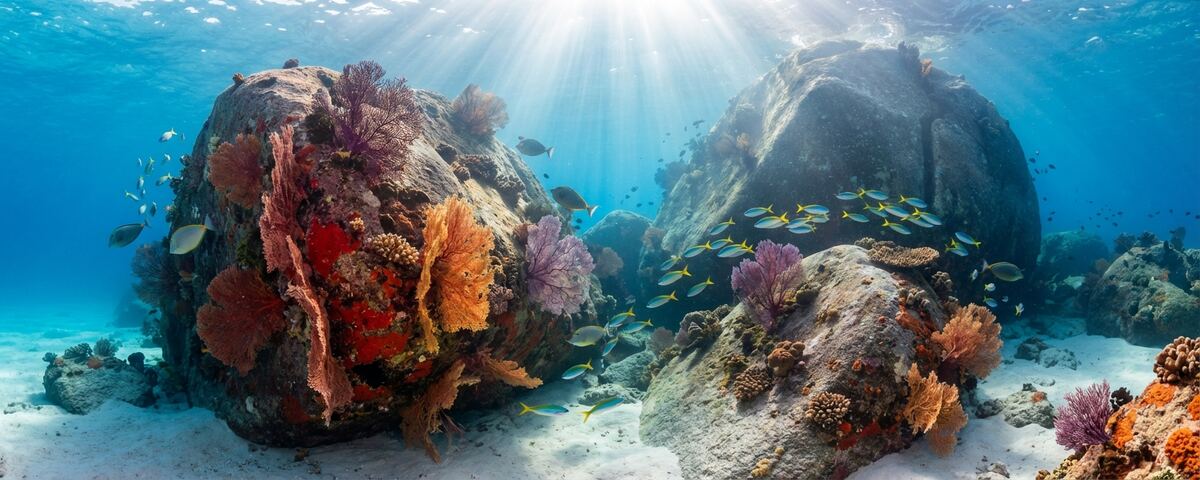
The site's isolation is what makes it special. Sitting closer to the marine sanctuary on Islands 1 and 2 (Koh Huyong and Koh Payang, which are closed to diving), Shark Fin Reef benefits from the spillover effect of a protected zone. Fish populations are dense. The granite boulders are enormous, some the size of houses, creating walls, platforms, canyons, and swim-throughs that give the dive a sense of exploring some submerged ancient ruin rather than a typical reef.
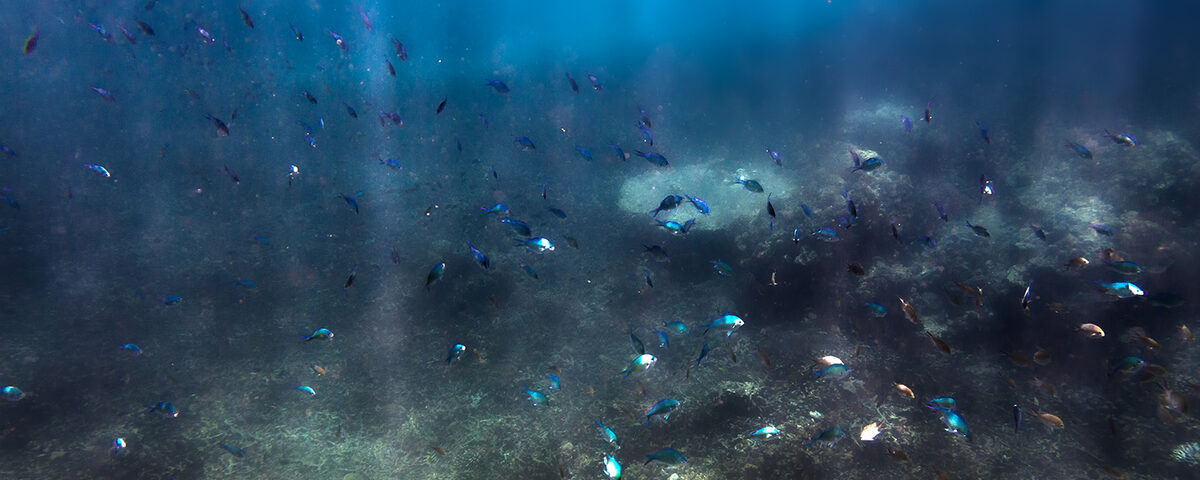
Visibility here is often the best in the Similans. The southern location catches cleaner water before it churns through the island chain, and 30-metre days are not unusual during peak season. The white sand surrounding the reef amplifies the light, making the whole site glow even at depth. On a clear day you can see the entire ridge laid out below you during descent, the dark granite shapes contrasting sharply against the bright sand.
The reef runs roughly north to south, with the deepest sections on the southern end meeting sand at around 30 metres and scattered boulders dropping beyond that to 40. The shallow northern sections top out at just 5 metres, making for easy safety stops with plenty to look at. Most dive profiles start deep on the south side and work north along the ridge, ascending gradually as air supply dictates.
Current is the main factor that keeps Shark Fin Reef off some itineraries. The exposed position means tidal flows hit the reef directly, and conditions can shift during a dive. On moderate current days, the diving is spectacular because the flow brings nutrients and the fish life responds accordingly. On strong current days, the site demands solid buoyancy control and awareness of potential downwellings near the boulder formations. Dive guides read conditions on the surface before committing, and if the current is ripping, they will redirect to a more sheltered site nearby.
Marine Life at Shark Fin Reef
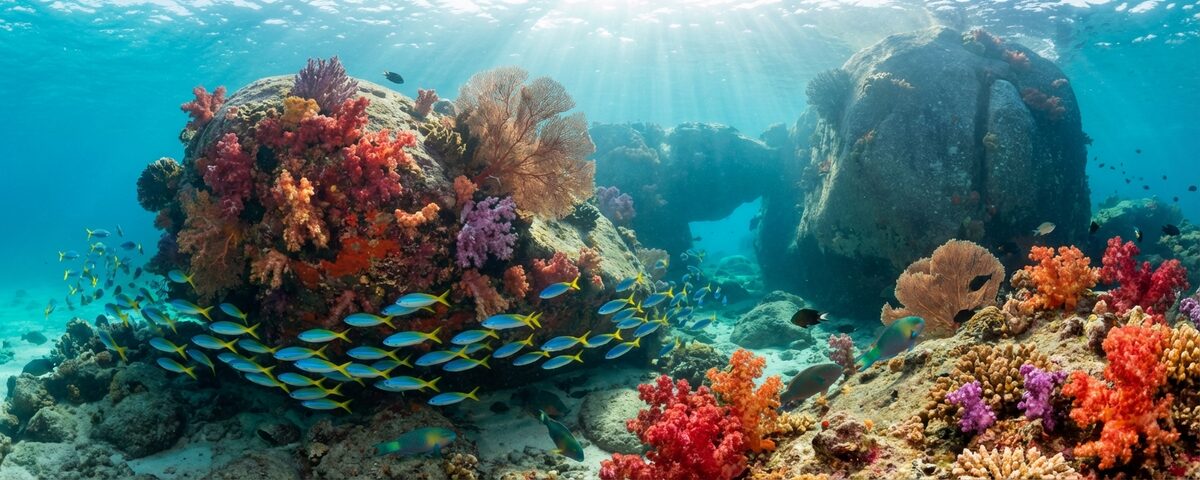
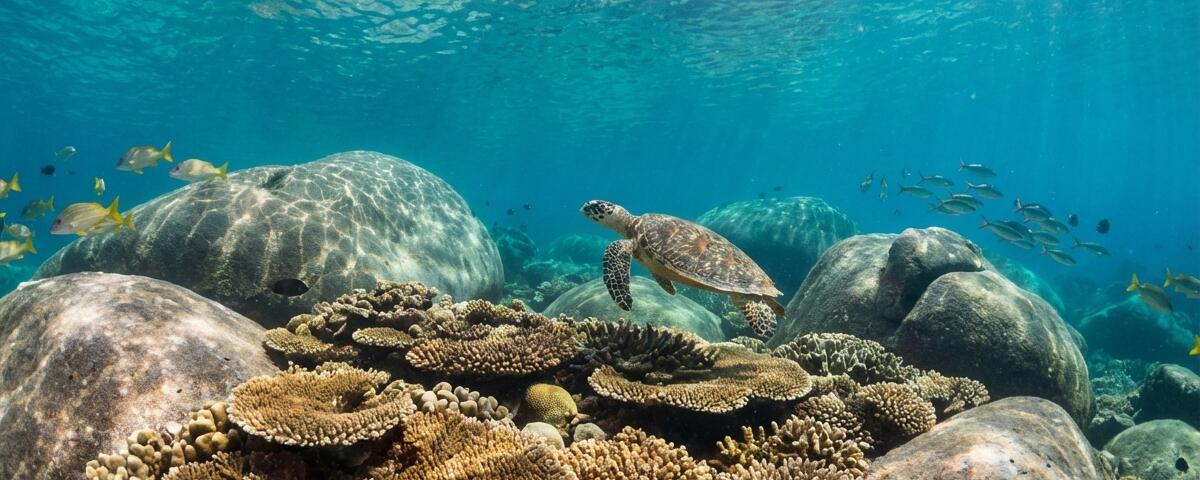
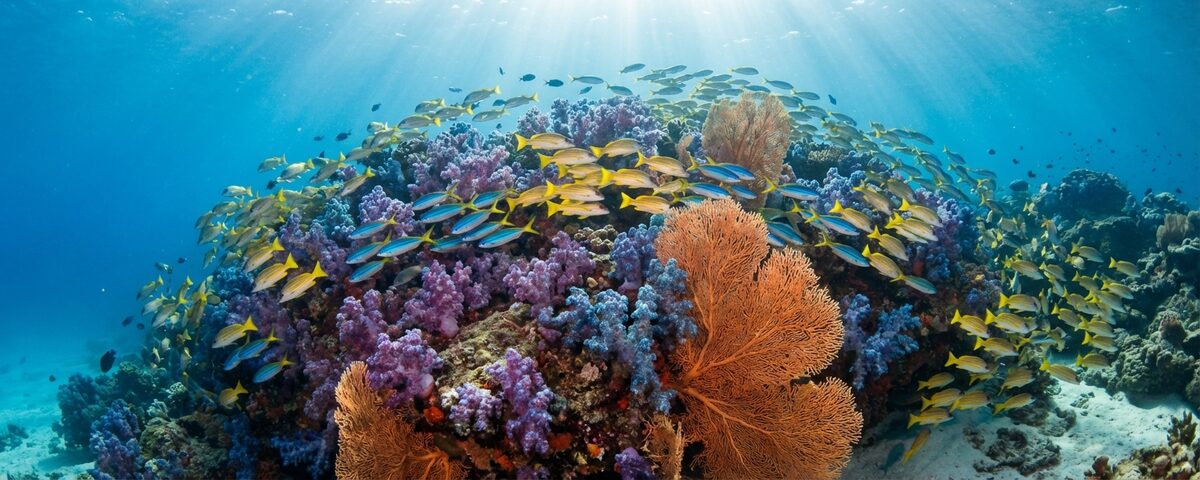
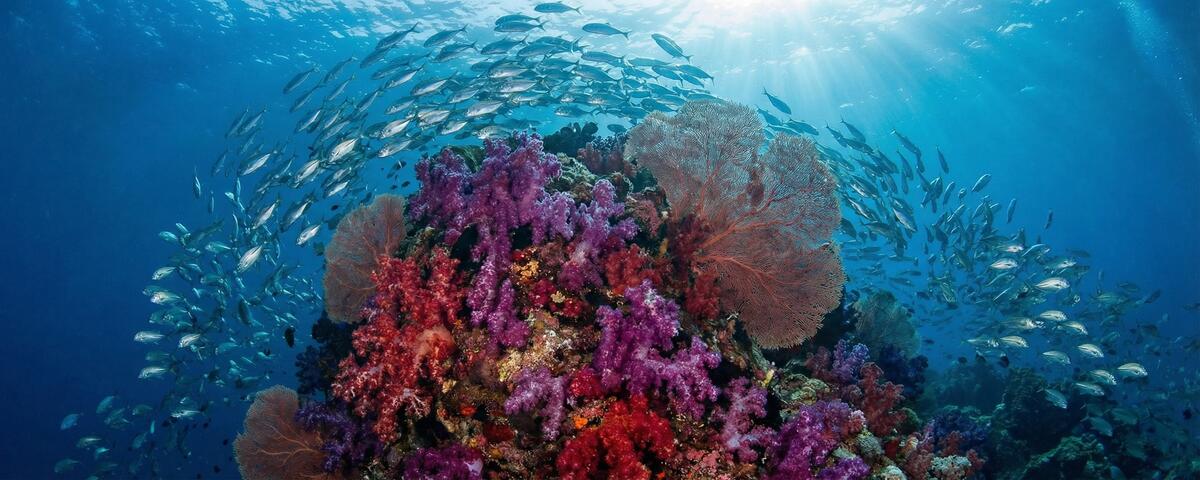
The granite boulders are the backbone of everything here, and the marine life arranges itself around them with a logic you can read once you know what to look for. Current-exposed faces host gorgonian sea fans spread wide to filter the flow, some of them a metre or more across, in purples and oranges that photograph brilliantly. Hard coral colonises the sheltered tops and ledges, with table corals and branching Acropora forming gardens on the shallower plateaus.
Schools dominate the mid-water. Yellowback fusiliers and dark-banded fusiliers are ever-present, streaming across the reef in shifting clouds that part and reform around the boulders. Unicorn fish and surgeonfish gather in groups on the current-exposed ridges. Yellow snapper form dense balls in the lee of the larger rocks, and on good days a school of chevron barracuda materialises from the blue and circles the reef edge before vanishing again.
The bigger residents are what elevate Shark Fin Reef beyond a standard boulder dive. Napoleon wrasse patrol the deeper sections, their size and slow confidence making them easy to spot even at distance. Bumphead parrotfish, genuinely rare at most Similan sites, have been recorded here more reliably than anywhere else in the archipelago. They travel in small groups, their foreheads and bulk unmistakable. Leopard sharks rest on the sand patches between boulders, usually on the deeper southern end where the current is mildest at the seabed.
Stingrays are a highlight. Blue-spotted lagoon rays tuck under overhangs throughout the site. Jenkins whiprays and marble rays are spotted on the sand, and pink whiprays (less commonly seen in the Similans) have been recorded here too. Moray eels peer from crevices in the boulder formations, giant morays being the most common species.
The site has a hidden gem that guides in the know will point out: a bubble-tip anemone wedged in a crack on the shallow plateau that glows an unusual fluorescent pink, hosting a pair of skunk clownfish. It is genuinely unusual in colour and has become something of a local landmark among repeat visitors.
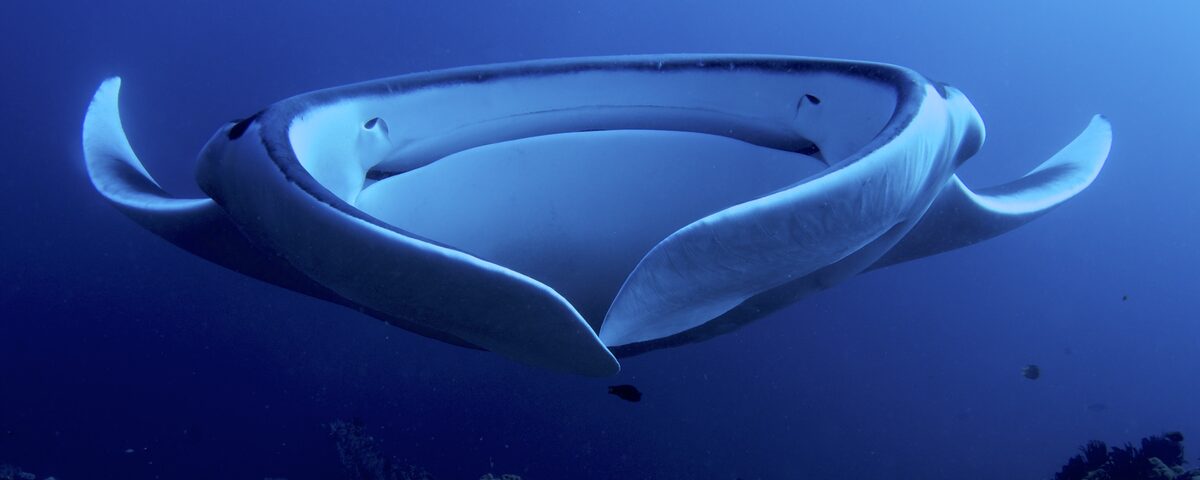
Occasional visitors from open water include manta rays (more likely between February and April), reef sharks, and on very lucky days a whale shark passing through the deep water off the southern end. These sightings are uncommon enough that they are not a selling point, but frequent enough that experienced guides keep half an eye on the blue throughout the dive.
Dive Conditions
The ridge extends roughly north to south with depth increasing towards the southern end. The deepest areas around the main boulders bottom out at 28 to 30 metres, with scattered rocks on sand continuing to 40 metres for divers with the training and gas to explore them. The northern section shallows to 5 metres at the reef top, where the granite breaks the surface.
Between the deep south and the shallow north lies a broad plateau at about 12 metres, scattered with coral bommies and smaller rocks. This is where fish life concentrates and where most divers spend the second half of their dive after ascending from the deeper exploration.
Current is the defining condition. The reef sits in open water with no island to break the flow, and tidal currents hit it directly. Moderate current is typical and manageable for intermediate divers with reasonable buoyancy control. Strong current days require experience and awareness of downwellings near the large boulder formations. The current direction determines which side of the ridge offers shelter, and guides adjust the dive plan accordingly.
Visibility ranges from 15 to 30 metres, with the best conditions in December through March. Water temperature sits between 27 and 29 degrees year-round during the dive season. Thermoclines are possible on the deeper sections, dropping temperatures by 2 to 3 degrees below 25 metres.
The Similan Islands are a national marine park, closed from mid-May to mid-October for the southwest monsoon. Shark Fin Reef is only accessible during the open season, and conditions are best between November and April when the northeast monsoon brings calmer seas.
⚓ Divemaster Notes
I have a soft spot for Shark Fin Reef because most of my guests have never heard of it, and the reaction when they surface is always the same: why does nobody talk about this place? The answer is logistics. It is at the wrong end of the chain for most itineraries, and the current can be unpredictable enough that I sometimes have to call it off on the surface check. But when conditions align, it is one of the three best dives in the Similans alongside Richelieu Rock and Elephant Head Rock.
I start the dive on the south side, dropping to 25 metres and working the sand patches between the big boulders. This is where the leopard sharks rest, and they are usually there. Slow approach, no sudden movements, and you can get within a few metres before they glide off. From the leopard shark zone, I bring the group northwest along the ridge at 18 to 20 metres, following the gorgonian-covered walls where the Napoleon wrasse cruise.
The transition from the deep section to the plateau at 12 metres is where the dive changes character. Down deep it is about the big stuff and the dramatic topography. On the plateau it becomes a fish aggregation site, with schools stacking up in the current. I find a comfortable spot with a good view of the ridge edge and let the group settle. Half the time, if you just stay still for a minute, something comes to you. Barracuda, trevally, a curious Napoleon. Patience pays here more than swimming.
The pink bubble anemone is in a crack on the plateau, slightly northwest of the main boulder cluster. I point it out to every group because it is genuinely unusual. The colour is vivid enough that it looks almost artificial, but it is entirely natural. Photographers go mad for it.
Current management is the main skill for guiding this site. I always brief the group to stay close to the reef structure rather than swimming in open water above it. The boulders create eddies and sheltered zones that make even a moderate current dive comfortable if you know where to position yourself. On stronger current days, I keep the group on the lee side of the ridge the entire dive and do not attempt a circumnavigation.
One thing I always mention in the briefing: keep an eye on the blue water off the southern end. I have seen mantas there twice in my last 15 dives, and both times they were below the group, cruising at 25 metres. If I had not been watching the deep water, we would have missed them entirely.
How to Get to Shark Fin Reef
The Similan Islands sit approximately 70 kilometres off Thailand's Andaman coast, west of Khao Lak in Phang Nga Province. Khao Lak is the primary departure point for all Similan diving, located about 90 minutes north of Phuket Airport by road.
Liveaboards are the most common and practical way to dive Shark Fin Reef. Multi-day trips departing from Tab Lamu Pier in Khao Lak typically run 2 to 5 night itineraries covering the Similan and Surin Islands. Shark Fin Reef sits on the southern end of the route, so it is usually dived on the first or last day of a trip. Not all liveaboards include it on every itinerary (some skip it in favour of more northern sites), so check the dive plan before booking if this site is a priority.
Day trips from Khao Lak reach the Similans in about 90 minutes by speedboat, but rarely venture as far south as Island 3. Day trip divers are more likely to dive the central islands (5 through 9). To reach Shark Fin Reef on a day trip, you would need to arrange a private or custom charter, which is possible but uncommon.
The nearest international airport is Phuket (HKT), with direct flights from Bangkok, Singapore, Kuala Lumpur, and various Chinese and European cities. From Phuket Airport, a taxi or minivan to Khao Lak takes about 75 minutes.
Gear Recommendations
3mm or 5mm wetsuit depending on sensitivity (thermoclines on deeper sections can be cooler). Reef hook not commonly used here but useful on strong current days for the plateau section. Wide-angle lens recommended for the dramatic boulder formations and schooling fish. Macro lens worthwhile as a second dive option for the anemone and nudibranch life on the sheltered walls. Torch useful for illuminating overhangs and crevices. SMB mandatory. Nitrox recommended for extended bottom time on the deeper sections.
Recommended Dive Operators
Sea Dragon Dive Center in Khao Lak operates liveaboards and day trips throughout the Similan season, with experienced guides who know the southern sites well. Khao Lak Scuba Adventures runs the Manta Queen fleet of liveaboards, and their multi-day trips regularly include Shark Fin Reef when conditions allow. MV Giamani offers 4 and 5 night safaris that cover the full Similan chain including the southern islands. Sunrise Divers in Khao Lak is another long-established operator with consistent quality. For budget liveaboards, the Similan Diving Safaris fleet offers good value with itineraries that include the southern sites. Check that your chosen liveaboard specifically lists Shark Fin Reef or Island 3 in its itinerary, as some operators focus exclusively on Islands 5 to 9.
Liveaboard Options
Most Similan liveaboards departing from Khao Lak include the southern islands on longer itineraries of 3 nights or more. The MV Giamani runs 4 and 5 night trips that reliably visit Island 3. Manta Queen fleet offers 2 to 4 night options with southern site coverage on the longer departures. Similan Diving Safaris operates several boats with varying itineraries. For the best chance of diving Shark Fin Reef, book a 4-night trip and confirm with the operator that Island 3 is on the route. Peak season (December to February) books out 2 to 3 months in advance. Budget liveaboards start around 15,000 THB for 2 nights. Mid-range options with better food and smaller groups run 25,000 to 40,000 THB for 4 nights.