Stonehenge Dive Site
Similan Islands (Andaman Sea), Thailand · Near Khao Lak
Overview
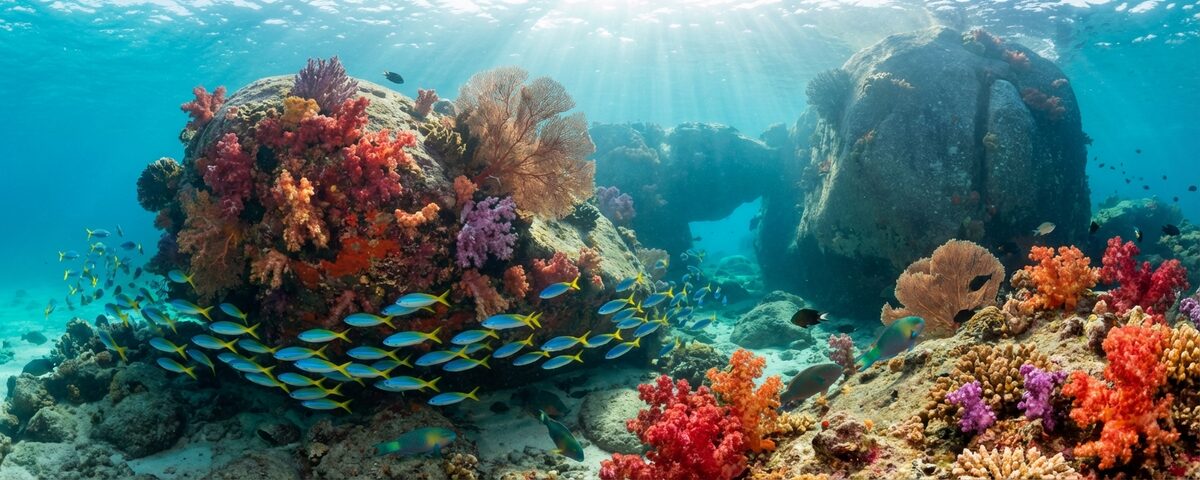
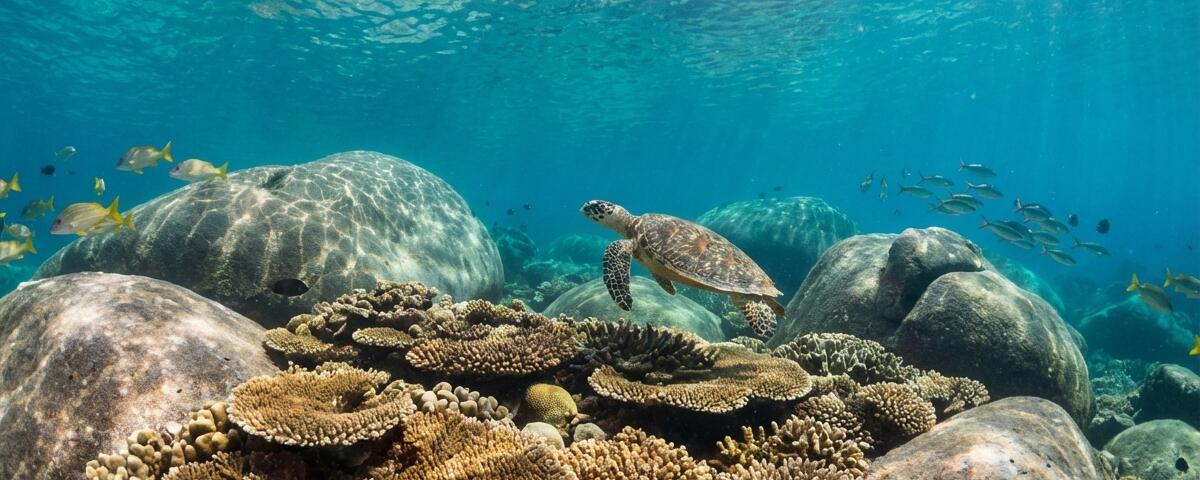
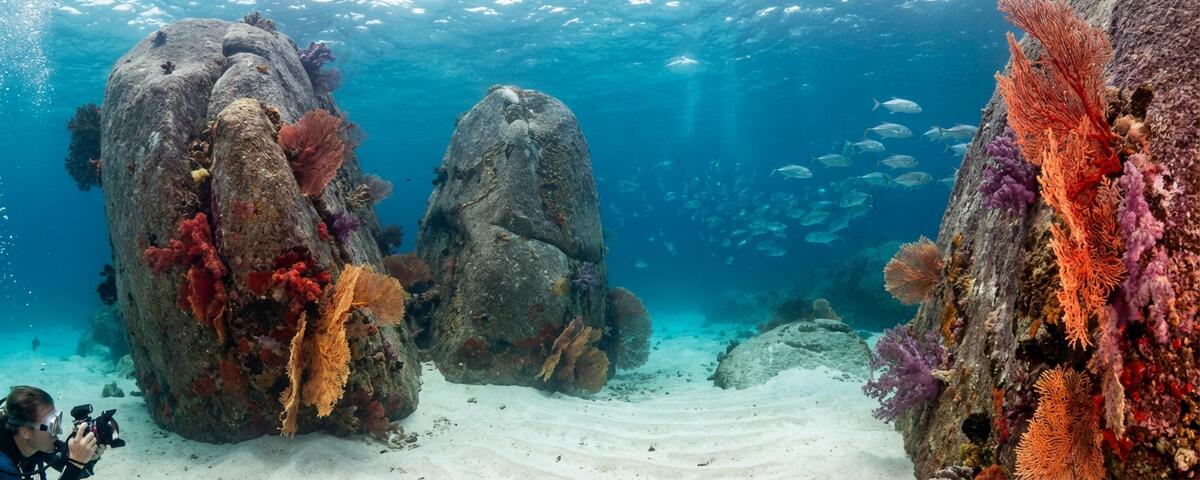
Stonehenge sits off the northwestern tip of Koh Miang (Island 4) in the Similan Islands, and it earns its name honestly. A cluster of colossal granite boulders rises from a sandy bottom at 35 to 40 metres, their tops reaching up to around 24 metres. The formation looks prehistoric, almost deliberate, like something was placed there rather than tumbled into position by geology. It is one of the deeper sites in the archipelago and one of the least crowded, partly because the depth and currents filter out casual visitors.
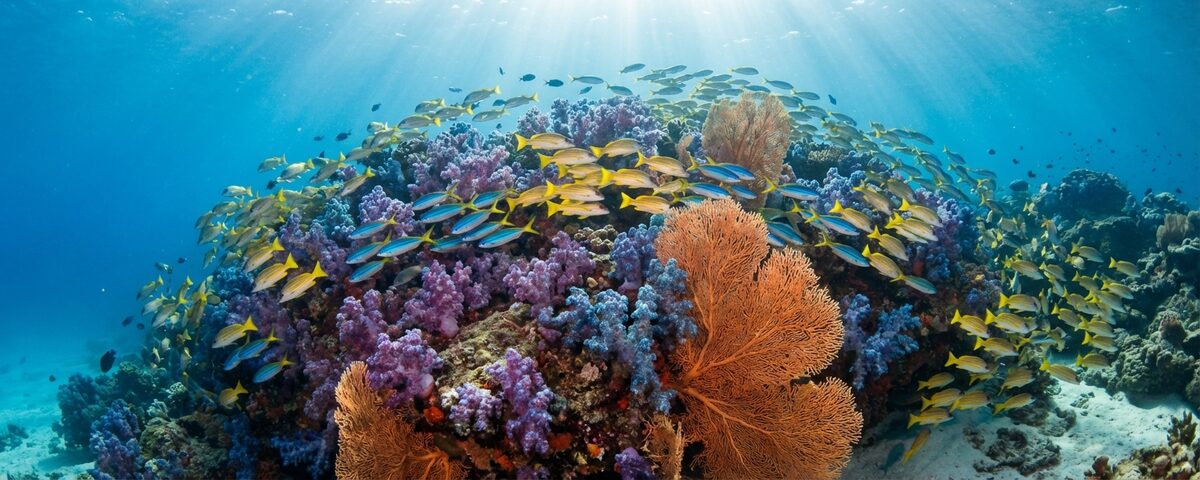
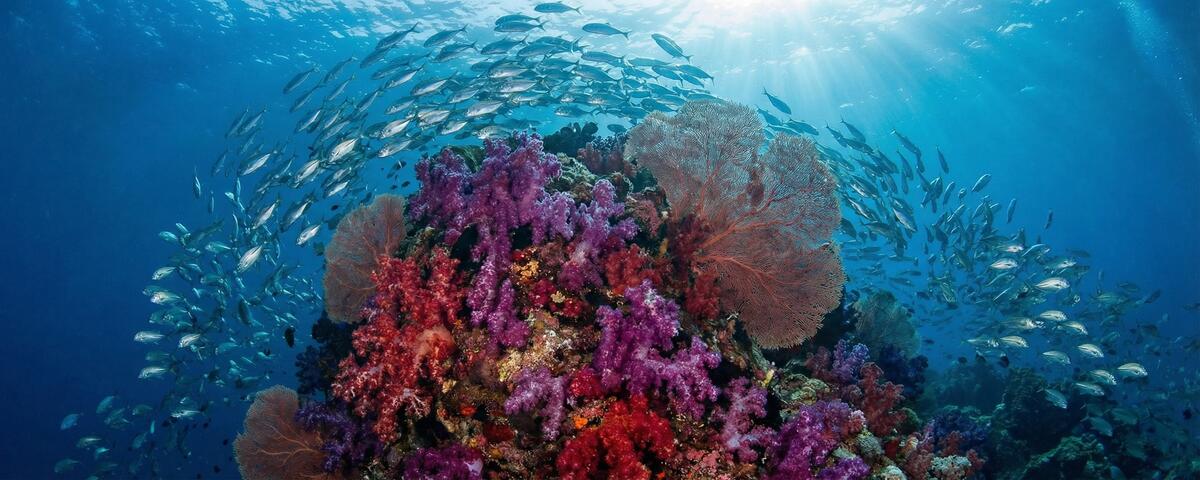
The boulders create a network of canyons, swim-throughs and overhangs that reward exploration. Soft corals and gorgonian sea fans colonise every sheltered surface, adding splashes of purple, red and orange to the grey granite. The exposed position between Islands 4 and 7 means clean oceanic water flows through regularly, which keeps visibility consistently high but also brings currents that can range from manageable to properly challenging. On a calm day with good vis, it is one of the most atmospheric dives in Thailand. You drop down the mooring line into blue water, and the boulders materialise below you like ruins emerging from fog.
Most liveaboards working the Similan itinerary include Stonehenge as an option for experienced divers, though it does not appear on every schedule. Day trip boats from Khao Lak rarely visit because the depth profile does not suit newer divers and the bottom time is limited. That relative quietness is part of the appeal. While the shallow reef sites around Koh Miang host clusters of snorkellers and Open Water students, Stonehenge belongs to the divers willing to burn through air at depth for something a bit wilder.
Marine Life at Stonehenge
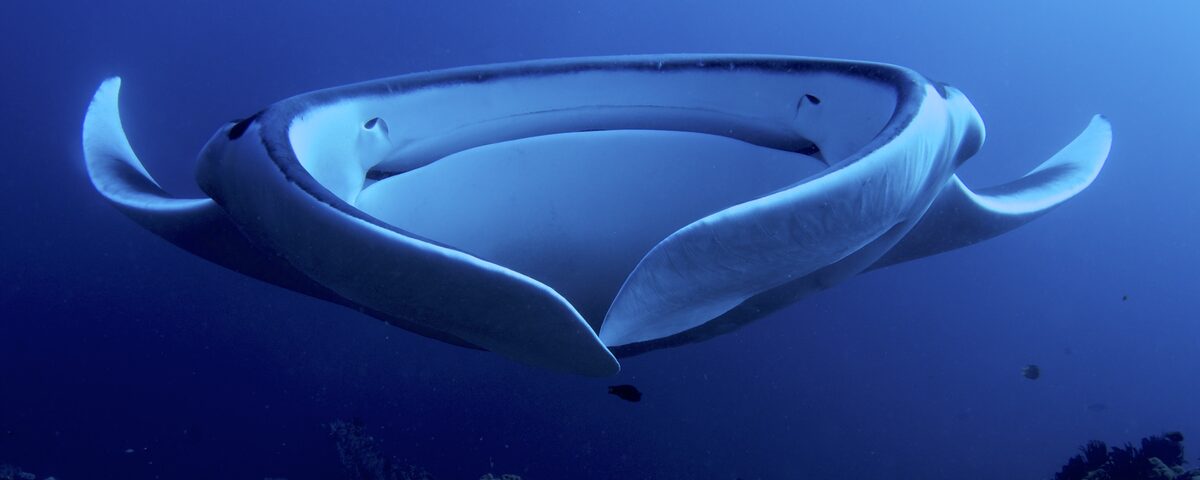
The marine life at Stonehenge reflects its position as an exposed, current-swept deep site. The boulders act as a magnet for pelagic species that would not bother visiting the sheltered eastern reefs. Schools of bluefin trevally and bigeye trevally patrol the outer edges in hunting formation, making sharp turns that catch the light. Dogtooth tuna pass through on feeding runs, and great barracuda hang in loose groups off the blue side, usually just at the edge of visibility.
Leopard sharks are one of the signature sightings here. They rest on the sandy bottom between the boulders, often at 35 metres or deeper. You will spot them if you look down while navigating the channels, their spotted bodies surprisingly well camouflaged against the pale sand. Whitetip reef sharks cruise the swim-throughs, and blacktip reef sharks appear occasionally in the shallower areas above the formation.
The boulder surfaces host a dense community of invertebrates. Gorgonian sea fans stretch out into the current from sheltered ledges, and ornate ghost pipefish hide among them, almost impossible to spot without a patient divemaster pointing them out. Barrel sponges grow to impressive sizes on the rock faces, and lionfish perch in their shade, fins spread wide. Bearded scorpionfish sit motionless on ledges, and if your guide knows where to look, you might find a leaf scorpionfish tucked into a crevice.
Smaller reef residents fill the gaps between the big sightings. Clown triggerfish with their bold patterns are common, as are longnose butterflyfish picking at the coral. Clownfish defend their anemone patches aggressively, apparently unaware of the size difference between themselves and you. Yellow boxfish, angelfish and various species of wrasse round out the reef fish population. The diversity is not quite at the level of the shallower sites like East of Eden, but the quality of individual encounters is higher. Fewer divers means less skittish fish, and the pelagic action adds a dimension that the gentle coral gardens cannot match.
Dive Conditions
Stonehenge is a genuine advanced dive, and the conditions reinforce that classification. The minimum depth at the top of the boulders is around 24 metres, which means your entire dive happens below the point where many recreational divers start watching their air gauge nervously. Maximum depth on the sand is 35 to 40 metres depending on which side of the formation you explore. Bottom time is limited accordingly. On air, experienced divers typically get 25 to 35 minutes before needing to begin their ascent. Nitrox (EANx32) extends that meaningfully and is worth arranging if your liveaboard offers it.
Currents are the other factor that separates this site from the easier Similan dives. The exposed position between islands means tidal flows hit the boulders without obstruction. On slack tide, conditions are manageable and the dive feels relaxed. When the current picks up, it can push hard enough to make swimming against it impractical. Competent divemasters plan the dive to work with the current rather than against it, typically dropping on the upcurrent side and drifting through the formation. On days when the current is running strong, some operators will skip the site entirely rather than risk it.
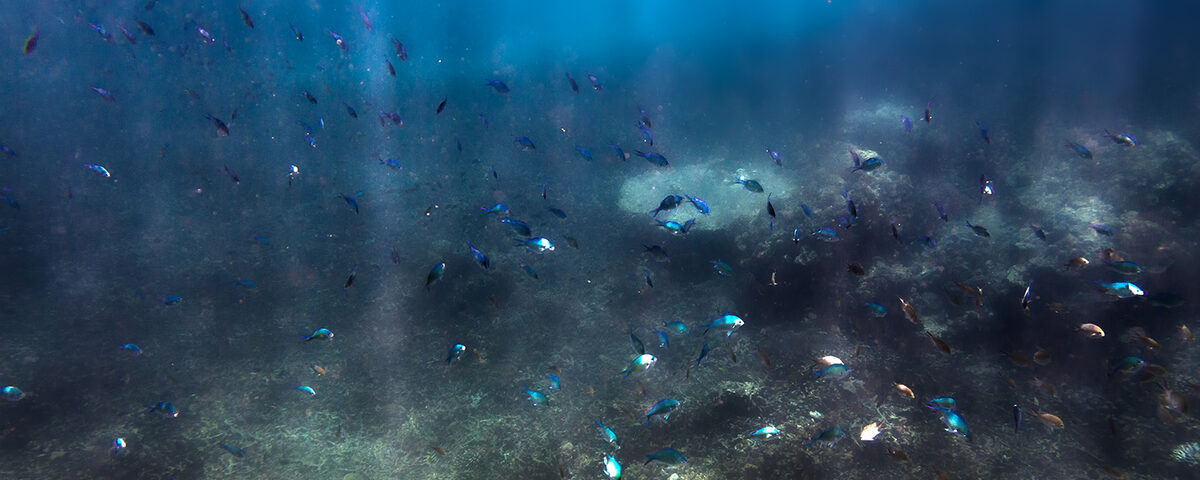
Visibility is generally excellent, ranging from 15 to 35 metres depending on the time of season. January through April delivers the best clarity, with 25-plus metres being typical. Early season (November and December) can be slightly reduced due to plankton blooms, though this also increases the chance of larger filter feeders appearing. Water temperature sits between 27 and 30 degrees Celsius throughout the season, comfortable in a 3mm full suit with most divers finding they do not need anything heavier.
The Similan Islands National Park is closed from mid-May to mid-October during the southwest monsoon. Stonehenge, along with all Similan dive sites, is only accessible during the November to May season.
⚓ Divemaster Notes
Brief your divers honestly about the depth and current before they get in the water. This is not a site to bring along someone who is technically qualified on paper but has not dived in six months. Check computers and air consumption rates from earlier dives in the trip before deciding who joins the Stonehenge dive.
Descend on the mooring line together and do not leave it until everyone in the group is equalised and settled. The top of the boulders at 24 metres is the gathering point, and from there the dive plan depends entirely on the current. On slack tide, you can work both sides of the formation and loop back to the mooring. With current running, commit to a drift pattern through the channels and arrange a pickup.
Keep the group tight through the swim-throughs. The passages between boulders are wide enough for comfortable single-file passage, but divers who wander off can lose the group quickly in the cavern-like topography. Point out the leopard sharks on the sand early in the dive while everyone still has air and bottom time. The ornate ghost pipefish on the sea fans are the other highlight worth searching for, but they require patience and a close eye.
Watch gas management aggressively. At these depths, air disappears fast, and less experienced advanced divers may not realise how quickly they are burning through their supply until they check and find 80 bar remaining. Set a turn pressure of 120 bar and enforce it without exception. Safety stop can be done on the mooring line if conditions allow, or free-hanging in the blue with SMB deployed if the group has drifted off the site.
The best time to dive Stonehenge is early morning on the first dive of the day, when currents tend to be lighter and the pelagic traffic is highest. Afternoon dives here can work, but the current typically strengthens as the tide shifts.
How to Get to Stonehenge
Stonehenge is reached exclusively by boat from Khao Lak or the Tab Lamu pier on the Andaman coast of southern Thailand. The site sits approximately 70 kilometres offshore, northwest of Koh Miang (Island 4) in the Similan Islands National Park.
From Bangkok, the most practical route is a flight to Phuket International Airport (roughly 90 minutes), followed by a 90-minute drive north to Khao Lak. Some travellers fly to Surat Thani and take ground transport, but Phuket is faster and has more frequent connections. From Khao Lak, liveaboard trips and day boats depart from Tab Lamu Navy Pier or private operator piers along the coast.
Liveaboard trips are the standard way to dive Stonehenge. Most Similan liveaboard itineraries run two to five nights and include Stonehenge as one of several deep dive options alongside Elephant Head Rock and Koh Bon. The crossing from Khao Lak to the Similan Islands takes roughly three hours on a liveaboard. Day trip speedboats from Khao Lak reach the islands in about 90 minutes, but they rarely include Stonehenge on their itinerary because the depth profile does not suit their typical customer base.
All visitors to the Similan Islands must pay a National Park entry fee of 500 Thai Baht for foreigners (subject to increase). This is typically collected by your operator and included in trip pricing. Park regulations require diving with a licensed guide at all sites.
Gear Recommendations
A 3mm full wetsuit is standard for the Similans, and Stonehenge is no exception with water temperatures between 27 and 30 degrees. Some divers find they cool down slightly on the longer safety stop after a deep dive, so a hood or rash guard underneath is worth considering if you run cold.
Nitrox certification is strongly recommended for this site. The depth range of 24 to 40 metres means you are pushing recreational air limits on every dive. EANx32 gives you meaningful extra bottom time and a wider no-decompression margin. Most Similan liveaboards offer Nitrox for an additional daily fee, and for a site like Stonehenge it is worth every baht.
Carry a surface marker buoy (SMB) and reel. If the current carries you off the mooring line during your ascent, the boat needs to see you. Liveaboard crews expect to do pickups at this site. A dive torch is useful for illuminating the colours inside the swim-throughs and overhangs, where the ambient light drops significantly. The gorgonians and soft corals look grey at depth without artificial light, but a torch reveals their true reds and purples.
A dive computer with clear depth and NDL displays is essential. This is not a site for relying on tables or borrowing a computer you are unfamiliar with. Set conservative factors if your computer allows it. A secondary air source (pony bottle) is carried by some experienced divers at deeper Similan sites and is not a bad idea here if available through your operator.
For photography, wide-angle is the clear winner. The boulder formations and swim-throughs beg for dramatic composition, and the pelagic life is best captured with a rectilinear or fisheye wide-angle lens. Macro opportunities exist (ghost pipefish, nudibranchs), but the limited bottom time makes it difficult to justify switching between lenses mid-dive.
Recommended Dive Operators
The major Similan liveaboard operators out of Khao Lak all visit this site when conditions permit. MV Manta Queen fleet operates several boats of varying comfort levels on two to five night itineraries, and their divemasters know the Similan sites thoroughly. The Junk is a converted traditional sailing vessel that offers a more characterful experience with solid dive operations. Giamani runs a well-regarded mid-range operation with strong safety standards. For higher-end options, The Phinisi is a traditional Indonesian-style vessel offering luxury Similan cruises with smaller diver-to-guide ratios.
Day trip operators like Fantastic Similan Travel and Similan Diving Safaris can technically reach the area, but confirm in advance whether Stonehenge is included in the day trip plan. Most focus on the shallower eastern reef sites and snorkelling stops that suit a broader range of customers.
All reputable operators provide PADI or SSI certified guides, equipment rental, and the national park fee. Nitrox availability varies by operator and vessel. If diving on Nitrox is important to you for this site (and at 40 metres max depth, it should be), confirm availability when booking.
Liveaboard Options
Stonehenge is almost exclusively a liveaboard dive. The depth profile and distance from shore make day trips impractical for most operators, and the site rewards repeat visits on different tidal conditions.
The Similan liveaboard season runs from November to May, aligned with the national park opening. Most operators depart from Khao Lak every few days during peak season (December to April). Itineraries range from two-night short trips covering the main Similan Islands to five-night extended trips that include the Similan Islands, Koh Bon, Koh Tachai, and Richelieu Rock.
Budget liveaboards start from around 12,000 to 18,000 Thai Baht for a two-night trip. Mid-range options like MV Giamani or Manta Queen 3 run 20,000 to 35,000 Baht for three to four nights. Premium vessels like The Phinisi charge 45,000 Baht and upward for four-night itineraries with smaller groups and better food. All prices typically include meals, tanks, weights, guide services, and national park fees. Equipment rental and Nitrox are usually extra.
Booking well in advance is advisable for peak season dates, particularly over Christmas, New Year and Chinese New Year periods. February and March offer consistently good conditions with slightly less demand. The shoulder months of November and late April to early May can deliver excellent diving with fewer boats on the water, though weather is less predictable.
Most liveaboards depart from Tab Lamu pier in the evening and make the crossing overnight, arriving at the Similan Islands for a dawn first dive. This means your first morning dive could potentially be Stonehenge, which is the ideal timing for the site.